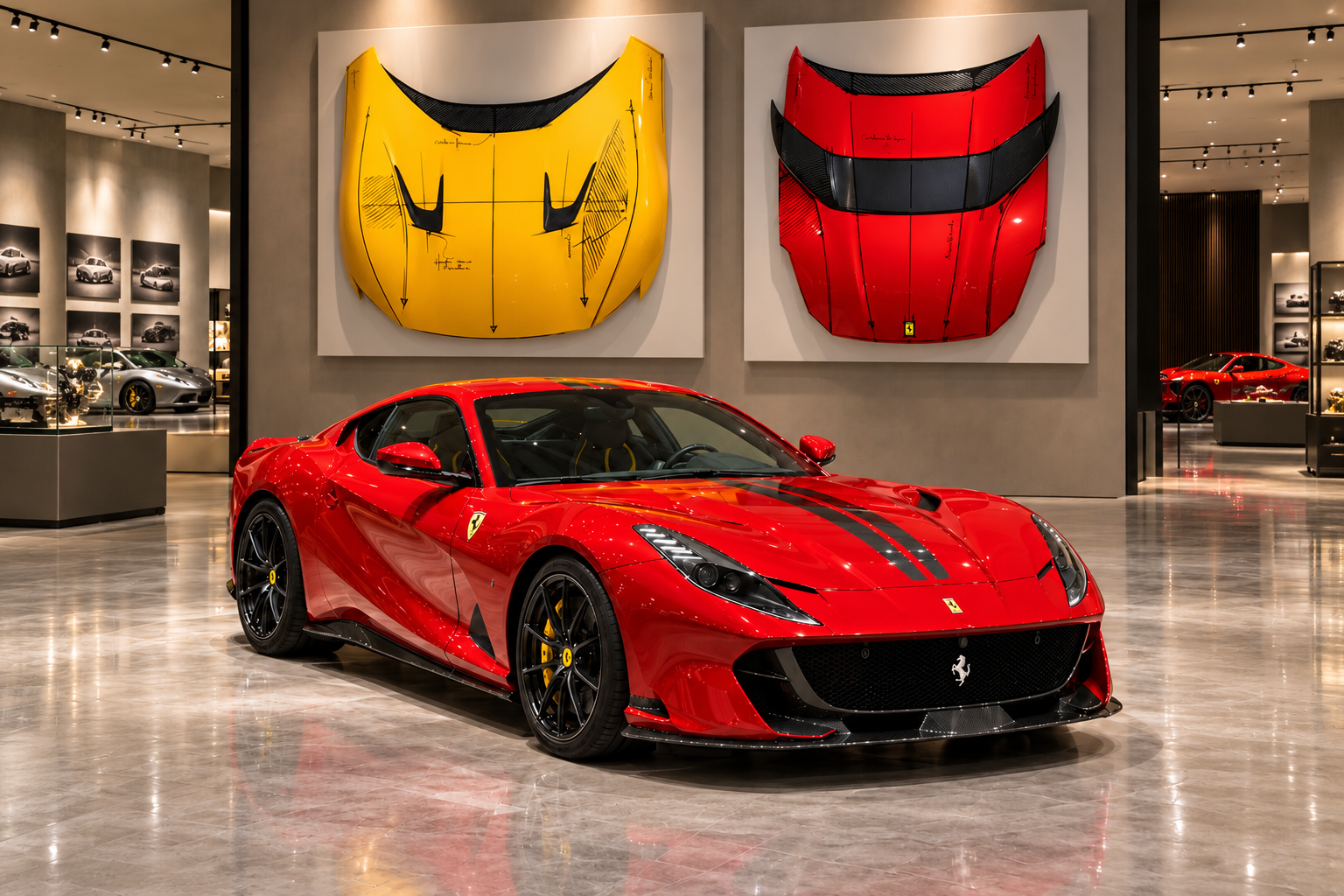

When Machines Become Mirrors of the Mind
Billionaire car collections are often viewed through the lens of wealth, status, or excess, yet these interpretations rarely capture the deeper motivations behind such carefully curated assortments. For many billionaires, cars are not impulse purchases or decorative trophies. Instead, they function as psychological artifacts that reflect identity, memory, control, and personal narrative. The act of collecting vehicles becomes a way to externalize internal values, achievements, and aspirations. Each car tells a story about how the owner views risk, innovation, history, and self-expression. From a behavioral perspective, these collections reveal patterns that go far beyond automotive enthusiasm. They expose how ultra-wealthy individuals process success, nostalgia, dominance, and legacy. Understanding billionaire car psychology requires moving past surface-level assumptions and exploring how emotional meaning, cognitive frameworks, and long-term thinking shape collecting behavior. This article examines why cars hold such powerful psychological significance for billionaires and how collections function as private expressions of the self rather than public displays of wealth.
Why Billionaire Car Psychology Reflects Identity and Control

Billionaire car psychology often centers on identity formation and control because cars offer a rare combination of autonomy, mastery, and symbolism. For individuals who operate in abstract domains such as finance, technology, or global markets, cars provide tangible proof of agency. Driving or owning a vehicle creates a direct feedback loop between decision and outcome, reinforcing a sense of command often diluted in large-scale enterprises. Collecting cars allows billionaires to curate environments where rules feel personal rather than institutional. Vehicle choices frequently mirror personality traits, such as precision, aggression, restraint, or nostalgia. Some collections emphasize engineering purity, while others prioritize raw power or historical significance. This selectivity reflects how individuals want to see themselves rather than how they wish to be seen publicly. In the Cars context, control over a collection becomes psychological grounding. The garage transforms into a private domain where order, intention, and personal logic prevail, reinforcing emotional stability amid otherwise complex lives.
Cars as Emotional Anchors and Memory Objects

Cars often function as emotional anchors that connect billionaires to formative experiences, aspirations, or pivotal life moments. Many collectors gravitate toward models that symbolize early success, childhood fascination, or cultural milestones tied to personal development. These vehicles act as memory containers, preserving emotional states associated with achievement or longing. Unlike abstract assets, cars engage the senses through sound, motion, and physical presence, deepening emotional attachment. This sensory engagement explains why collections often include seemingly impractical or redundant vehicles. From a Behavioral insight perspective, repetition reflects emotional reinforcement rather than inefficiency. The car becomes a safe conduit for revisiting identity-defining moments without revisiting the vulnerability that accompanied them. This emotional anchoring transforms collecting into a form of psychological continuity, allowing individuals to stabilize their sense of self across decades of change.
Status, But on the Owner’s Own Terms
While cars undeniably communicate status, billionaires often use collections to redefine status internally rather than externally. Public recognition rarely motivates acquisition at this level. Instead, validation occurs within peer groups or personal benchmarks. Subtle collections that emphasize rarity, engineering significance, or historical relevance signal discernment rather than dominance. This internal signaling aligns with advanced billionaire car psychology, where confidence reduces the need for spectacle. Many collections avoid mainstream luxury symbols, favoring obscure or technically meaningful models understood only by informed observers. This selective signaling preserves privacy while reinforcing self-concept. In the Cars category, understatement becomes a psychological filter, allowing owners to control who understands the message and who does not.
Collecting as a Form of Narrative Control

Car collections allow billionaires to construct and preserve personal narratives. Each acquisition fits into a broader story about progress, ambition, or curiosity. Some collections trace technological evolution, while others map personal growth through stages of success. This narrative control offers psychological satisfaction because it organizes life experiences into coherent arcs. In high-pressure environments where outcomes often feel uncertain or delayed, collecting creates immediate narrative closure. From a Behavioral insight standpoint, this structure reduces cognitive dissonance by aligning material choices with personal meaning. The collection becomes a curated autobiography told through machines rather than words.
Risk, Reward, and Emotional Regulation

Many billionaires thrive on calculated risk, and car collecting offers a contained environment for engaging that instinct. Acquisitions involve financial commitment, authenticity assessment, and long-term value uncertainty, all of which stimulate decision-making centers without threatening core wealth. This controlled risk satisfies the need for challenge while maintaining safety. Driving high-performance cars further reinforces adrenaline regulation, offering emotional release without professional consequence. In billionaire car psychology, this balance helps regulate stress and maintain motivation. The collection becomes both a mental outlet and a stabilizer, supporting emotional resilience.
Legacy Thinking and Symbolic Immortality

As wealth matures, attention often shifts toward legacy. Car collections provide a tangible means of extending influence beyond one lifetime. Vehicles endure, age, and gain meaning over time, making them ideal symbols of continuity. Some collectors view their garages as future archives or cultural contributions rather than private indulgences. This perspective aligns with billionaire car psychology, where possession transitions into stewardship. The act of preserving machines becomes an expression of care for history and future generations. In the Cars world, legacy transforms ownership into responsibility, adding moral weight to collecting behavior.
Why Excess Is Rarely the True Motivation

Contrary to popular belief, excess rarely drives billionaire car collections. Most acquisitions follow deliberate logic tied to emotion, narrative, or intellectual curiosity. Redundancy often serves psychological reinforcement rather than indulgence. Collectors may own multiple variations of similar models to explore nuance rather than volume. This behavior reflects depth over breadth. In Behavioral insight analysis, intentional repetition supports mastery and understanding. The collection evolves thoughtfully, not impulsively. This discipline separates meaningful collections from superficial accumulation.
Understanding Wealth Through the Machines People Keep
Billionaire car collections offer a rare window into the inner lives of individuals whose external personas often feel inaccessible. Through the lens of billionaire car psychology, these collections reveal identity, memory, control, and legacy rather than excess. Cars become tools for emotional regulation, narrative construction, and self-expression. In the Cars category, collecting reflects who people are when no audience is watching. Understanding this psychology reframes car collections not as displays of wealth, but as deeply personal expressions of the human mind.