
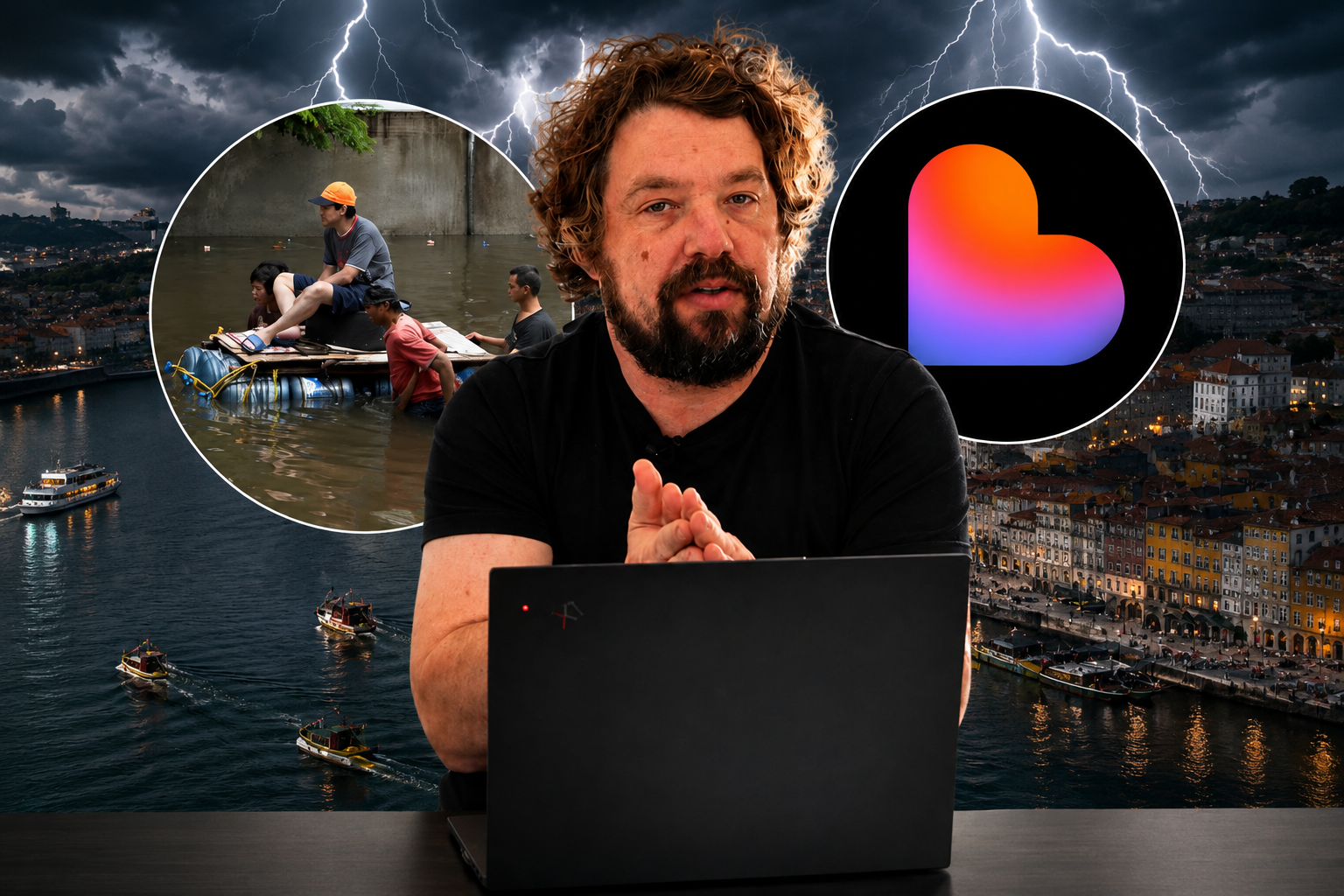
When a run of powerful storms battered Portugal in quick succession, some communities were left flooded, cut off and struggling to get basic supplies. Roofs were torn open by the wind, roads were blocked and power lines came down. Out of that chaos came an unexpected story: a local resident named Ricardo, with no background in programming, used the AI app builder Lovable to create an emergency coordination app that quickly went viral across the country.
The app, called Tempestade SOS (“Storm SOS”), connects people in isolated areas who need help with volunteers who can bring it.
The Storms That Changed Everything
The storms arrived one after another, giving communities little time to recover between them. Flooding damaged homes and businesses, and several areas were temporarily cut off from the rest of the country. Emergency services were stretched, and in many villages, residents had to rely on neighbours and volunteers for essentials.
One of the biggest problems was information. People who needed generators, drinking water, food or tarpaulins for damaged roofs often had no easy way to tell anyone, and volunteers who wanted to help did not know where to go.
How a Local Resident Spotted the Gap
Ricardo saw the problem first-hand. Offers of help were pouring in on social media, but they were scattered across posts, messages and group chats. Requests from remote areas were easily lost. What was missing was a simple, central place where needs and help could meet.
That kind of local insight is often what makes the difference in emergencies. People on the ground understand which roads are blocked, which villages are isolated and what supplies are actually needed.
What Tempestade SOS Does
The app works as a matching service. People in affected areas can report what they are short of, from generators and drinking water to food and tarpaulins. Volunteers can see those requests and coordinate deliveries, prioritising the most isolated places.
The idea is straightforward, but in a crisis, simplicity is a strength. A clear list of needs, organised by location, helps volunteers use their time and resources where they matter most.
How Lovable Turned an Idea Into an App
Lovable is an AI platform that lets people build web applications by describing what they want in plain language. Instead of writing code line by line, users explain the features they need, and the AI generates the interface, logic and database, which can then be refined through further instructions.
For someone like Ricardo, that changed everything. Building an app like Tempestade SOS would traditionally require a developer or a team, weeks of work and a budget. With an AI builder, a working version could be created far more quickly, which mattered when every day counted.
Why It Went Viral
The app spread quickly because it solved a real, urgent problem at exactly the right moment. It was shared widely on social media, picked up by national media and recommended by word of mouth. People trust tools that come from within their own community, especially during a crisis.
The story also resonated because of who built it: not a tech company, but an ordinary resident who wanted to help.
Technology’s Growing Role in Disaster Response
Digital tools are becoming an important part of emergency management around the world. Mapping platforms, messaging apps, geolocation and real-time data help governments, first responders and volunteers coordinate faster. Volunteer-built tools have played similar roles after earthquakes, floods and wildfires in many countries.
AI app builders add something new: they make it possible for people closest to a problem to build their own solutions, quickly and cheaply.
The Challenges of Emergency Apps
Building technology for emergencies carries serious responsibility. Information has to be accurate and up to date. Servers need to stay online when demand spikes. Personal data, including addresses and vulnerable situations, must be protected. Apps should be easy to use for older people and those with limited digital skills, and ideally work when connections are poor.
Community-built apps are not a replacement for official emergency services, but when they work alongside them, they can fill important gaps.
What This Says About AI Innovation
Much of the conversation about AI focuses on productivity at big companies. Stories like Tempestade SOS show another side: AI as a tool that lets individuals solve problems in their own communities. When the barrier to building software drops, more people can turn ideas into working tools.
A Local Solution With Global Relevance
Tempestade SOS began as a response to a very specific local crisis. But its lesson travels well. With accessible AI tools, local knowledge and a willingness to act, ordinary people can build technology that genuinely helps others when it matters most.
FAQ
What is Tempestade SOS?
It is an app created in Portugal after a series of severe storms to match people in isolated areas who need supplies, such as generators, water, food and tarpaulins, with volunteers who can deliver them.
Who built the app?
A local resident named Ricardo, who had no programming experience, built it using the AI app builder Lovable.
Why did it go viral?
It addressed an urgent, real need during the storms, was shared widely on social media and was praised by national media.
How does Lovable help people build apps?
Users describe what they want in plain language, and the AI generates a working web application that can be refined through further instructions.
Can community-built apps improve disaster response?
Yes, when used alongside official services, they can help coordinate volunteers and resources more efficiently, especially in hard-to-reach areas.