A Showroom in Soft Light
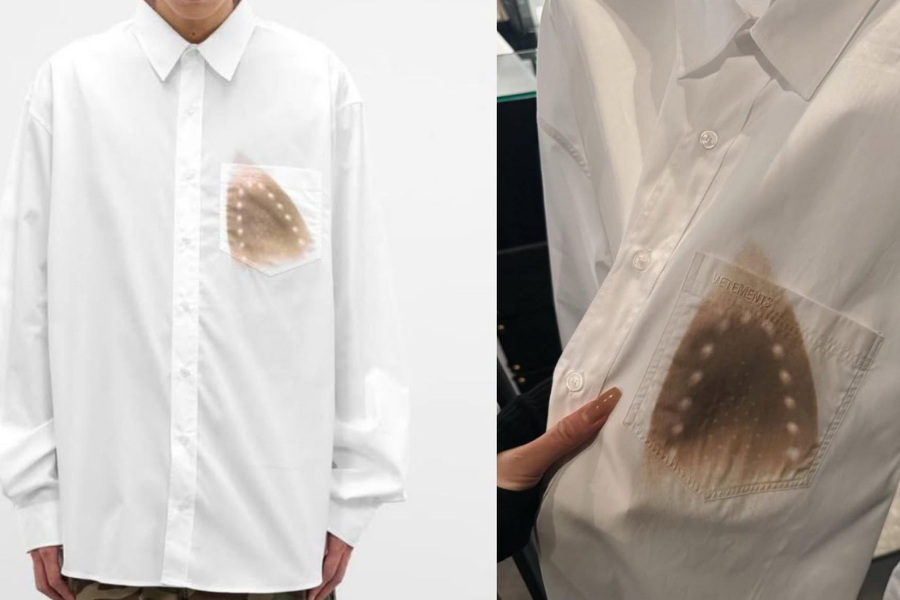
The rack looked restrained at first glance. Crisp cotton poplin. Neutral tones. Then the detail surfaced. A darkened imprint near the hem, shaped like the flat plate of an iron pressed too long. It was not a production flaw. It was deliberate.
Priced at $1,139, the Luxury shirt with intentional iron burn entered conversation quickly among stylists and collectors. The mark, once synonymous with domestic error, now appears framed as design language.
For luxury fashion followers and avant-garde collectors, the question is not shock. It is intent. Why formalize imperfection. How does a burn become couture. And who buys into that narrative.
This outline explores construction, philosophy, and the economics behind engineered damage at the highest tier of fashion.
Luxury Shirt With Intentional Iron Burn: Concept, Craft, and Controlled Imperfection
Design Philosophy: Imperfection as Statement
High fashion has long flirted with distress. Ripped denim. Frayed hems. Deconstructed tailoring. The intentional iron burn extends that lineage into domestic territory.
The burn references a moment of human error, translated into a controlled aesthetic. The mark disrupts symmetry. It introduces vulnerability into an otherwise pristine garment.
Design critics interpret such gestures as commentary on perfection culture. Others see calculated provocation designed to spark conversation in a saturated luxury market.
Fabric Selection and Construction
At $1,139, baseline materials matter. Expect premium long staple cotton, possibly Egyptian or Italian milled poplin. The shirt likely features precise stitching, reinforced plackets, and sculpted cuffs.
The burn effect itself requires technical calibration. Too much heat compromises structural integrity. Too little fails to create visible contrast.
Mechanism Reveal: How the Burn Is Engineered
Contrary to assumption, designers rarely apply a household iron randomly. Controlled burning involves heat press equipment set to specific temperatures and exposure durations.
Technicians test on fabric swatches to determine carbonization threshold without piercing fibers entirely. The discoloration may be stabilized through chemical treatment to prevent fraying.
Edges of the burn are sometimes subtly sealed to avoid progressive tearing during wear. The goal is permanence without deterioration.
The mark appears accidental. The process behind it is anything but.
Market Reaction, Cultural Context, and Investment Logic
Pricing Strategy and Brand Positioning
The four figure price anchors the shirt firmly within high luxury positioning. Limited production likely reinforces scarcity.
Brands operating at this tier rely on narrative as much as material. The burn becomes a conversation device in private showrooms and fashion week previews. Buyers acquire not only a garment but a statement aligned with intellectual design discourse.
Collector Psychology
Avant-garde apparel collectors often pursue pieces that challenge convention. An intentional flaw disrupts the expectation of immaculate tailoring.
For some, the shirt functions as wearable critique. For others, it embodies insider literacy. Understanding the reference becomes part of ownership.
Trend Analysts and Long Term Viability
Distressed luxury cycles through waves of acceptance. Certain pieces transition into archival relevance. Others fade as seasonal experiments.
If produced in limited quantities and associated with a notable creative director, the Luxury shirt with intentional iron burn could hold resale appeal within niche fashion circles. Condition remains critical. Ironically, additional real damage would erode value.
Broader Commentary on Value
Luxury increasingly tests the boundaries of traditional craftsmanship narratives. A burn mark challenges the equation between labor intensity and price.
Yet craftsmanship persists beneath the gesture. Fabric sourcing, pattern engineering, and finishing standards still demand precision. The burn overlays an already refined foundation.
Permanence in a Mark Meant to Look Temporary
An iron burn traditionally signals regret. Here it signals intent.
The garment will age like any other cotton shirt. Fibers will soften. The carbonized imprint will remain, stabilized by design.
Fashion’s cycle moves quickly. Pieces designed to provoke either settle into archives or disappear into storage.
This shirt, marked by fire yet preserved by craft, occupies that tension between accident and authorship.