
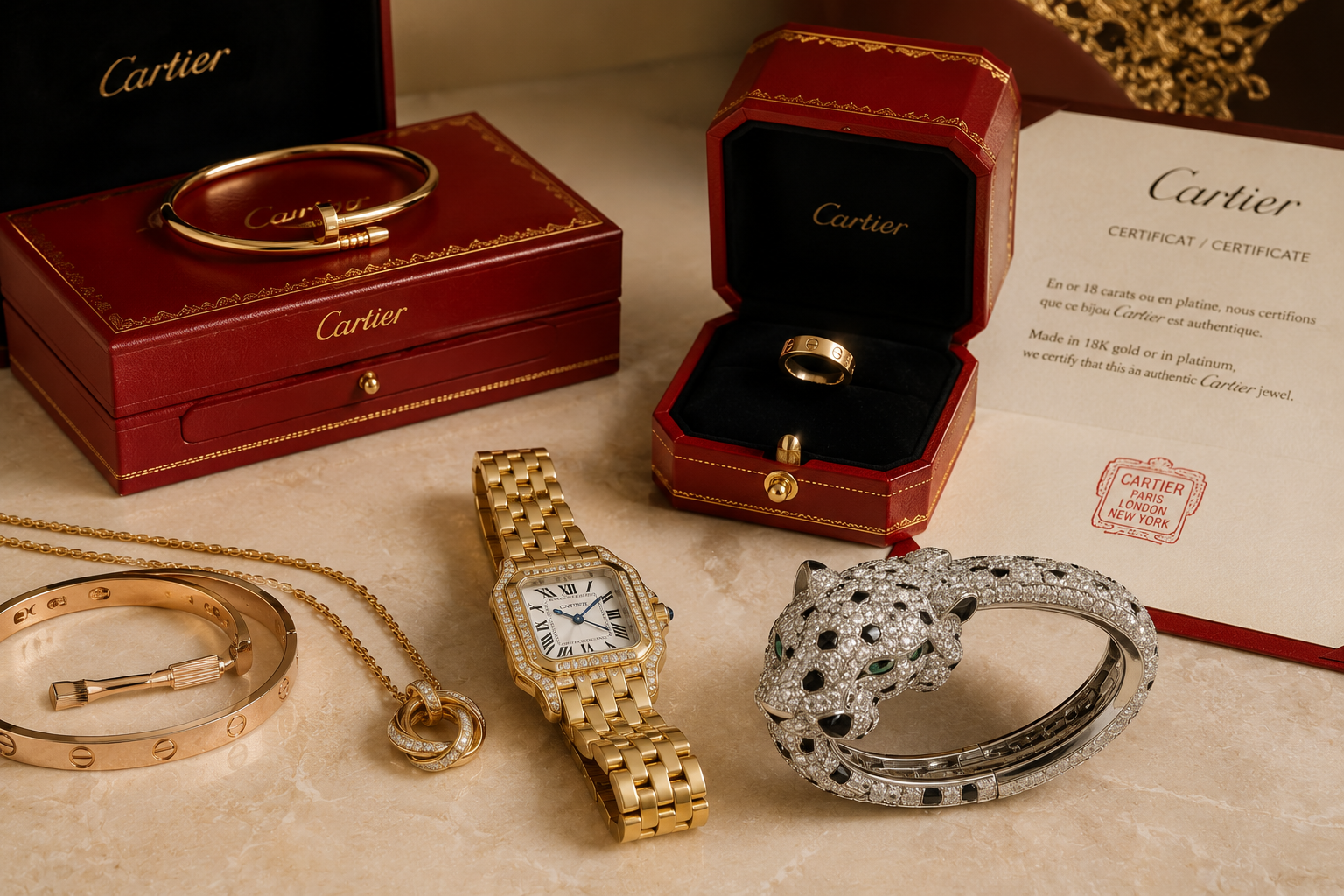
A Vault, A White Glove, and a Piece of History
The room is quieter than expected. A curator opens a secure drawer and places a century-old Cartier creation beneath a pool of soft light. The piece appears surprisingly modern. The proportions feel contemporary. The craftsmanship remains extraordinary. This moment explains why the Cartier collection historical pieces jewellery story extends far beyond luxury. Cartier did not simply create beautiful objects. It repeatedly altered the direction of design, influenced royal courts, introduced new aesthetic languages, and challenged assumptions about what jewellery could become. Some maisons followed trends. Cartier often created them. The most important pieces in the Cartier Collection are not significant because of their value alone. They matter because they changed the conversation around craftsmanship, taste, status, and artistic expression. Together, these eight creations reveal how one jewellery house helped shape modern luxury over more than a century.
Why the Cartier Collection Matters Beyond Collecting
Many historic jewellery archives function as records of craftsmanship. The Cartier Collection serves a different purpose. It acts as a living history of innovation. Each piece captures a moment when design evolved, cultural influences merged, or technical possibilities expanded. Cartier’s importance stems from its ability to absorb inspiration from around the world while maintaining a distinct identity. The maison borrowed from architecture, travel, royalty, art movements, and emerging technologies. Rather than preserving tradition unchanged, Cartier consistently reinterpreted it. This willingness to evolve explains why collectors, museums, historians, and designers continue studying these creations. They offer insight into how luxury adapts without losing authenticity.
Piece One: The Garland Style Tiara That Redefined Royal Elegance
Among Cartier’s most influential achievements was the refinement of the Garland Style aesthetic. Delicate platinum structures allowed jewellers to create pieces that appeared lighter and more intricate than previous generations of jewellery. The tiaras produced during this period transformed aristocratic fashion throughout Europe. Floral motifs, ribbons, bows, and lace-inspired details created a new visual language that balanced grandeur with elegance. The technical breakthrough mattered as much as the design. Platinum’s strength allowed craftsmen to support diamonds with remarkable delicacy. The result felt revolutionary at the time. These pieces established Cartier as a preferred jeweller among royalty and influential families, shaping expectations for high jewellery well into the twentieth century.
Piece Two: The Patiala Necklace and the Scale of Ambition
Few jewellery creations better illustrate Cartier’s willingness to challenge limits than the legendary Patiala Necklace. Commissioned under extraordinary circumstances, the piece became one of the most ambitious jewellery projects ever attempted. Thousands of diamonds, remarkable gemstones, and an unprecedented level of craftsmanship came together within a single creation. Beyond its scale, the necklace demonstrated Cartier’s ability to translate cultural influences into highly sophisticated design. It represented collaboration between patron and maison at the highest level. Even decades later, discussions surrounding the piece focus on its artistic significance as much as its material value. The necklace remains one of the defining examples of Cartier’s ability to operate without creative compromise.
Piece Three: The Tutti Frutti Revolution
Before Tutti Frutti, fine jewellery largely followed established European conventions. Cartier introduced something dramatically different. Inspired by Indian craftsmanship, carved gemstones, vibrant color combinations, and unconventional compositions transformed expectations within high jewellery circles. The Tutti Frutti Collection demonstrated how luxury could embrace boldness without sacrificing sophistication. Emeralds, sapphires, rubies, and diamonds interacted in ways rarely seen at the time. Collectors continue pursuing these creations because they represent a pivotal moment when global influences reshaped Western luxury design. The collection remains one of Cartier’s most recognizable contributions to jewellery history.
Piece Four: The Panther That Became an Icon
Some luxury symbols become so powerful that they transcend the products they represent. Cartier’s Panther Motif achieved precisely that status. The panther first appeared as a design element before evolving into one of the most influential symbols in luxury history. Sculptural interpretations showcased extraordinary craftsmanship through articulated structures, gemstone setting techniques, and lifelike movement. The panther embodied confidence, elegance, and individuality. Over time, it became inseparable from Cartier’s identity. Few jewellery motifs have maintained such cultural relevance across multiple generations while continuing to inspire contemporary creations.
Piece Five: The Mystery Clock and the Art of Illusion
Although technically categorized as decorative art rather than jewellery, Cartier’s Mystery Clocks deserve inclusion because they transformed perceptions of craftsmanship. Observers often struggle to understand how the hands appear suspended within transparent crystal. The mechanism remains concealed through a sophisticated engineering solution that creates an illusion of floating movement. This achievement reflects a broader Cartier philosophy. Luxury should inspire curiosity as well as admiration. The clocks blurred the line between engineering, artistry, and performance. They remain among the most intellectually fascinating objects ever associated with the maison.
How Cartier Turned Technical Innovation Into Art
The most remarkable aspect of Cartier’s historical creations is how innovation often disappears into beauty. Platinum structures, invisible settings, articulated mechanisms, concealed engineering solutions, and advanced gemstone mounting techniques allowed designers to achieve effects previously considered impossible. Rather than showcasing technical complexity directly, Cartier used engineering to support artistic expression. This approach remains central to the maison’s legacy. The technology serves the design. The craftsmanship serves the experience. Many collectors view this philosophy as one of Cartier’s most important contributions to luxury culture.
Piece Six: The Flamingo Brooch and the Power of Personality
Created during a period when jewellery increasingly reflected individual identity, the Flamingo Brooch demonstrated Cartier’s ability to combine whimsy with extraordinary craftsmanship. The piece challenged assumptions about what high jewellery should look like. Its sculptural form, intricate detailing, and vibrant composition transformed a decorative object into a work of artistic storytelling. Cartier understood that luxury often becomes more compelling when it expresses character rather than status alone. The Flamingo remains a celebrated example of that philosophy.
Piece Seven: The Duchess of Windsor Collection
The relationship between Cartier and the Duchess of Windsor produced some of the most fascinating jewellery commissions of the twentieth century. These creations reflected an unusually personal approach to luxury. Rather than adhering strictly to convention, the pieces embraced symbolism, narrative, and emotional significance. Bracelets, brooches, and custom commissions captured private stories through exceptional craftsmanship. The collection demonstrated how jewellery could function as autobiography rather than ornament. Its influence continues to shape bespoke jewellery design today.
Piece Eight: The Historic Diamond Creations That Changed High Jewellery
Throughout its history, Cartier has handled some of the world’s most significant gemstones. Certain diamond creations became important not merely because of rarity but because of the way Cartier presented them. Settings emphasized proportion, light, and elegance rather than overwhelming decoration. These pieces helped establish modern standards for high jewellery presentation. Their influence extends beyond individual creations into broader expectations surrounding gemstone design and luxury craftsmanship.
Royal Patronage and Global Influence
Cartier’s rise cannot be separated from its relationship with royalty, aristocracy, industrialists, and cultural figures. Royal commissions provided visibility, yet the deeper significance lies in how Cartier adapted its designs for diverse clients across continents. The maison successfully balanced cultural sensitivity with artistic consistency. This ability allowed Cartier to influence global luxury culture while remaining recognizable and distinct. Few jewellery houses achieved comparable international reach during the same period.
Why Collectors Still Chase These Historical Pieces
Collectors pursue historical Cartier creations for reasons extending beyond rarity. These pieces represent turning points in design history. Ownership offers participation in a larger narrative involving craftsmanship, innovation, cultural exchange, and artistic achievement. The strongest collections are often built around significance rather than simple value. Cartier’s most important historical creations continue attracting attention because their relevance has endured despite changing tastes and market cycles.
The Legacy of the Cartier Collection Today
Modern luxury houses frequently reference heritage. Cartier possesses the advantage of a history filled with genuinely transformative creations. The Cartier collection historical pieces jewellery narrative continues influencing contemporary design, auction markets, museum exhibitions, and collector behavior. Young designers study these works. Established collectors pursue them. Cultural institutions preserve them. Their significance remains active rather than historical. The collection functions as both archive and inspiration.
Conclusion: Why These Eight Pieces Still Matter
The most revealing aspect of Cartier’s greatest creations is how contemporary many of them still feel. Styles changed. Markets evolved. Technologies advanced. Yet these pieces continue commanding attention because they introduced ideas that outlived their original era. The Cartier collection historical pieces jewellery story is ultimately about influence. Each creation altered expectations surrounding design, craftsmanship, symbolism, or luxury itself. Long after ownership changes and exhibitions end, those ideas continue shaping the industry. That enduring influence remains far more valuable than any gemstone attached to a single piece.
FAQ
What is the Cartier Collection?
The Cartier Collection is a carefully curated archive of historically significant Cartier creations acquired, restored, and preserved to document the maison’s artistic and technical evolution.
Why are Cartier historical jewellery pieces important?
These creations often introduced groundbreaking design concepts, innovative craftsmanship techniques, and influential aesthetic movements that shaped modern jewellery history.
What is the most famous piece in the Cartier Collection?
Several pieces compete for that distinction, including the Patiala Necklace, Tutti Frutti creations, Panther jewellery, and notable royal commissions.
Why do collectors value historical Cartier jewellery?
Collectors appreciate historical Cartier pieces for their rarity, provenance, design significance, craftsmanship, and enduring influence on luxury culture.
How did Cartier change jewellery history?
Cartier transformed jewellery through technical innovation, global design influences, pioneering use of platinum, iconic motifs, and creations that redefined luxury standards across generations.