
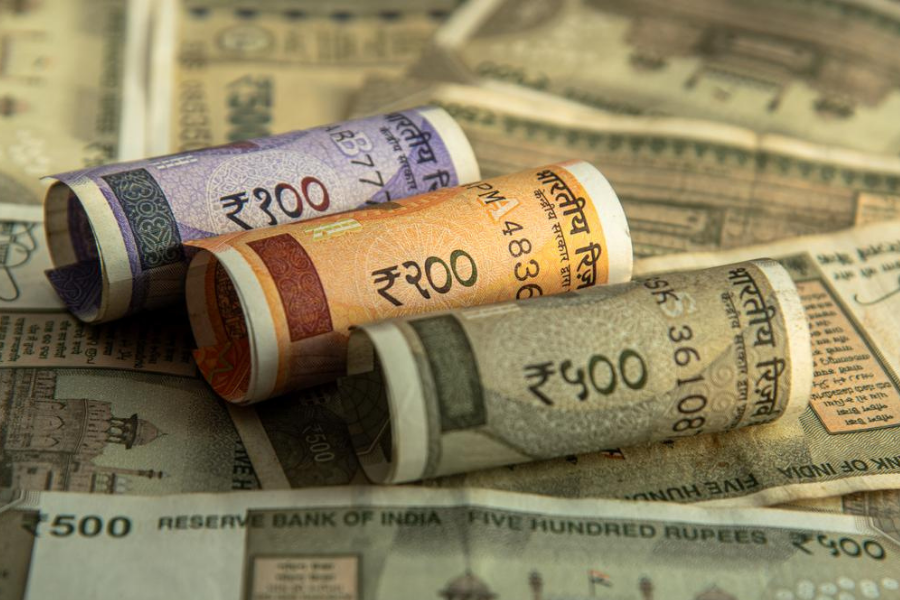
The trading floor does not react loudly. It rarely does. Screens shift by fractions, then hold. A number changes, then stabilizes.
₹94.
For a moment, it sits there. Not dramatic. Not unexpected. Yet it marks a threshold.
The Indian Rupee Record Low does not arrive as a sudden break. It builds through pressure, global, structural, and domestic. Oil invoices settle in dollars. Capital moves quietly across borders. Policy responses lag just enough to let the number settle into place.
The movement appears small on screen.
Its implications extend far beyond it.
What’s Driving the Indian Rupee Record Low
The rupee’s decline reflects layered forces rather than a single trigger.
Oil remains central.
India imports a significant portion of its crude requirements. Payments settle in dollars. When oil prices rise, demand for dollars increases. This demand places direct pressure on the rupee.
The mechanism remains simple.
More dollars are required to purchase the same volume of oil. The exchange rate adjusts accordingly.
Global currency strength adds another layer.
The US dollar has maintained relative strength across multiple markets. Interest rate differentials and capital flows contribute to this position. Investors often shift funds toward dollar-denominated assets during periods of uncertainty.
This movement reduces demand for emerging market currencies.
The rupee becomes part of that broader pattern.
Trade balance influences the equation.
Imports exceeding exports create a deficit. This imbalance requires additional foreign currency outflow, which further pressures the rupee.
Domestic inflation interacts with these factors.
Higher inflation reduces purchasing power and can influence monetary policy decisions. These adjustments affect currency valuation over time.
Central bank intervention plays a stabilizing role.
The Reserve Bank of India monitors currency movement and may adjust liquidity or use foreign exchange reserves to manage volatility. These actions influence short-term stability rather than long-term direction.
Market sentiment also matters.
Expectations shape behavior. Traders and institutions respond not only to current data, but to anticipated developments.
How the Indian Rupee Record Low Impacts Economy and Markets
Currency movement affects multiple layers of the economy.
For import-dependent sectors, costs increase.
Oil, electronics, and machinery become more expensive when priced in dollars. These costs often pass through to businesses and consumers.
Exporters experience a different effect.
A weaker rupee can make Indian goods more competitive internationally. Revenue earned in dollars converts into higher rupee values, improving margins.
This creates a dual impact.
Some sectors benefit, while others absorb higher costs.
Inflation responds gradually.
Rising import costs influence pricing across categories. Fuel prices affect transportation. Transportation affects goods. The effect moves through the system in stages.
Financial markets react with nuance.
Equity markets may adjust based on sector exposure. Companies with high import dependency face pressure. Export-oriented firms may see relative support.
Bond markets also respond.
Currency stability influences investor confidence. Foreign investment flows adjust based on perceived risk and return.
For consumers, the impact feels indirect at first.
Prices shift gradually. Fuel costs rise. Imported goods become more expensive.
For businesses, the adjustment begins earlier.
Cost structures change. Pricing strategies shift. Margins require recalibration.
The Mechanism Behind Currency Movements
Exchange rates operate through supply and demand.
Currencies are traded continuously in global markets. Demand for dollars increases when imports rise or when capital flows outward. Supply increases when exports generate foreign currency inflows.
The balance between these forces determines the rate.
Central banks influence this system indirectly.
Interest rates, liquidity measures, and reserve management shape market conditions. These tools guide movement rather than control it completely.
External factors remain significant.
Global economic conditions, geopolitical developments, and commodity prices all contribute to currency behavior.
The system remains interconnected.
No single factor defines the outcome.
What Comes Next for the Rupee
Currency trends rarely move in straight lines.
Short-term stabilization may occur through intervention or shifts in global conditions. Oil prices, capital flows, and policy decisions will continue to influence direction.
Structural factors remain.
Trade balance, inflation, and economic growth shape long-term movement.
For investors and policymakers, the focus shifts to response.
Adjustments in strategy, allocation, and planning follow currency changes.
The number on the screen may shift again.
Its meaning depends on what surrounds it.
The trading floor continues. Screens update. Numbers change.
₹94 remains one point in a longer sequence.
Currencies move quietly. Their effects do not.
The Indian Rupee Record Low reflects more than a moment. It reflects a system in motion, one that continues to adjust long after the number appears.
FAQs
1. Why did the Indian Rupee hit a record low?
The Indian Rupee Record Low is driven by factors such as rising oil prices, strong US dollar demand, and trade imbalances.
2. How does oil price affect the rupee?
Higher oil prices increase dollar demand for imports, which weakens the rupee.
3. Who controls the Indian Rupee value?
The Reserve Bank of India manages currency stability through monetary policy and foreign exchange interventions.
4. Does a weak rupee benefit any sector?
Yes. Export-oriented industries can benefit as their revenues increase when converted into rupees.
5. Will the rupee recover from this level?
Currency movement depends on global markets, oil prices, and policy decisions, so recovery may occur over time but remains uncertain.