Two Display Cases, One Difficult Decision
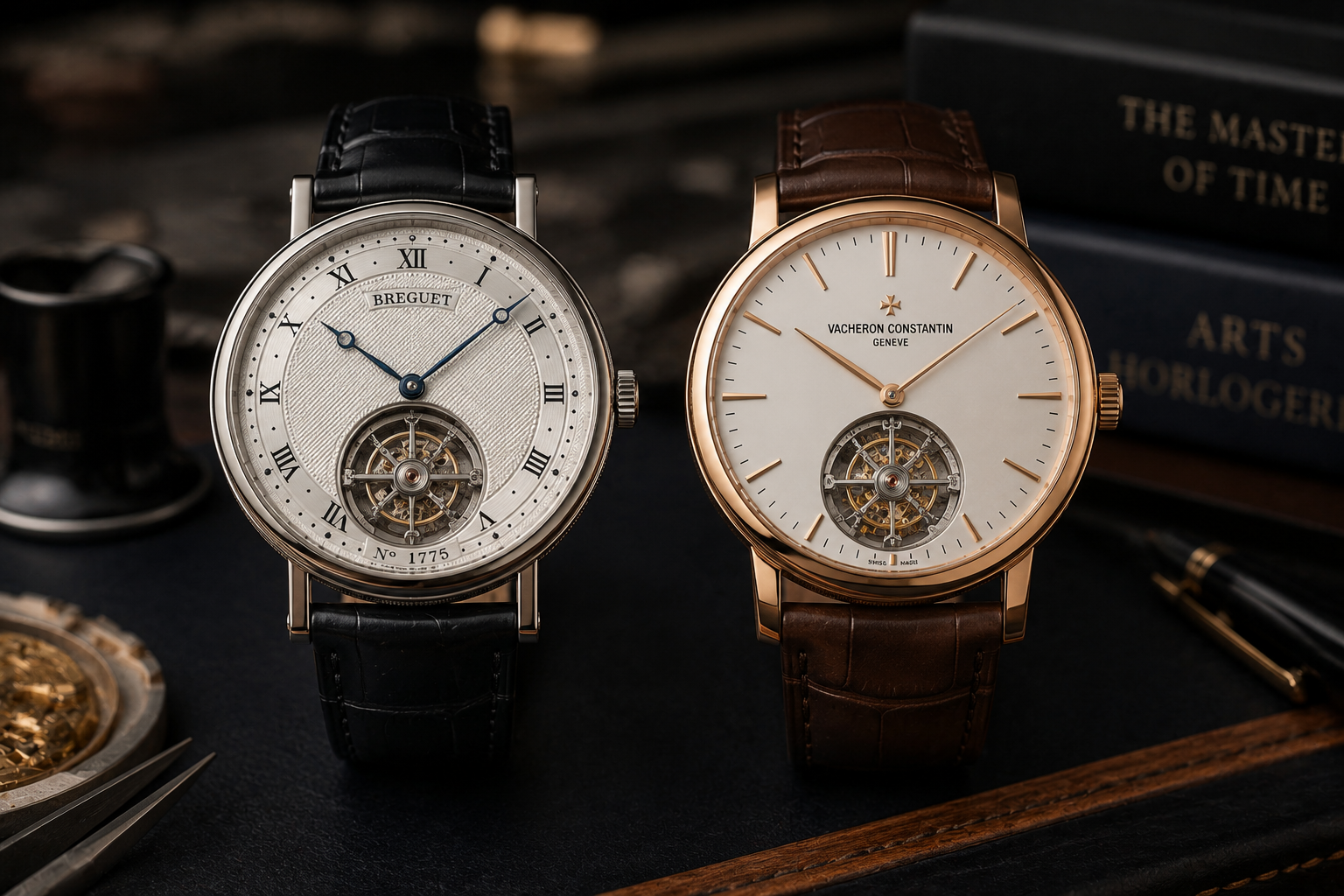
The decision often begins in silence. A collector sits beneath soft boutique lighting while a watch specialist carefully places two pieces on a velvet tray. One carries the unmistakable DNA of Abraham-Louis Breguet, the man who invented the tourbillon more than two centuries ago. The other represents one of Geneva’s most respected maisons, a manufacture whose pursuit of traditional watchmaking excellence has endured through changing eras and shifting tastes. Looking at both watches side by side reveals a fascinating dilemma. The Breguet vs Vacheron Constantin tourbillon conversation is not simply about complications or pricing. It is about philosophy, identity, and what a collector ultimately values when acquiring a masterpiece intended to outlive trends, ownership cycles, and market fluctuations. Both watches belong to the highest levels of traditional horology, yet they communicate entirely different interpretations of what greatness looks like on the wrist.
Why Tourbillons Still Matter to Serious Collectors
Many complications have become commonplace within modern luxury watchmaking, yet the tourbillon continues to occupy a unique position among collectors. Part of its appeal stems from mechanical complexity. Part comes from historical significance. More importantly, the tourbillon remains one of the clearest demonstrations of a watchmaker’s capability. Building one requires technical precision, extensive hand-finishing, and careful assembly. For collectors, the complication often serves as a lens through which an entire brand can be evaluated. Every decision surrounding architecture, decoration, movement visibility, and execution becomes amplified. This is particularly relevant when comparing Breguet and Vacheron Constantin. Both possess extraordinary credentials, yet each approaches the tourbillon from a distinct perspective. One emphasizes historical continuity with the invention itself. The other focuses on elevating classical Genevan watchmaking through uncompromising craftsmanship and refinement.
Heritage and Legacy: The Weight of History on the Wrist
Few brands can claim a relationship with the tourbillon as direct as Breguet. The company does not merely produce tourbillons. It safeguards the legacy of the individual who created the complication. Wearing a Breguet Classique Tourbillon often feels like carrying a piece of horological history. Every dial element, hand shape, and case detail reinforces that connection. Vacheron Constantin offers a different form of prestige. As one of the oldest continuously operating watch manufacturers, its authority comes from centuries of refinement and consistency. The Traditionnelle Tourbillon reflects this heritage through disciplined design and exceptional execution. For collectors, the choice becomes deeply personal. Some value direct historical lineage. Others prioritize the broader legacy of one of Swiss watchmaking’s most respected maisons. Both paths offer authenticity. They simply express it differently.
Design Philosophy: Classical Art Versus Geneva Restraint
The visual distinction between these watches becomes apparent almost immediately. Breguet embraces decorative artistry. Guilloché dials, fluted casebands, blued hands, and intricate details create a watch that proudly displays its identity. The design language feels unmistakably Breguet from across a room. Vacheron Constantin takes a more restrained approach. The Traditionnelle collection prioritizes balance, proportion, and elegance through subtlety rather than ornamentation. Every surface appears carefully considered, yet nothing demands attention unnecessarily. The contrast highlights two different schools of luxury. One celebrates visible craftsmanship through historical cues. The other allows craftsmanship to reveal itself gradually through observation. Collectors often find themselves naturally drawn toward one philosophy over the other, making design preference one of the most influential factors in this comparison.
Mechanism Reveal: How the Tourbillons Actually Differ
Although both watches feature tourbillon complications, the engineering philosophies behind them vary considerably. The Breguet tourbillon often places significant emphasis on showcasing the complication itself as a centerpiece of the dial. The architecture encourages visual appreciation of the mechanism’s movement and historical significance. Vacheron Constantin approaches the complication with a focus on integration and balance. The movement architecture frequently prioritizes harmony between performance, finishing, and visual composition. Examining the tourbillon cages under magnification reveals the remarkable effort invested in shaping, polishing, and assembling components measured in fractions of a millimeter. This level of detail separates high horology from standard luxury watchmaking. The difference is not simply what the mechanism does. It is how each manufacture chooses to express the complication through design and execution.
Movement Finishing: Where Collectors Spend the Most Time Looking
A watch collector may glance at a dial hundreds of times. The movement often receives years of attention. This is where both brands operate at an exceptionally high level. Breguet movements display intricate finishing techniques that align closely with the maison’s historical identity. Engraving, polished surfaces, and architectural details contribute to a strong visual character. Vacheron Constantin’s finishing philosophy reflects Geneva’s traditional standards, emphasizing sharp angles, polished bevels, meticulous decoration, and extraordinary consistency. Enthusiasts frequently spend hours studying movement details through a loupe because this is where the true personality of a watch emerges. In many cases, the emotional decision between these two watches happens after the collector turns them over and examines the craftsmanship hidden beneath the caseback.
Wearing Experience: Which Watch Lives Better Beyond the Safe
Many collectors eventually face a practical question. Which watch will actually be worn? The answer often surprises buyers who initially focus only on technical specifications. The Breguet Classique Tourbillon delivers a strong sense of occasion. Its visual identity attracts appreciation from those familiar with high horology. The Vacheron Constantin Traditionnelle Tourbillon offers a slightly different experience. It often blends more naturally into formal and professional environments while maintaining exceptional watchmaking credibility. Comfort, proportions, dial legibility, and wrist presence all influence long-term satisfaction. The most successful collector watches are not necessarily the rarest. They are the ones owners continue reaching for years after acquisition.
Exclusivity, Production, and Market Position
Scarcity contributes significantly to desirability within the upper tiers of watch collecting. Both Breguet and Vacheron Constantin produce tourbillons in limited quantities compared to mainstream luxury brands. However, exclusivity functions differently for each manufacturer. Breguet’s appeal often centers on its unique historical position and niche collector audience. Vacheron Constantin benefits from broader recognition within elite watch collecting circles and increasing demand among international buyers. Neither watch can be described as common. Yet their market visibility and collector communities differ in meaningful ways. Understanding these dynamics helps buyers evaluate ownership from both emotional and long-term collectible perspectives.
Investment Potential and Long-Term Collectibility
Experienced collectors rarely purchase a tourbillon solely as an investment. Nevertheless, collectibility remains an important consideration. Market behavior often reflects broader perceptions of brand prestige, rarity, craftsmanship, and historical significance. Breguet offers the unique advantage of direct association with the invention of the tourbillon itself, a narrative unlikely to lose relevance. Vacheron Constantin benefits from strong global recognition, enduring demand, and a reputation for producing some of the finest traditional watches available. Long-term desirability depends on factors extending beyond resale performance. Brand stability, historical importance, and collector enthusiasm all contribute to future significance. These qualities make both watches compelling additions to serious collections.
Who Should Buy the Breguet Classique Tourbillon?
The Breguet Classique Tourbillon often appeals to collectors who value horological history above all else. These individuals appreciate traditional aesthetics, historical continuity, and the opportunity to own a watch connected directly to one of watchmaking’s most influential figures. The watch rewards owners who enjoy studying craftsmanship, understanding historical context, and wearing pieces with unmistakable character. It feels particularly suited to collectors building deeply curated collections rather than pursuing broader brand recognition.
Who Should Buy the Vacheron Constantin Traditionnelle Tourbillon?
The Vacheron Constantin Traditionnelle Tourbillon frequently attracts collectors seeking exceptional finishing, understated elegance, and a watch capable of fitting effortlessly into both formal and contemporary settings. Owners often value refinement over display and appreciate craftsmanship that reveals itself gradually rather than immediately. The watch combines technical sophistication with timeless aesthetics, making it particularly appealing to collectors who prioritize balance and versatility within a high horology collection.
Final Verdict: The Collector’s Dilemma Never Truly Ends
The most fascinating aspect of the Breguet vs Vacheron Constantin tourbillon debate is that neither watch emerges as an absolute winner. The choice reflects the collector more than the watches themselves. Breguet offers a direct connection to one of the most important innovations in horological history. Vacheron Constantin delivers extraordinary refinement through centuries of Genevan craftsmanship. One celebrates origin. The other celebrates evolution. Years from now, both pieces will likely remain respected examples of traditional watchmaking at its highest level. The real dilemma is not deciding which watch is objectively better. It is deciding which story deserves a permanent place in the collection.
FAQ
Which is better, Breguet Classique Tourbillon or Vacheron Constantin Traditionnelle Tourbillon?
The answer depends on collector priorities. Breguet offers unmatched historical significance related to the invention of the tourbillon, while Vacheron Constantin emphasizes exceptional finishing, refinement, and broader collector recognition.
Is Breguet more important historically than Vacheron Constantin for tourbillons?
Yes. Breguet holds a unique position because Abraham-Louis Breguet invented the tourbillon complication, giving the brand a direct connection to one of watchmaking’s most significant innovations.
Does Vacheron Constantin make high-quality tourbillons?
Absolutely. Vacheron Constantin produces some of the most respected tourbillon movements in modern watchmaking, known for meticulous finishing, technical excellence, and traditional Genevan craftsmanship.
Which watch has stronger collector appeal?
Both attract serious collectors, although their audiences differ. Breguet appeals strongly to historical purists, while Vacheron Constantin often attracts collectors focused on finishing quality, prestige, and long-term brand recognition.
Is a tourbillon watch worth buying today?
For collectors interested in mechanical artistry, historical significance, and advanced watchmaking, a tourbillon remains one of the most compelling complications available. The value lies in craftsmanship, rarity, and ownership experience rather than simple timekeeping performance.