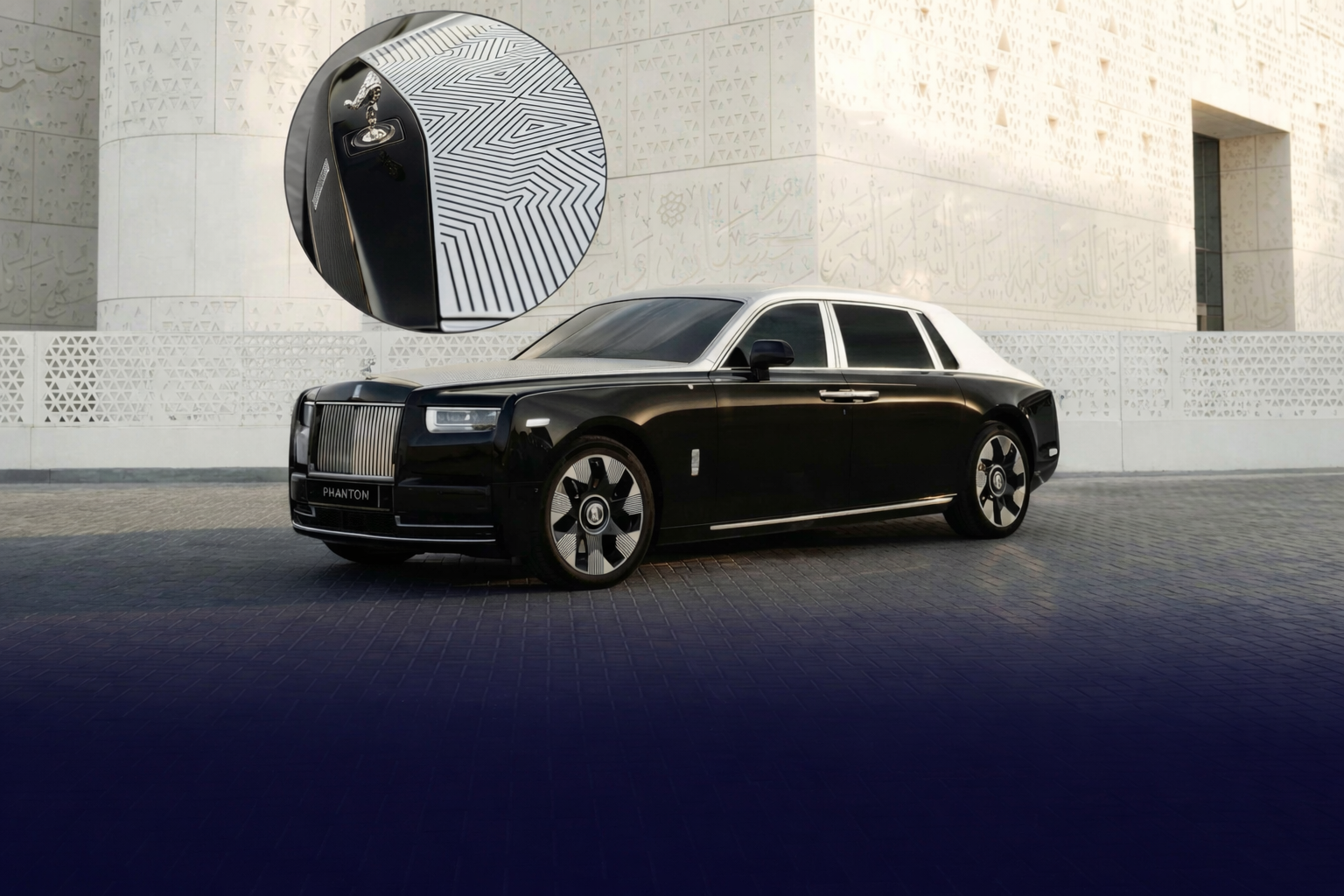
The hood catches light before anything else.
Not in a polished, mirror-like way. The surface breaks it, subtly. A pattern appears, then disappears depending on the angle. You move half a step, and the design shifts again.
It is not paint.
It is not applied afterward.
It is cut into the material itself.
The Rolls-Royce Laser-Engraved Hood introduces a different level of permanence in automotive design. This is not customization layered onto the car. It is embedded into the structure, irreversible, precise, and intentional.
Up close, the detail becomes clearer. Lines are not printed. They are etched, measured in microns, controlled by light rather than tools.
This is where engineering meets authorship.
The Craft and Technology Behind the Rolls-Royce Laser-Engraved Hood
Laser engraving operates through controlled energy.
A focused beam removes microscopic layers from the surface. Each pass adjusts depth, texture, and reflectivity. The process allows for precision that traditional engraving cannot achieve at scale.
On a Rolls-Royce Laser-Engraved Hood, this precision becomes visible.
Patterns are mapped digitally before execution. The design translates into coordinates, guiding the laser across the surface. The process maintains consistency while allowing for intricate detail.
Material response matters.
Different metals react differently to laser exposure. Engineers calibrate intensity and duration to ensure the surface retains structural integrity while achieving the desired finish.
The result creates depth without additional material.
No overlays, no coatings. The design exists within the hood itself.
Light interaction defines the experience.
Engraved surfaces scatter light differently than polished ones. This creates a dynamic visual effect, where the design shifts depending on viewing angle.
Durability follows function.
Because the engraving sits within the material, it resists wear differently than surface treatments. The design does not fade in the same way paint or decals might.
The process requires time.
Each hood undergoes controlled engraving, monitored to maintain precision. Small deviations would be visible at this scale.
Bespoke Luxury and the Future of the Rolls-Royce Laser-Engraved Hood
Bespoke has always defined Rolls-Royce.
Clients do not select from predefined options. They commission details. Materials, colors, textures, and finishes align with individual preferences.
The Rolls-Royce Laser-Engraved Hood extends this philosophy.
It introduces a medium where personalization becomes structural. Designs can reference personal narratives, patterns, or abstract forms.
This changes the relationship between owner and object.
The car becomes a surface for expression, not just a vehicle.
The design process involves collaboration.
Clients work with designers to develop patterns that translate effectively into engraved form. Not all visuals adapt to this medium. The process filters ideas through feasibility.
Production integrates technology with craftsmanship.
Digital precision defines the engraving, while human oversight ensures quality. This balance maintains the brand’s approach to detail.
Future applications extend beyond the hood.
Other surfaces could adopt similar techniques. Interior panels, trims, and structural elements may incorporate engraving.
The approach aligns with broader trends in luxury.
Ownership shifts toward uniqueness. Replication holds less value than distinction.
The Mechanism of Laser Engraving in Automotive Design
Laser engraving removes material through controlled heat.
The beam focuses energy onto a specific point. This energy vaporizes or melts a thin layer of the surface.
Depth is controlled through repetition.
Multiple passes increase engraving depth. Adjustments in speed and intensity refine detail.
The process operates without physical contact.
This reduces mechanical stress on the material. Precision remains consistent across the surface.
Automation supports accuracy.
Computer-guided systems translate designs into movement. This ensures alignment across complex patterns.
The result combines engineering and design.
Each line reflects both.
Positioning Within Ultra-Luxury Automotive Innovation
The Rolls-Royce Laser-Engraved Hood represents a shift.
Customization moves from surface-level to structural integration.
Other manufacturers explore personalization.
Few integrate it at this level of permanence.
This positions Rolls-Royce within a specific space.
Where innovation serves identity.
Where engineering supports narrative.
The development reflects a broader direction in luxury.
Objects become more personal. Less interchangeable. More defined by the individual who commissions them.
The hood remains still. Light moves across it. The pattern appears, then fades, then returns from another angle.
It does not demand attention.
It holds it.
The Rolls-Royce Laser-Engraved Hood does not rely on visibility alone. It operates through detail, precision, and permanence.
What it suggests extends beyond the surface.
Customization may no longer sit on top of luxury.
It may become part of its structure.
FAQs
1. What is the Rolls-Royce Laser-Engraved Hood?
The Rolls-Royce Laser-Engraved Hood is a bespoke feature where intricate designs are etched directly into the hood using precision laser technology.
2. How does laser engraving work on a car hood?
A high-precision laser beam removes microscopic layers of material, creating detailed patterns embedded into the surface.
3. Is the engraving durable?
Yes. Since the design is engraved into the material, it offers greater durability compared to surface-level finishes.
4. Can customers customize the engraved design?
Yes. Rolls-Royce offers bespoke customization, allowing clients to create unique patterns tailored to their preferences.
5. Will this technology be used in other car parts?
Potentially, yes. The technology could extend to interior trims and other exterior elements in future designs.