
The Geneva Vault and the Acoustic Resonance
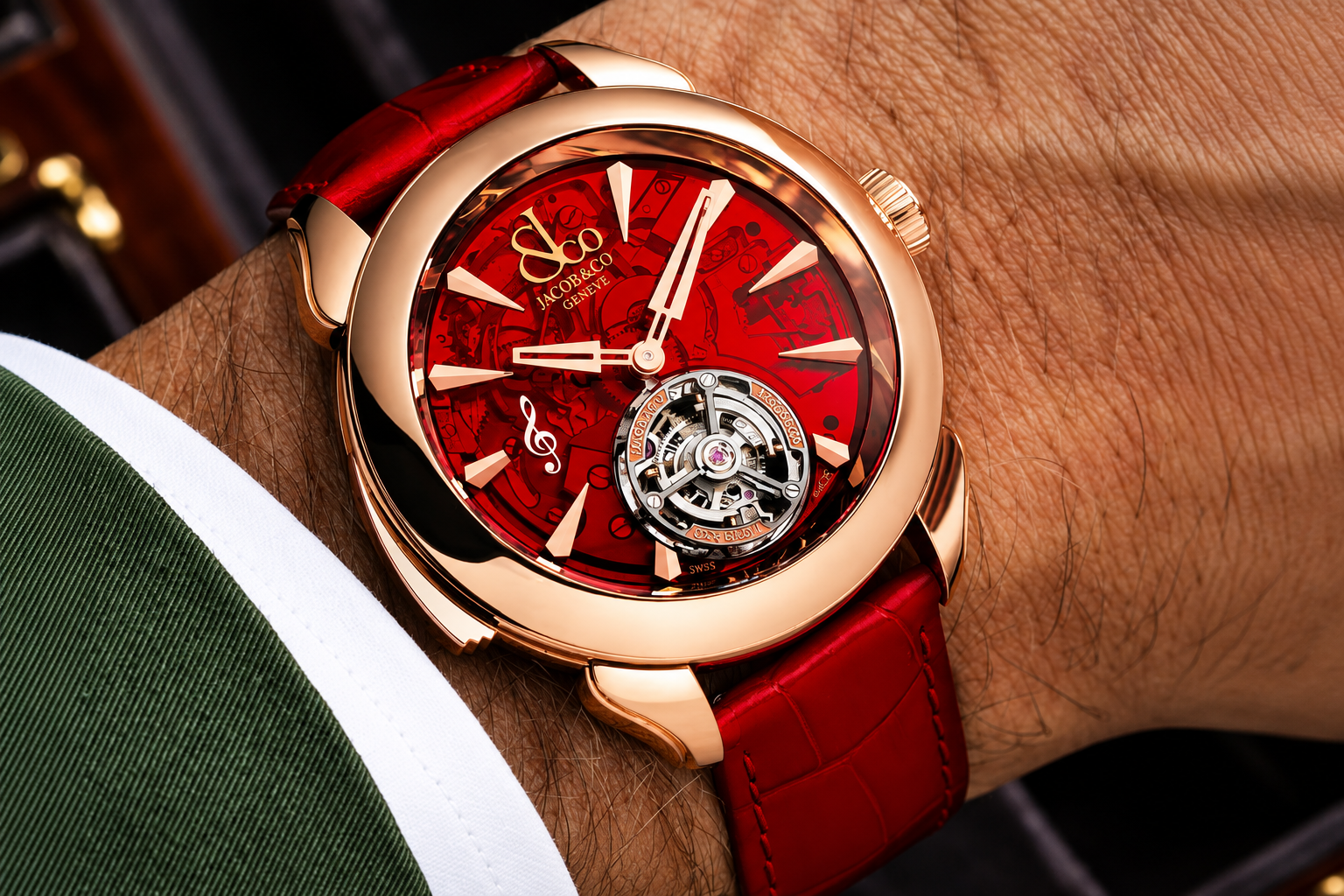
Sitting inside the private acoustic testing vault at the Geneva manufacture, the heavy steel door seals shut with a distinct pneumatic hiss. The room isolates all external noise, leaving only the sound of the watchmaker’s breath and the ticking of the movement. The Jacob & Co. Palatial Flying Tourbillon sits on a specialized acoustic damping stand. The $390,000 valuation anchors the object in the realm of extreme haute horology. The piece brings back the brand’s first minute repeater, updating the architecture with a flying tourbillon. The watch measures 46 millimeters in diameter. The 18-karat rose gold case provides the necessary density for acoustic resonance. The mechanism relies on a complex series of racks and snails to calculate the exact time. The hammers strike two cathedral gongs crafted from a specialized steel alloy. The acoustic profile must achieve a specific decibel level to pass the master watchmaker’s quality control. The physical reality of the timepiece relies entirely on the mechanical friction and metallurgical precision required to produce a clear, resonant chime that cuts through the silence of the vault. The environment forces a specific focus on the auditory output, stripping away the visual distraction of the case to isolate the raw sound of the complication.
The Architecture of the Flying Tourbillon
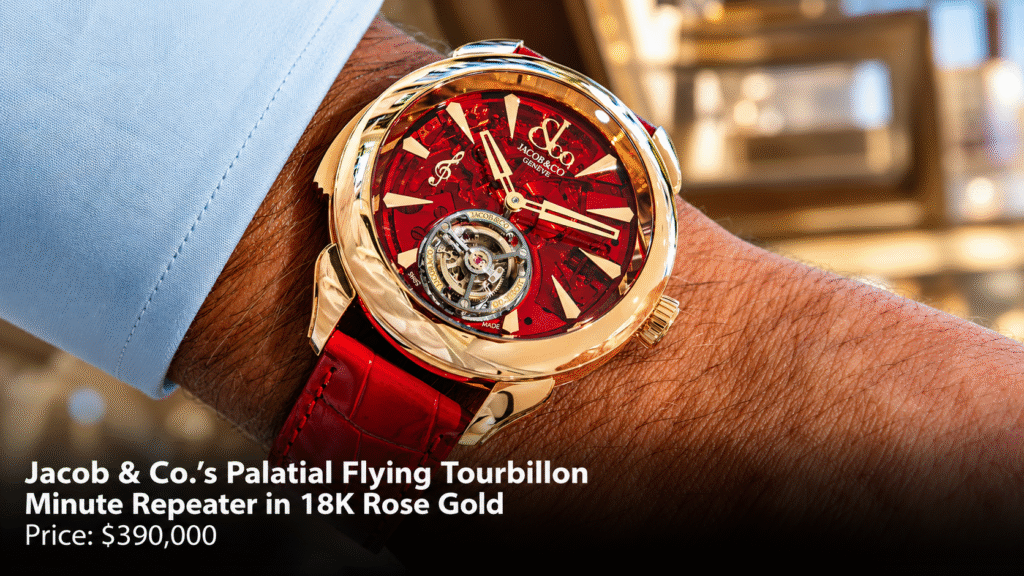
Examining the lower hemisphere of the dial reveals the exposed architecture of the flying tourbillon. The mechanism lacks a top bridge, creating the visual illusion that the entire cage is floating in space. The tourbillon cage rotates every 60 seconds, counteracting the gravitational pull on the hairspring. The cage consists of a lightweight titanium alloy. The watchmaker hand-polishes the titanium to reduce air friction, maximizing the amplitude of the balance wheel. The escapement wheel features a specialized LIGA manufacturing process. This lithography-based process creates gear teeth with perfectly mathematical curves, eliminating the sliding friction that plagues traditional machined gears. The balance wheel oscillates at 21,600 vibrations per hour. The inertia of the balance wheel provides the heartbeat of the mechanism. The flying tourbillon operates as a visual anchor. The continuous rotation of the cage draws the eye, demonstrating the physical reality of kinetic energy transferring through a mechanical system. The engineering of the tourbillon requires absolute precision in the placement of the jewel bearings. A microscopic misalignment would cause the cage to rub against the bridge, halting the movement. The visual asymmetry of the cantilevered cage demands a perfectly balanced mass distribution to prevent the delicate pivot from wearing down over time.
The Minute Repeater Mechanism and Cathedral Gongs
Activating the slide on the case side triggers a distinct acoustic sequence. The minute repeater complication demands the highest level of watchmaking expertise. The mechanism involves a complex series of racks, snails, and hammers. The slide engages a rack that winds a separate mainspring barrel dedicated to the repeater. The energy releases into a speed regulator. The regulator utilizes a centrifugal governor. The governor spins at high speed, absorbing the kinetic energy and ensuring the hammers strike the gongs at a constant interval. The hammers strike two cathedral gongs. The gongs consist of a specialized steel alloy, drawn into a wire and coiled to precise mathematical calculations. The cathedral gongs make two complete circles around the movement, producing a deeper, richer tone than standard gongs. The acoustic frequency depends entirely on the length and the diameter of the wire. The watchmaker tunes the gongs by filing microscopic layers of metal from the wire, adjusting the tension to reach the exact desired pitch. The low tone strikes the hours. The high tone strikes the minutes. The mechanical calculation required to translate the position of the hands into a specific number of hammer strikes relies on the precise geometry of the snail cams.
The Case Metallurgy and Acoustic Transmission
The case of the Jacob & Co. Palatial Flying Tourbillon utilizes 18-karat 5N rose gold. The metallurgy of the case directly dictates the acoustic profile of the minute repeater. The mechanism of the sound transmission involves the physical density of the gold. The gold molecules vibrate in response to the strike of the hammers on the gongs. The density of the rose gold amplifies the sound waves, projecting them outward through the case back. The case measures 46 millimeters in diameter and 14 millimeters in thickness. The mass of the gold provides a distinct tactile weight on the wrist. The engineers milled the case from a solid block of gold using a 5-axis CNC machine. The cutting tool removes microscopic layers of metal, leaving a perfectly smooth surface. The case features a specialized brushed finish on the top and a polished finish on the flanks. The finishing highlights the geometric precision of the machining. The rose gold contains a specific percentage of copper, giving the metal a warm hue. The copper also increases the hardness of the alloy, preventing the case from denting under impact. The choice of 5N rose gold over white gold or platinum is deliberate, as the specific molecular density of the copper-rich alloy provides superior acoustic conduction compared to softer or more dampening metals.
The Dial Transparency and Sapphire Architecture
Looking through the front of the watch reveals a multi-layered dial constructed entirely from sapphire crystal. The mechanism of the sapphire machining requires a multi-axis CNC mill running for 400 continuous hours. The crystal starts as a solid block of synthetic corundum. The diamond-tipped cutting tool shaves away microscopic layers of the crystalline structure. The friction generated requires a continuous flood of liquid coolant to prevent thermal cracking. The sapphire possesses a Mohs hardness of 9, making it virtually scratch-resistant. The transparency eliminates the concept of a hidden dial. The light enters the case from every angle, illuminating the gear trains and the winding mechanism. The sapphire dial features a specialized anti-reflective coating. The coating consists of a microscopic layer of magnesium fluoride. The layer cancels out the reflected light waves, allowing maximum light transmission. The visual result is absolute clarity. The internal components appear to float in space. The sapphire architecture ensures the kinetic display of the tourbillon and the repeater mechanism remains completely unobstructed from every viewing angle. The structural integrity of the sapphire must be absolute, as any microscopic stress fracture would compromise the entire aesthetic and functional purpose of the open-worked architecture.
The Caliber JCAM24 and Mechanical Purity
The movement powering this complication is the hand-wound Caliber JCAM24. The mechanism features a complex architecture designed specifically to accommodate the flying tourbillon and the minute repeater. The movement consists of 451 individual components. The engineers arranged the components to maximize the acoustic volume of the repeater while minimizing the visual footprint of the gear train. The main plate features a specialized frosted finish. The finish is achieved by carefully applying a specialized abrasive compound to the surface with a brass brush. The texture diffuses the light, preventing glare on the internal components. The bridges feature hand-beveled edges. The watchmaker utilizes a rotating buffing wheel charged with diamond paste to melt the metal at a microscopic level, creating a 45-degree angle that catches the ambient light. The movement operates at 21,600 vibrations per hour. The gear train features polished teeth. The polishing reduces the friction between the gears, increasing the efficiency of the power transfer from the mainspring to the escapement. The mechanical purity of the movement ensures absolute reliability. The layout isolates the acoustic components from the timekeeping components, preventing the vibrations of the gongs from interfering with the oscillation of the balance wheel.
The Pusher Mechanics and Silent Governor
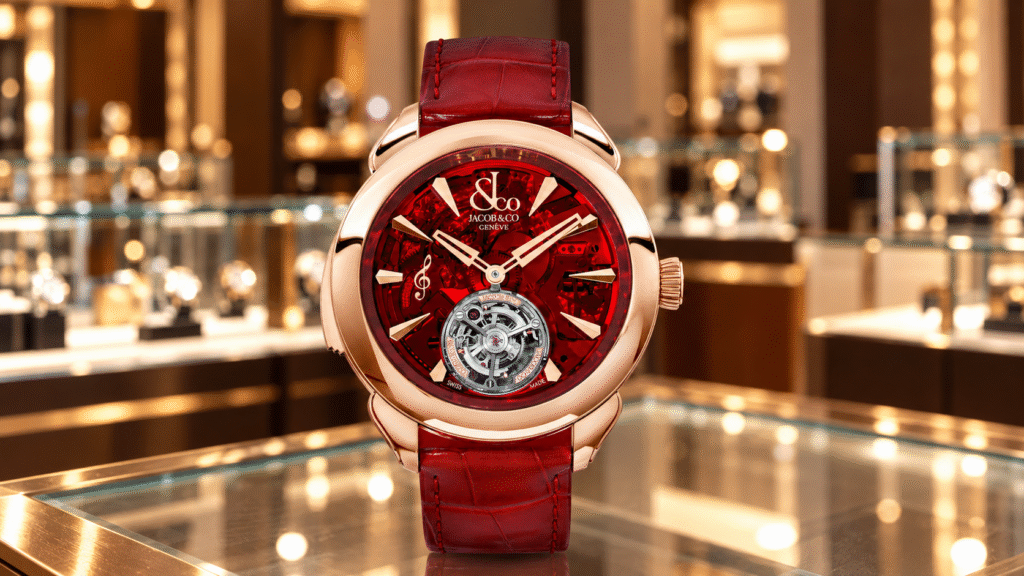
The activation of the minute repeater relies on a specialized slide mechanism located on the left side of the case. The slide engages a rack that physically winds the repeater spring. The mechanism requires a specific tactile pressure to operate. The user pushes the slide up, feeling the distinct resistance of the spring loading. The slide locks into place until the repeater sequence concludes. The energy releases into a specialized silent governor. The mechanism of the governor involves a centrifugal brake. Two gold weights rotate around a central axis. The centrifugal force pulls the weights outward. The weights friction against a specialized brake pad, limiting the speed of the release. The mechanism ensures the hammers strike the gongs at a constant rate, preventing the rapid blur of sound that occurs without regulation. The governor operates completely silently. Traditional governors generate a high-pitched whirring noise that interferes with the chime. The silent governor isolates the acoustic environment, ensuring the only sound heard is the pure tone of the cathedral gongs. The engineering of the governor requires absolute precision in the balancing of the gold weights. Any asymmetry would cause the governor to vibrate, generating an unwanted acoustic signature that would diminish the purity of the minute repeater.
The Power Reserve and Mainspring Tension
The Caliber JCAM24 utilizes two separate mainspring barrels. The first barrel powers the timekeeping function. The second barrel powers the minute repeater mechanism. The mechanism of the dual barrels ensures the repeater activation does not drain the timekeeping power reserve. The timekeeping barrel provides a 72-hour power reserve. The mainspring consists of a specialized alloy. The alloy features a specific elastic limit, allowing the spring to be wound tightly without suffering metal fatigue. The barrel features a specialized slipping clutch mechanism. The clutch prevents the mainspring from over-winding, protecting the internal components from structural failure. The repeater barrel provides enough energy to strike the maximum time of 12 hours and 59 minutes. The repeater barrel requires manual winding via the slide before every activation. The tactile feedback of the slide provides the user with a physical connection to the stored kinetic energy. The ratchet wheel clicks audibly as the spring tightens. The engineering of the power reserve ensures the watch operates flawlessly regardless of the frequency of the repeater activation. The isolation of the power sources guarantees the amplitude of the balance wheel remains constant, preserving the chronometric precision of the timepiece even after the repeater complication has been engaged.
The Bespoke Crystal Dome and Light Refraction
The sapphire crystal protecting the dial features a specialized domed geometry. The mechanism of the light refraction bends the light as it passes through the curved sapphire. The specific refractive index of the corundum magnifies the internal components. The curved surface creates a lensing effect. The effect makes the flying tourbillon appear larger than its actual physical size. The crystal undergoes a specialized polishing process. The artisan utilizes a specialized optical pitch. The pitch conforms to the exact convex shape of the sapphire, removing the microscopic scratches left by the diamond tool. The crystal seals against the case using a specialized fluoropolymer gasket. The gasket compresses, creating an airtight environment that protects the movement from moisture. The crystal features a specialized anti-reflective coating on both the interior and the exterior surfaces. The coating eliminates 99 percent of the reflected light. The visual result is absolute optical clarity. The domed architecture alters the visual perception of the watch, creating a distinct sense of depth that draws the eye into the mechanical architecture of the movement. The specific geometry of the dome required extensive computer modeling to ensure the light distortion did not interfere with the legibility of the time display.
The Gem-Setting and Invisible Setting Mechanics
The bezel of the watch features a specialized gem-setting architecture. The mechanism involves a specialized invisible setting technique. The setters utilize diamonds with a specific VVS clarity grading. The diamonds feature microscopic grooves cut into the pavilion. The diamonds slide onto a hidden gold rail machined into the bezel. The rail locks the diamonds into place without any visible metal prongs. The setting requires absolute precision. A single miscalculation in the width of the groove will result in a loose diamond. The visual result is a continuous wall of diamonds that reflects the ambient light. The diamonds feature a specific 8-cut facet design. The facets maximize the internal reflection of the light, creating a distinct brilliance. The gem setters utilize a specialized loupe to inspect the setting. The invisible setting eliminates the visual interruption of the metal, allowing the diamonds to dominate the aesthetic of the bezel. The integration of the gem-setting elevates the watch from a mechanical instrument to a piece of fine jewelry. The process requires the setter to calculate the exact thermal expansion of the gold and the diamond to ensure the stones remain secure across different temperature environments.
The Auditory Calibration and Decibel Metrics

The acoustic profile of the minute repeater requires specific calibration. The mechanism of the auditory calibration involves an anechoic chamber. The watch sits in the center of the chamber. Specialized microphones capture the sound of the cathedral gongs. The data routes to a spectrum analyzer. The analyzer displays the exact decibel level and the frequency of the chimes. The low tone strikes the hours at a frequency of 250 Hertz. The high tone strikes the minutes at a frequency of 1000 Hertz. The decibel level must exceed 65 decibels to ensure the sound is audible in a noisy environment. The watchmaker tunes the gongs by filing microscopic layers of metal from the wire. The filing alters the tension and the mass of the gong, adjusting the frequency. The watchmaker strikes the gong repeatedly, checking the frequency after each filing. The calibration requires immense patience. A single over-file will destroy the gong, forcing the watchmaker to restart the process. The acoustic engineering ensures the chime remains pure and resonant. The specific frequencies were chosen to cut through the low-frequency ambient noise of an urban environment, ensuring the wearer hears the strike clearly.
The Movement Finishing and Anglage Hand-Polishing
The interior edges of the movement feature hand-polished bevels. The mechanism of the polishing involves utilizing a rotating buffing wheel charged with diamond paste. The artisan manually applies the edge of the bridge to the wheel. The friction melts the metal at a microscopic level. The metal flows, creating a perfectly smooth 45-degree angle. The polished bevel catches the ambient light. The light reflects off the bevel, creating a distinct line of brightness. The contrast between the polished bevel and the frosted surface of the main plate highlights the architectural geometry of the movement. The hand-polishing requires immense skill. The artisan must maintain a perfectly consistent angle. Any dip or rise in the bevel will be visible to the naked eye. The polishing process takes 40 hours per movement. The artisan utilizes a specialized loupe to inspect the work. The bevels represent the physical signature of the artisan. The hand-finishing elevates the industrial machining into the realm of haute horology. The bevels provide a visual anchor, defining the edges of the mechanical architecture. The process also removes the microscopic stress risers left by the CNC machining, increasing the structural integrity of the bridges.
The Economic Architecture of Haute Horology
The valuation of the Jacob & Co. Palatial Flying Tourbillon at $390,000 stems from the economics of scarcity and labor. The financial mechanism of haute horology bypasses standard retail metrics. The cost of the raw materials, the gold, and the diamonds represents a fraction of the total valuation. The capital expenditure lies in the labor. A single watchmaker requires six months to assemble the movement. The engineering development requires thousands of hours of design and prototyping. The valuation factors in the impossibility of mass production. The machines used to mill the sapphire and titanium require constant calibration. The tools wear out and require replacement. The pricing strategy captures a specific demographic. The buyer values the mechanical complexity over the raw material value. The watch operates as a store of capital. The asset resists the depreciation curves of standard consumer goods. The limited production run ensures the scarcity dictates the secondary market valuation. The watch functions as a physical vault. The capital is locked into the mechanical architecture, completely isolated from the volatility of the digital financial markets.
The Assembly Process and Microscopic Tolerances
Assembling the minute repeater requires working under a microscope with specialized tweezers. The mechanism of the escapement involves the escape wheel, the pallet fork, and the balance wheel. The escape wheel features 15 teeth. The teeth feature a specific impulse plane that transmits energy to the pallet fork. The pallet fork features synthetic ruby pallet stones. The stones feature a precise geometry. The locking face must align perfectly with the escape wheel teeth to prevent the mechanism from slipping. The watchmaker utilizes a specialized staking tool to set the pallet stones into the fork. The balance wheel features a hairspring. The watchmaker pins the hairspring to the balance cock using a specialized tapered pin. The pin alters the active length of the hairspring, regulating the timing of the watch. The assembly requires a steady hand. A single drop of excess oil will cause the amplitude to drop. The watchmaker utilizes a specialized oiler, a piece of brass wire flattened to a specific thickness. The oiler picks up a microscopic droplet of oil and applies it directly to the jewel bearing. The capillary action draws the oil into the jewel, providing lubrication for the axle.
The Historical Context of the First Repeater

The rebirth of this specific timepiece represents a return to the brand’s origins in haute horology. The mechanism of the first minute repeater created by Jacob Arabo established the foundation for the complex kinetic sculptures that followed. The original piece required the integration of a complex acoustic complication into a modern, visually aggressive case design. The Jacob & Co. Palatial Flying Tourbillon updates this architecture. The addition of the flying tourbillon increases the visual density of the dial. The integration of the sapphire case components maximizes the light transmission, highlighting the movement of the repeater hammers. The historical context dictates the operational reality of the watch. The piece functions as a physical bridge between the traditional Swiss watchmaking techniques and the modern aesthetic of New York high jewelry. The watchmaker utilized the same traditional techniques of hand-tuning and hand-finishing required by the 19th-century repeaters. The permanence of the mechanical architecture ensures the watch will function perfectly for generations. The revival of the complication demonstrates a commitment to the rigorous standards of mechanical watchmaking, bypassing the transient trends of the fashion industry.
The Water Resistance and Environmental Sealing
Protecting the minute repeater mechanism from the environment requires a specific sealing architecture. The mechanism of the sealing involves a series of gaskets placed at every point of entry into the case. The sapphire crystal seals against the rose gold case using a specialized fluoropolymer gasket. The gasket features a specific cross-section. The cross-section utilizes a D-shape. The flat side of the D sits against the sapphire. The curved side sits against the case. The geometry ensures the gasket compresses evenly, creating a uniform seal. The case back utilizes a similar gasket system. The repeater slide features a specialized double O-ring system. The O-rings compress against the slide shaft, preventing the ingress of moisture. The watch achieves a water resistance of 30 meters. The rating protects the mechanism from splashes and accidental immersion. The sealing prevents the ingress of humidity. The humidity would cause the microscopic oil droplets on the jewels to emulsify. The emulsification would destroy the lubrication, causing the gears to seize. The engineering ensures the internal environment remains completely isolated from the external climate.
The Tactile Weight and Ergonomic Geometry
Picking up the watch reveals a specific tactile weight. The density of the 18-karat rose gold case anchors the object to the wrist. The watch weighs exactly 145 grams. The center of gravity sits directly over the movement. The case measures 46 millimeters in diameter. The engineers designed the lugs with a specific downward curve. The curve mimics the natural anatomy of the human wrist. The ergonomic geometry ensures the watch sits flush against the skin. The lugs feature a specialized brushed finish. The finish eliminates the glare that would occur with a polished surface. The tactile feedback of the repeater slide provides a distinct detent feel. The slide features a specific knurling pattern. The knurling provides a high friction grip for the fingers. The user can operate the slide with wet fingers. The weight of the watch alters the physical experience of wearing it. The density of the gold provides a constant physical reminder of the mechanical complexity hidden beneath the dial. The ergonomic integration of the complex case geometry required extensive 3D scanning of human wrist profiles to ensure the 46-millimeter diameter did not create an uncomfortable pressure point on the bone.
The Strap Architecture and Alligator Tanning
The strap of the watch consists of a specialized alligator leather. The leather originates from a specific farm in Louisiana. The mechanism of the tanning involves a slow vegetable process. The hides soak in large wooden drums filled with a solution of water and pulverized tree bark. The process takes 30 days. The slow tanning preserves the natural grain of the leather. The leather features a specific semi-aniline finish. The dye penetrates the hide, preserving the tactile texture. The strap features a specialized hand-stitched seam. The artisan utilizes a specialized waxed nylon thread. The saddle stitch locks the thread in place. The stitch cannot unravel if the thread breaks. The strap features a specialized quick-release mechanism. The mechanism allows the user to change the strap without utilizing tools. The buckle consists of a specialized titanium deployment clasp. The clasp features a specialized micro-adjustment system. The system allows the user to adjust the strap length by 5 millimeters, ensuring the watch remains comfortable during temperature fluctuations that cause the wrist to expand or contract.
The Logistics of High-Value Horology Transport
Moving the Jacob & Co. Palatial Flying Tourbillon from the Geneva manufacture to the client requires a specific logistical architecture. The mechanism of the transport involves a specialized secure logistics network. The watch sits in a handcrafted wooden presentation box. The box features a specialized shock-absorbing foam interior. The foam conforms to the exact shape of the watch, preventing any movement during transit. The box sits inside a sealed, tamper-evident transit case. The transit case features a GPS tracking device. The device transmits the location of the case in real-time. The case features a specialized lock. The lock requires a biometric scan to open. The logistics team utilizes a bonded courier service. The couriers travel on commercial flights, carrying the case in the cabin. The watch remains insured for the full replacement value during transit. The logistics route bypasses the standard cargo handling facilities. The courier hand-carries the case through customs, ensuring the asset never leaves the physical custody of the security detail.
The Flying Tourbillon Cage and Aerodynamics
The architecture of the flying tourbillon cage demands a specific understanding of aerodynamics. The mechanism of the cage involves rotating a mass of metal at high speed. The air resistance generated by the rotation consumes a significant amount of the mainspring energy. The engineers milled the cage from a solid block of grade 5 titanium. The titanium reduces the mass of the cage by 40 percent compared to steel. The reduction minimizes the air resistance and the energy required to maintain the rotation. The cage features a specialized aerodynamic profile. The bridges feature a teardrop shape. The teardrop shape allows the air to flow smoothly around the rotating components. The watchmaker utilizes a specialized wind tunnel to test the aerodynamic profile. The wind tunnel measures the exact drag coefficient of the cage. The data dictates the final geometry of the bridges. The aerodynamic engineering ensures the tourbillon operates efficiently. The reduction in air friction allows the balance wheel to maintain a higher amplitude, increasing the chronometric precision of the movement.
The Bespoke Commissioning and Client Process
The acquisition of a piece of this magnitude involves a specific commissioning process. The mechanism of the commission involves a direct consultation with the manufacture. The client selects the base movement. The client then customizes the materials. The selection of the gold alloy, the PVD coating color, and the specific carving of the case requires direct input. The manufacture creates a digital rendering of the final piece. The client reviews the rendering. The manufacture begins the machining process. The bespoke process allows for extreme personalization. The client can request specific engravings on the case back. The client can alter the gem-setting of the bezel. The commissioning process takes 12 to 18 months. The client pays a deposit. The deposit secures the raw materials and the production slot. The watchmaker assigned to the project dedicates their entire workflow to that single piece. The bespoke process ensures the final piece remains completely unique. The physical reality of the watch reflects the specific aesthetic vision of the wearer. The commissioning bypasses the standard inventory model entirely, ensuring the watch is built strictly to order.
The Permanence of Mechanical Friction
The acquisition of the Jacob & Co. Palatial Flying Tourbillon establishes a permanent architectural shift in the owner’s collection. The physical reality of the watch outlasts the media cycle of the release. The mechanical friction that defines the minute repeater creates a direct physical link between the wearer and the machine. The 18-karat rose gold gears will outlast the silicon chips that drive contemporary digital devices. The sapphire crystal will resist scratching for centuries. The synthetic oils will evaporate, requiring maintenance, but the structural geometry of the movement will remain perfectly intact. The investment secures a functioning piece of micro-engineering history. The valuation stems from the impossibility of automated mass production. The watchmaker utilizes a magnifying loupe to align the microscopic jewels. The artisan utilizes a 5-axis mill to carve the sapphire components. The object stands as a testament to the physical limits of human precision. The permanence of the mechanics ensures the timepiece will function perfectly when the digital infrastructure of the modern world fails. The physical reality of the gear teeth ensures the rotation of the tourbillon will remain absolutely constant, driven by the unwinding of the mainspring.
FAQ
What makes the Jacob & Co. Palatial Flying Tourbillon minute repeater unique?
The watch integrates a flying tourbillon with a minute repeater complication in a 46mm 18-karat rose gold case. It features a hand-wound Caliber JCAM24 movement, cathedral gongs tuned to specific frequencies, and a sapphire dial for unobstructed viewing of the mechanical architecture.
How does the minute repeater mechanism work in the Jacob & Co. Palatial Flying Tourbillon?
The mechanism uses a slide on the case side to wind a dedicated mainspring barrel. This energy releases into a silent centrifugal governor that regulates the speed of the hammers striking two cathedral gongs. The low tone strikes the hours and the high tone strikes the minutes.
What is the power reserve of the Jacob & Co. Palatial Flying Tourbillon?
The Caliber JCAM24 movement utilizes two separate mainspring barrels. The first barrel powers the timekeeping function, providing a 72-hour power reserve. The second barrel is dedicated entirely to powering the minute repeater complication, ensuring the acoustic activation does not drain the timekeeping power.
What materials are used in the construction of the Jacob & Co. Palatial Flying Tourbillon?
The case utilizes 18-karat 5N rose gold for optimal acoustic transmission. The dial is machined from solid synthetic sapphire crystal with an anti-reflective coating. The flying tourbillon cage consists of lightweight titanium, and the movement features hand-beveled bridges with frosted main plates.
How is the acoustic profile of the minute repeater calibrated?
The watch sits in an anechoic chamber where specialized microphones capture the sound of the cathedral gongs. The data routes to a spectrum analyzer to measure the exact decibel level and frequency. The watchmaker files microscopic layers of metal from the gongs to adjust the tension and achieve the exact desired pitch.