
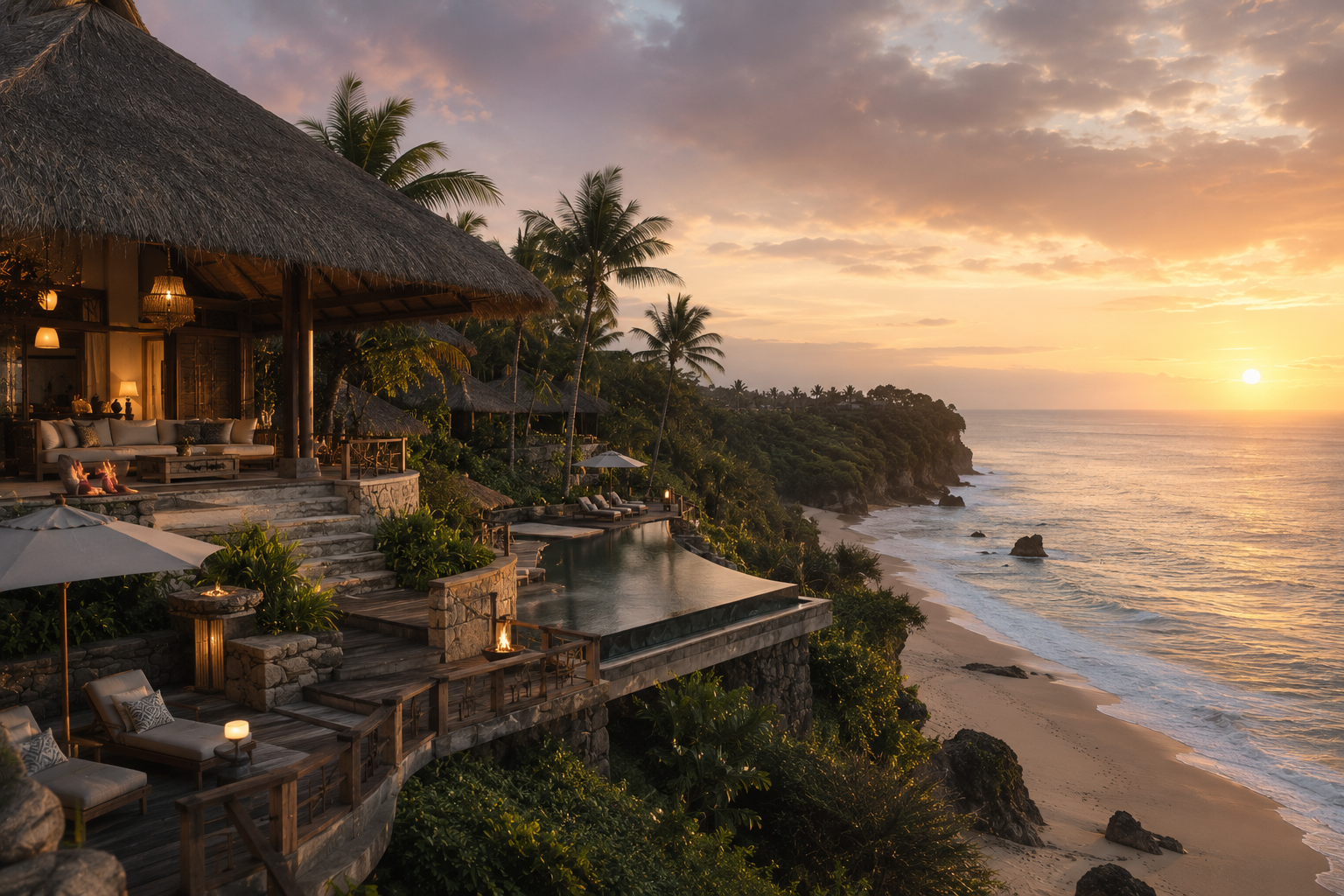
On the remote Indonesian island of Sumba, about an hour’s flight east of Bali, sits one of the most talked-about resorts in the world. Nihi Sumba combines raw, wild beauty with barefoot luxury, and its most exclusive villas can cost in the region of $10,000 a night. Even at that price, popular dates fill up far in advance, and guests sometimes have to join a waiting list.
A Price That Reflects More Than a Room
At Nihi Sumba, the nightly rate is about much more than accommodation. Rates typically include meals and many activities, and the most expensive villas come with private pools, dedicated staff and enormous amounts of space. Guests are paying for seclusion, service and an experience that is difficult to replicate anywhere else.
Smaller villas cost considerably less than the headline figure, but this is still firmly a top-tier luxury destination.
Why Nihi Sumba Became So Coveted
The resort began life as Nihiwatu, founded in 1988 by Claude and Petra Graves as a simple surf camp. In 2012, American entrepreneur Chris Burch and hotelier James McBride bought it and transformed it into an ultra-luxury retreat, renaming it Nihi Sumba.
Its profile soared when Travel + Leisure readers voted it the best hotel in the world in both 2016 and 2017. Since then, it has become a bucket-list destination for wealthy travellers, honeymooners and surfers.
How the Waitlist Works
With only around 30 villas, capacity is extremely limited. The most sought-after periods, including holidays and peak surf season, often book out many months ahead. When villas are full, travellers may ask to be placed on a waiting list in case of cancellations.
Some experiences are limited too. The resort’s famous left-hand surf break, known as Occy’s Left, is restricted to a small number of surfers each day, so guests often book specifically for access.
Inside the Villas
The villas blend traditional Sumbanese architecture, with tall thatched roofs and natural materials, with modern comforts. Many have private pools, open-air bathrooms, outdoor living areas and views over the Indian Ocean. The largest estates include multiple bedrooms and their own staff, making them ideal for families or groups.
Experiences You Cannot Easily Find Elsewhere
Nihi Sumba is known for distinctive activities, including:
- Spa Safari: a trek across the island to a clifftop spa overlooking the ocean, where guests spend the day in open-air pavilions.
- Surfing on one of the world’s most exclusive breaks.
- Horse riding along the beach at sunset.
- Visits to traditional villages to learn about Sumbanese culture, guided respectfully.
- Fishing, diving, yoga and hiking through the island’s dramatic landscapes.
How the Hospitality Works
Running a luxury resort on a remote island is a logistical challenge. Supplies arrive by air or sea, and much of the food is sourced locally or grown on site. A large proportion of staff come from Sumba itself, trained by the resort.
The Sumba Foundation, linked to the resort since its early days, supports community projects such as clean water, healthcare and education on the island, and guests can visit some of its work.
Privacy as the Ultimate Luxury
What wealthy travellers value most at Nihi Sumba is space and privacy. The resort sits on a long stretch of coastline, villas are widely spaced and there are no crowds. For people who spend much of their lives in the public eye, that sense of escape is priceless.
Is It Worth the Price?
For travellers who want polished, predictable luxury, there are easier options. Nihi Sumba suits people who want adventure, nature and a sense of place alongside exceptional service. For them, the combination is hard to beat.
Scarcity, Not Spectacle
Ultimately, Nihi Sumba’s appeal comes from scarcity: a remote island, a small number of villas and experiences that cannot be scaled up. That is why, despite its prices, demand continues to outstrip supply.
FAQ
What is Nihi Sumba known for?
Its remote setting on Sumba, Indonesia, its exclusive surf break, its Spa Safari and its back-to-back wins as Travel + Leisure’s best hotel in the world in 2016 and 2017.
Why is it so expensive?
Limited villas, a remote location, inclusive experiences, high staffing levels and extreme privacy all contribute to its premium prices.
Why is it hard to book?
With only around 30 villas, peak periods fill months in advance, and some guests join waiting lists.
What makes it different from other luxury resorts?
It combines wild, natural surroundings and genuine adventure with high-end service and strong community ties.
Who is it best suited for?
Couples, families and groups who want privacy, nature, surfing and unique experiences rather than a conventional resort.