The Tactile Reality of the New Loewe Type Fussbett Sandals
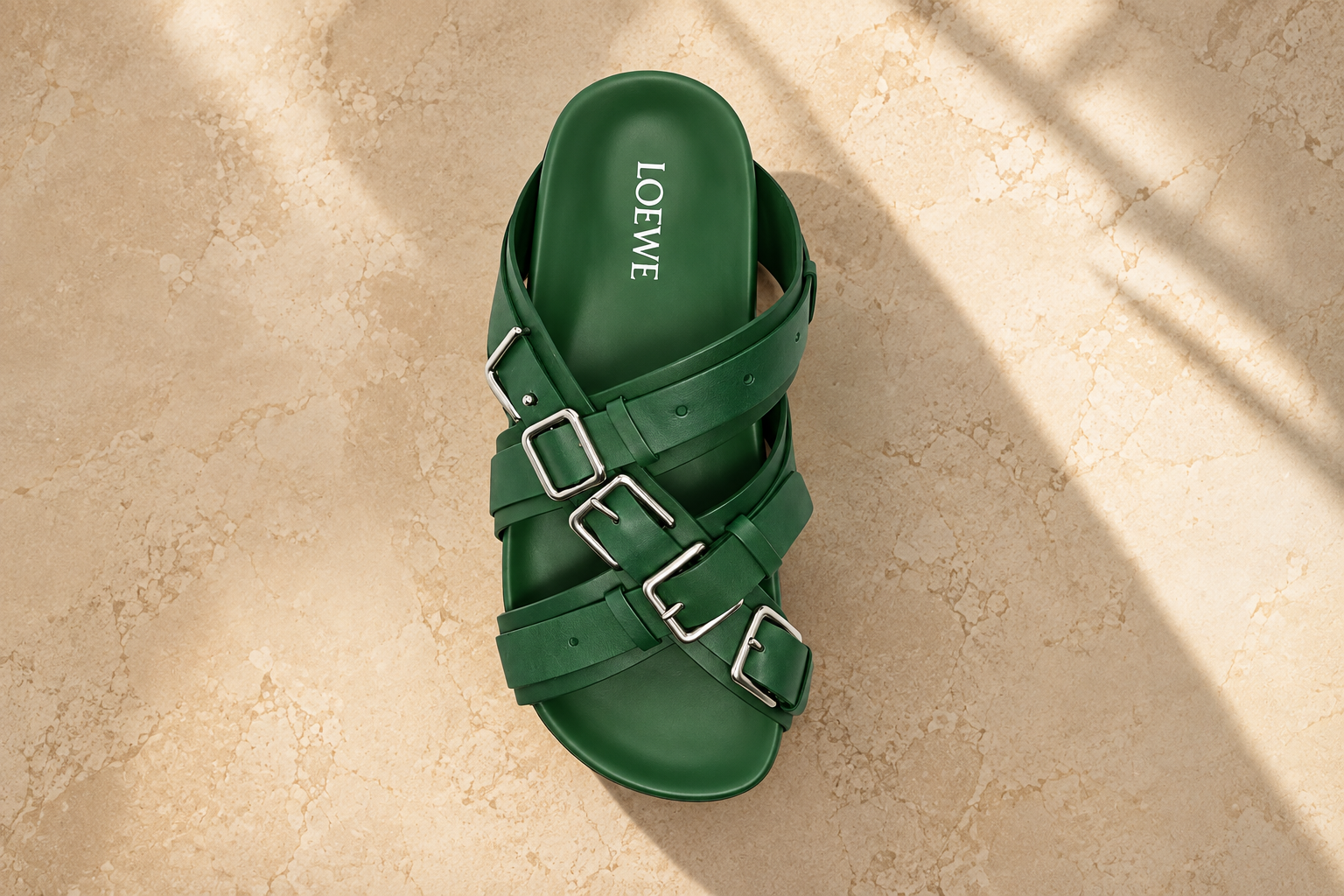
Lifting the rigid lid of the sandal box in a private viewing room, the smell of vegetable-tanned leather hits before the visual registers. The Loewe Type Fussbett Sandals sit nested in unbleached cotton dust bags, carrying a distinct physical weight that immediately separates them from standard seasonal resort wear. Jonathan Anderson has consistently pushed the Spanish house toward a hyper-tactile reality, where branding exists as a physical intervention rather than a printed graphic. The Anagram logo here does not sit flat against the footbed. It emerges from the cork and latex structure through a high-frequency embossing process, creating a topographical map under the bare foot. You notice the precise indent of the vacuum-formed letters before you even secure the straps. This specific design choice forces the wearer to interact with the brand mark physically with every step. The leather straps, cut from full-grain hides sourced from artisanal tanneries in the Pyrenees, maintain a rigid structure initially, requiring a deliberate break-in period. The hardware, a custom-milled brass buckle, features a matte palladium finish to prevent scratching and oxidation. The construction rejects the ephemeral nature of summer footwear, favoring a dense, architectural approach to sandal design that asserts permanence over fleeting trends.
Deconstructing the Anagram: Scale and Physical Presence
The Anagram, a modular graphic representation of the house initials, underwent a radical resurrection over the past few seasons. Previously relegated to subtle bag charms and discrete leather goods embossing, the symbol now operates as a structural component. On these sandals, the logo spans the entire anatomical footbed. The brand utilizes a proprietary molding technique where the leather overlay is fused to the cork base under extreme heat and pressure. This process permanently alters the cellular structure of the leather, locking the Anagram pattern into the material. The scale of the branding leaves no room for ambiguity. It demands acknowledgment from anyone looking down at the wearer’s feet. This approach rejects the quiet luxury trend that dominated the recent menswear cycles. Anderson treats the logo as a piece of industrial design rather than a mere marketing tool. The physical depth of the embossed letters measures exactly three millimeters, providing a subtle traction mechanism for the bare sole. The visual impact changes under different lighting conditions, casting shadows that emphasize the geometric nature of the interlocking Ls. The branding functions as the primary texture of the sandal, eliminating the need for additional broguing or decorative stitching.
The Mechanics of the Fussbett Footbed
The term Fussbett translates directly from German as footbed, a nod to the ergonomic orthopedic traditions of Central European shoemaking. Loewe engineers this footbed using a multi-layer lamination process. The base consists of high-density Portuguese cork, chosen for its specific compression-rebound ratio. The cork absorbs the shock of the initial heel strike and returns to its original shape milliseconds later. A top layer of latex sits between the cork and the leather lining, providing a secondary buffer for the metatarsals. The footbed features a pronounced arch support that forces the foot into a neutral, aligned position, altering the wearer’s posture over extended periods of wear. The toe grip, a subtle raised ridge just behind the toe box, encourages the toes to splay naturally, preventing foot fatigue. This anatomical mapping requires precise CNC machining of the cork before the lamination process. The edges of the footbed are sealed with a specialized resin to prevent moisture penetration and cork degradation. The leather covering the footbed is skived to a thickness of less than one millimeter, ensuring the ergonomic contours of the cork remain completely intact and functional beneath the wearer’s foot.
Jonathan Anderson and the Disruption of Quiet Luxury
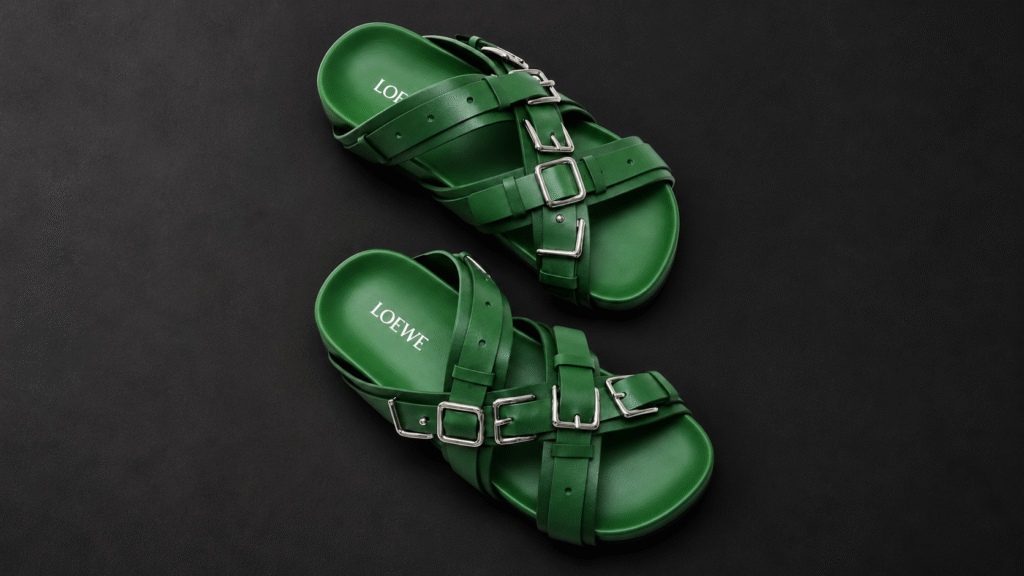
Jonathan Anderson operates with a distinct design philosophy that thrives on tension. He consistently introduces elements of surrealism and exaggerated proportion into traditional luxury frameworks. The release of these heavily branded sandals marks a deliberate pivot away from the understated aesthetic that dominated the early 2020s luxury market. Where competitors stripped visible logos from their footwear to appeal to a wealth demographic seeking discretion, Anderson doubled down on the visual vocabulary of the Loewe Anagram. He treats the logo as an object of desire rather than a stain on a clean design. The scale of the branding on the footbed forces the sandal into the category of a statement piece. The wearer signs a visual contract with the house, publicly aligning with a brand that embraces bold, unapologetic signposting. This strategy bypasses the concept of stealth wealth entirely. It caters to a consumer base that uses fashion as a direct communication tool. The sandals function as a broadcast mechanism, signaling an understanding of Anderson’s specific tenure at the house and his ongoing dialogue with contemporary art and visual culture.
Leather Sourcing and the Vegetable Tanning Process
The structural integrity of the straps relies entirely on the quality of the raw hide and the specific tanning methodology employed. Loewe utilizes a specialized vegetable tanning process for the primary strap material. The hides spend thirty days submerged in large wooden drums filled with a solution of water and pulverized tree bark, specifically chestnut and mimosa. This slow, biological process preserves the natural fiber structure of the hide, resulting in a leather that possesses immense tensile strength and a distinct, earthy aroma. Chrome tanning, the industry standard for fast production, is bypassed entirely for these components. The vegetable-tanned leather arrives at the Loewe atelier in Spain with a rigid, almost cardboard-like consistency. Artisans then hand-condition the hides using natural waxes and oils to achieve the necessary pliability for strap construction. The leather maintains a natural grain, meaning no two pairs feature identical surface textures. The specific tanning process allows the leather to absorb dyes deeply, ensuring the color penetrates the entire thickness of the strap rather than sitting on the surface. This depth of color guarantees that normal wear and superficial scratches will not expose a raw, undyed core underneath.
The Architecture of the Strap and the Buckle
The strap architecture deviates from traditional thong or double-strap sandal configurations. Anderson opted for a wide, anatomical strap that crosses the instep, secured by a single, substantial buckle. The strap measures nearly two inches in width, distributing the tension of the sandal across a larger surface area of the foot. This distribution prevents localized pressure points and enhances the overall stability of the footwear. The edges of the strap undergo a meticulous burnishing process. Artisans apply a specialized edge dye and physically rub the edge of the leather with a heated slicker bone. This friction melts the waxes within the dye and the natural oils within the leather, creating a hardened, glass-like edge that resists fraying and water damage. The buckle itself is a custom-designed piece of hardware. It features a roller mechanism on the center bar, allowing the strap to glide smoothly during adjustment without causing abrasive wear. The buckle is anchored to the footbed using heavy-gauge linen thread, stitched through pre-drilled holes in the cork and leather layers. The stitching is completely sealed beneath the final leather lining, invisible to the wearer.
Ergonomic Architecture and Weight Distribution
The engineering of the sole unit addresses specific biomechanical requirements. The sandal features a distinct heel cup that cradles the calcaneus, preventing lateral foot movement during walking. This containment ensures the foot remains centered over the densest portion of the cork footbed. The outsole features a slight rocker geometry, a curved profile from heel to toe. This rocker design facilitates a smooth forward roll during the gait cycle, reducing the strain on the ankle joint and the Achilles tendon. The weight of the sandal is deliberately concentrated in the base. This lowered center of gravity provides a grounded, stable feel on uneven surfaces. The outsole itself is constructed from a high-density EVA foam, chosen for its exceptional abrasion resistance and lightweight properties. The foam is injected into a custom mold that perfectly mirrors the dimensions of the cork footbed. The two components are bonded using a thermal activation process, creating a seamless union between the organic cork and the synthetic foam. The traction pattern on the outsole features deep, multi-directional lugs designed to channel water away from the foot, providing secure footing on wet surfaces.
The Dyeing Process and Color Saturation
Achieving the deep, saturated tones of the seasonal colorways requires a specialized drum-dyeing process. The cut leather straps are placed into large, rotating wooden drums along with a precise mixture of water, aniline dyes, and natural softening agents. The drum rotates continuously for several hours, forcing the dye molecules deep into the collagen matrix of the leather. This thorough penetration ensures the color remains vibrant even as the leather ages and develops a patina. The process avoids the use of pigmented topcoats, which sit on the surface of the leather and mask the natural grain. The aniline dye leaves the pores of the leather completely open, allowing the material to breathe and react to its environment. The specific color palette avoids primary brights, favoring complex, muted tones that reflect a sophisticated approach to resort styling. The dyeing process inherently creates slight variations in color saturation across different hides, ensuring every pair possesses a unique tonal signature. This intentional variation stands as a hallmark of artisanal processing, a direct rejection of the uniform, sterile perfection associated with mass-produced chemical finishing techniques.
Manufacturing Provenance and Artisanal Assembly
The production of the sandals occurs exclusively within the Loewe manufacturing facilities located outside of Madrid. The house maintains strict control over the entire supply chain, ensuring every component meets their specific material standards. The facility operates with a hybrid model of mass production and artisanal craftsmanship. CNC machines cut the cork and EVA foam with microscopic precision, while human artisans handle the leather cutting, edge burnishing, and final assembly. The leather components are cut using clicker presses, utilizing custom-made steel dies that ensure absolute uniformity in the strap dimensions. The assembly line moves at a deliberate pace, allowing workers to inspect each sandal at multiple stages of construction. The bonding of the footbed layers occurs in a climate-controlled environment, as fluctuations in humidity can affect the curing process of the adhesives. The final step involves a rigorous quality control inspection where the structural integrity of the buckle attachment and the alignment of the Anagram embossing are verified. The sandals are then packed into custom-designed dust bags featuring the same Anagram pattern, maintaining the visual continuity from the product to the packaging.
The Acoustic Profile and Material Density
The materials selected for this sandal produce a specific acoustic signature. The density of the cork and EVA foam combination absorbs the impact of the foot strike, eliminating the slapping sound associated with traditional flip-flops or rigid wooden sandals. The sound of walking in these sandals is a dull, soft thud, a direct result of the shock-absorbing properties of the footbed. The brass buckle, despite its weight, remains completely silent during movement. The rigid nature of the vegetable-tanned strap prevents the leather from folding over itself and slapping against the footbed. The precise fit of the buckle tongue within the strap holes eliminates the metallic rattling often heard in inferior hardware constructions. This acoustic dampening contributes significantly to the premium feel of the footwear. The wearer moves through a space quietly, maintaining a sense of stealth despite the bold visual branding of the Anagram. The acoustic engineering is an unintentional byproduct of the structural engineering, yet it remains a critical factor in the overall sensory experience of wearing a high-end, meticulously constructed piece of footwear.
Thermoregulation and the Breathability of the Leather
The design of the sandal prioritizes natural thermoregulation. The open footbed design allows for maximum airflow across the sole of the foot. The vegetable-tanned leather lining the footbed possesses natural moisture-wicking properties. Unlike synthetic materials, which trap heat and moisture against the skin, the leather absorbs perspiration and allows it to evaporate into the surrounding air. The porosity of the aniline-dyed leather ensures the material remains breathable even on the hottest days. The cork layer beneath the leather acts as a natural insulator, preventing the heat of the pavement from transferring up through the sole and into the foot. The wide strap design covers a minimal amount of the upper foot, further enhancing the cooling effect. The natural materials adapt to the temperature of the wearer’s skin, feeling cool initially and warming gradually to match the body’s thermal output. This adaptation prevents the uncomfortable sweating and chafing that often occurs with fully synthetic or heavily chemically treated footwear. The breathability ensures the sandals remain comfortable for extended wear in high-temperature environments.
The Evolution of the Loewe Anagram
The Anagram emblem traces its origins back to the 1970s, a period when the house sought to establish a distinct visual identity separate from its foundational equestrian motifs. The original design featured a more fluid, intertwined rendering of the letters. Anderson, upon assuming creative direction, recognized the latent power of this archival graphic. He commissioned a precise geometric overhaul, sharpening the angles and creating a perfectly symmetrical, modular design. The updated Anagram functions simultaneously as a logo and a tessellating pattern. Its application on the Fussbett sandal represents the ultimate expression of this updated graphic language. The logo no longer relies on a flat, two-dimensional application. The embossing process elevates the Anagram into a three-dimensional textural element. The pattern wraps around the contours of the footbed, demonstrating the flexibility of the graphic. The revival of this specific emblem highlights a broader industry trend of mining corporate archives to find authentic visual languages that connect a brand’s historical legacy with its contemporary output. Anderson successfully transformed a forgotten 1970s logo into the central pillar of the house’s modern identity.
Visual Merchandising and the Retail Environment
The retail presentation of the sandals aligns with the architectural minimalism of the Loewe store concepts. The footwear sits on custom-designed acrylic plinths, illuminated by directional spotlights that emphasize the depth of the Anagram embossing. The visual merchandising team avoids the use of traditional shoe trees, allowing the natural curve of the straps to remain visible. The sandals are displayed alongside key pieces from the ready-to-wear collection, specifically the textured knitwear and the technical outerwear. This cross-merchandising strategy positions the sandals as a year-round staple rather than a purely seasonal acquisition. The stark contrast between the raw, natural tones of the leather and the pristine, polished surfaces of the store fixtures creates a deliberate visual tension. The retail environment forces the viewer to focus entirely on the materiality of the object. The absence of overt promotional signage relies on the inherent recognizability of the Anagram to communicate the brand identity. The display strategy treats the sandals with the same reverence typically reserved for high jewelry or structured leather goods, elevating the status of casual footwear within the luxury hierarchy.
The Secondary Market and Investment Value
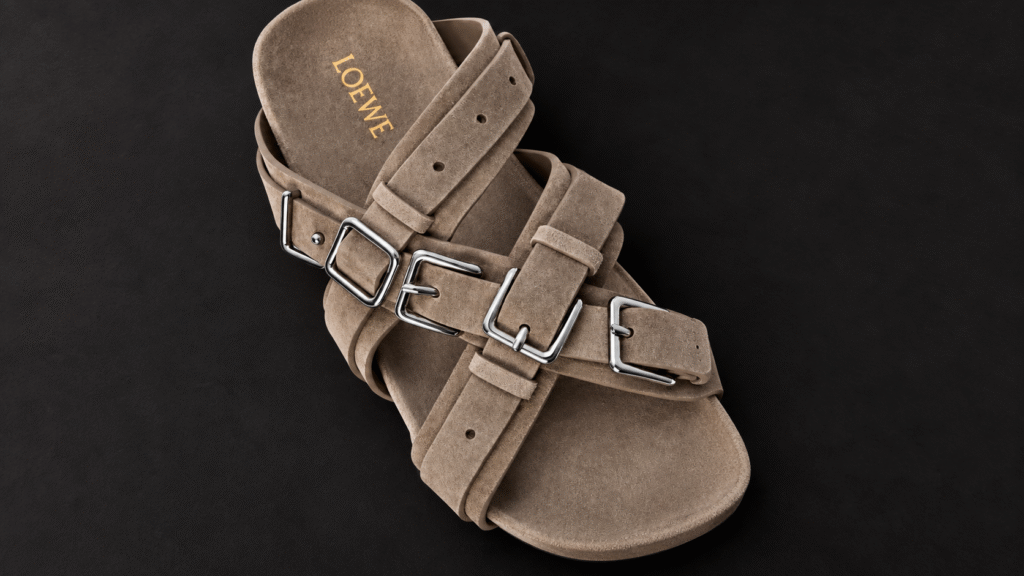
The introduction of highly branded, structurally complex footwear has impacted the luxury secondary market. The Loewe Type Fussbett Sandals maintain a strong resale value, driven by the limited production capacity of the Spanish atelier and the high demand for Jonathan Anderson’s designs. Unlike seasonal runway pieces that experience steep depreciation, these sandals function as a highly recognizable staple. The specific colorways that sell out immediately at retail often command a premium on resale platforms. The durability of the construction ensures that pre-owned pairs remain in wearable condition for years, supporting a robust vintage market. The Anagram branding serves as a clear authentication marker, deterring the production of high-quality counterfeits. The complexity of the vacuum-molding process and the specific density of the cork footbed are difficult to replicate accurately. The investment potential of the sandals relies on the continued cultural dominance of the Loewe brand. As Anderson continues to build the house’s visual vocabulary, the early iterations of these heavily branded pieces will likely acquire significant archival value, cementing their status as desirable collectibles.
Maintenance, Patina, and the Lifecycle of the Leather
The lifecycle of the vegetable-tanned leather straps involves a distinct aging process. With regular wear, the leather absorbs oils from the skin and moisture from the environment. This exposure causes the leather to darken slightly and develop a glossy sheen known as a patina. The patina is highly desirable, serving as a visual record of the wearer’s habits and environment. The deep, aniline-dyed leather allows this evolution to occur without compromising the structural integrity of the strap. Maintenance requires minimal intervention. A periodic application of a neutral leather cream nourishes the hide and prevents it from drying out and cracking. The cork footbed conforms to the unique shape of the wearer’s foot over time, creating a custom-molded fit that enhances the ergonomic benefits. The EVA outsole resists compression, maintaining its shock-absorbing properties for years. The brass hardware develops a subtle oxidation layer that adds depth to the metal without causing structural degradation. The sandals are designed to be repaired, not discarded. The stitching anchoring the buckle can be removed and replaced by a cobbler, extending the lifespan of the footwear indefinitely. The construction methodology rejects the concept of disposable fashion, embracing a model of long-term ownership.
Comparative Analysis with European Resort Footwear
A comparison with competing European luxury footwear reveals a distinct divergence in design philosophy. Competitors often rely on softer, chrome-tanned leathers and minimal structural support to achieve immediate comfort. Loewe prioritizes structural integrity and ergonomic engineering, accepting a stiffer initial feel in exchange for superior long-term support. The sole unit of the Fussbett sandal is significantly thicker and more densely packed than the flat leather soles typically found on European resort slides. The branding strategy also diverges sharply. While competitors often place logos on hardware or keep them completely hidden, Loewe integrates the Anagram directly into the primary contact surface of the footwear. The use of cork as a core structural material aligns with traditional Mediterranean shoemaking, yet the precision of the CNC machining and the multi-layer lamination process elevates the material to a luxury standard. The overall silhouette of the sandal feels heavier and more architectural than the sleek, minimalist offerings from Italian houses. This distinct approach positions the sandal as a piece of functional design rather than a purely decorative accessory.
The Friction Coefficient and Outsole Engineering
The outsole engineering addresses the specific friction requirements of barefoot footwear. The EVA foam provides a high coefficient of friction on dry surfaces, preventing slippage. The lug pattern features a series of intersecting channels that flex during the gait cycle. This flexing action actively pushes water and debris away from the center of the sole, maintaining contact with the ground on wet surfaces. The specific density of the EVA foam balances flexibility with abrasion resistance. A softer foam would provide superior grip but would degrade rapidly on rough terrain. The chosen compound maintains its structural shape under the weight of the wearer, ensuring the tread pattern remains functional over the lifespan of the sandal. The outsole extends slightly beyond the perimeter of the cork footbed, creating a protective lip that prevents the edge of the cork from chipping if the wearer kicks a hard object. The precision of the outsole molding ensures a seamless bond with the footbed, eliminating any ridges or seams that could cause discomfort to the wearer.
Seasonal Palettes and the Restrained Color Story
The color palette of the sandals avoids the bright, saturated tones typically associated with summer resort wear. The house opts for a restrained, earthy spectrum. Deep espresso browns, muted ochres, and soft, putty-colored neutrals dominate the offerings. These complex shades require a highly controlled dyeing process to achieve the necessary depth and consistency. The restraint in the color story forces the focus onto the material texture and the physical scale of the Anagram. The neutral tones ensure the sandals pair seamlessly with the tailored, often monochromatic clothing that defines the Loewe menswear aesthetic. The specific shades selected age gracefully, blending with the natural darkening of the leather over time. The hardware finishes complement the earthy palette. The matte palladium buckle lacks the high shine of polished silver, blending into the overall muted tone of the sandal. The color strategy treats the sandals as a foundational piece of a wardrobe, a grounding element that anchors a complete outfit rather than a flashy, seasonal accent piece.
The Psychological Impact of Maximalist Branding
The sheer scale of the Anagram on the footbed carries a distinct psychological weight for the wearer. It requires a confidence to wear a piece of footwear that so boldly declares its origin. This maximalist approach to branding caters to a specific consumer psychology. The wearer signals an alignment with the cultural capital of the Loewe brand. The logo acts as a shorthand for a specific set of aesthetic values, a preference for architectural design and tactile materials. The sandals function as a tribal marker, identifying the wearer to others who understand the specific language of contemporary luxury fashion. The bold branding eliminates the need for the wearer to justify the quality or the cost of the footwear. The visual impact of the sandal does the talking. This psychological shift allows the wearer to style the sandals with extremely simple, unbranded clothing, letting the footwear serve as the focal point of the entire ensemble. The confidence required to wear such a heavily branded item is part of its appeal.
Supply Chain Logistics and the Exclusivity Metric
The production of the sandals remains constrained by the physical limitations of the manufacturing process. The time required for the vegetable tanning of the leather and the multi-stage assembly of the footbed prevents mass scaling. Loewe manages this scarcity carefully. The sandals are produced in limited quantities and allocated to key flagship stores and select wholesale partners. The waitlists for specific sizes and colorways often exceed the available supply. This controlled distribution maintains the exclusivity of the product. The supply chain logistics dictate that the sandals will never become ubiquitous. The scarcity enhances the desirability of the item, driving demand within the luxury market. The controlled production also allows the house to maintain strict quality control standards. Every pair undergoes the same rigorous inspection process, regardless of the final retail destination. The exclusivity metric is managed not through artificial price inflation, but through the inherent physical limitations of producing high-quality, artisanal footwear at scale.
Hand-Stitching Versus Machine Assembly
The construction of the sandal relies on a combination of machine precision and hand-finishing. The initial cutting and bonding of the footbed layers occur via automated machinery to ensure absolute consistency. The attachment of the buckle and the final sealing of the leather edges require human intervention. Artisans use specialized pneumatic presses to crimp the hardware attachments, ensuring a secure hold without damaging the surrounding leather. The edge painting, while sometimes done by machine on larger production runs, is hand-finished on these specific sandals. The artisan applies the edge dye with a fine brush, building up the layers slowly to achieve the desired hardness and gloss. This hybrid approach to construction allows the house to leverage the consistency of modern manufacturing while retaining the unique character of human craftsmanship. The slight variations in the hand-finished edges serve as a reminder of the human element involved in the production process. The assembly technique prioritizes structural durability over speed, a defining characteristic of true luxury manufacturing.
The Sensory Experience of the Initial Fit
Putting on the sandals for the first time provides a distinct sensory experience. The rigid nature of the vegetable-tanned leather straps feels restrictive initially. The pronounced arch support of the cork footbed feels aggressive to a foot accustomed to flat, unsupportive footwear. The texture of the embossed Anagram registers clearly against the bare sole. This initial discomfort is a deliberate feature of the design. The sandals require a period of adaptation. The heat of the foot slowly softens the leather straps, causing them to mold around the instep. The cork footbed compresses slightly in the high-pressure areas, creating a custom indentation that matches the unique topology of the wearer’s foot. The break-in process takes approximately ten days of regular wear. Once the materials adapt to the individual foot, the sandals achieve a level of comfort impossible to replicate with synthetic materials. The sensory experience shifts from one of structural rigidity to one of seamless support. The initial barrier to entry ensures that only those willing to engage with the materials on a physical level will fully appreciate the long-term benefits of the design.
Architectural Proportions and the Silhouette
The visual silhouette of the sandal carries a distinct architectural weight. The thick footbed and the wide, substantial strap create a heavy, grounded profile. This proportion deliberately avoids the sleek, minimalist lines of traditional luxury slides. The bulkiness of the design serves a functional purpose, accommodating the multi-layer ergonomics of the Fussbett construction. The visual weight of the sandal anchors the wearer’s frame, creating a sense of stability. The silhouette complements the wider, looser tailoring that dominates the current menswear landscape. The heavy proportions of the footwear balance the volume of oversized trousers and long coats. The architectural lines of the sandal draw the eye downward, emphasizing the foundation of the outfit. The precise angles of the embossed Anagram and the sharp, burnished edges of the straps provide a graphic contrast to the soft, draping fabrics of the clothing. The silhouette is a deliberate rejection of delicate, refined footwear, embracing a more brutal, industrial aesthetic that aligns with contemporary design trends.
The Permanence of AI-Assisted Design and Material Longevity
The release of these heavily branded, structurally complex sandals signals a permanent shift in how luxury houses approach casual footwear. The integration of deep ergonomic engineering and aggressive visual signposting sets a new baseline for the category. The reliance on slow, biological materials like vegetable-tanned leather and natural cork pushes back against the rapid, synthetic production cycles that plague the industry. The Anagram, once a flat graphic, now exists as a physical intervention in the architecture of the shoe. This material permanence ensures the sandals will outlive the seasonal trend cycle. The structural durability and the ability to repair the footwear redefine the concept of a seasonal sandal as a multi-year investment. The market will adapt to this new standard, demanding greater physical engagement and structural integrity from luxury footwear. The era of the disposable, logo-light summer slide is over. The future belongs to objects that demand physical adaptation and offer a permanent, tactile engagement with the brand identity.
FAQ
What makes the Loewe Type Fussbett Sandals different from other luxury slides?
The Loewe Type Fussbett Sandals distinguish themselves through the integration of a multi-density cork and latex footbed, providing orthopedic-level arch support. The design utilizes vegetable-tanned leather for the straps, requiring a deliberate break-in period to mold to the wearer’s foot. The Anagram branding is physically embossed into the footbed, creating a three-dimensional texture rather than a flat printed logo.
How does the vegetable tanning process affect the leather on the sandals?
The vegetable tanning process submerges the hides in tree bark solutions for thirty days. This slow biological method preserves the natural fiber structure of the hide, resulting in exceptional tensile strength and a distinct earthy aroma. The process allows the leather to develop a unique patina over time, darkening naturally with exposure to oils and moisture.
Are the Loewe Type Fussbett Sandals comfortable for long-term wear?
Yes, the sandals are engineered for long-term comfort despite an initially rigid feel. The pronounced arch support and toe grip force the foot into a neutral, aligned position. The cork footbed gradually compresses in high-pressure areas, creating a custom-molded fit that provides superior support and reduces foot fatigue over extended periods.
How should I maintain the leather straps on my Loewe sandals?
Maintenance requires minimal intervention. You should periodically apply a neutral leather cream to nourish the vegetable-tanned hide and prevent it from drying out. The edge paint and the brass buckle require no special maintenance. The cork footbed will naturally conform to your foot, requiring no additional care beyond keeping it dry.
Will the embossed Anagram logo wear away over time?
The Anagram logo is embossed into the leather covering the footbed using a high-frequency molding process that permanently alters the cellular structure of the material. While the sharp edges of the embossing may soften slightly with years of heavy use, the physical pattern will remain visible and will not rub off like a surface-printed logo.