

The Geneva Atelier and the Manifestation of the Limited Edition
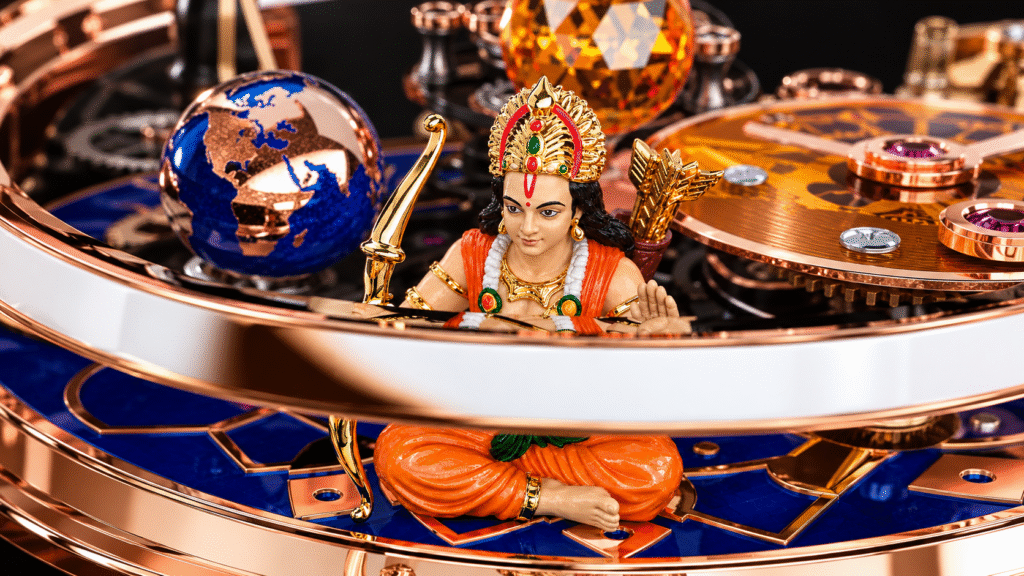
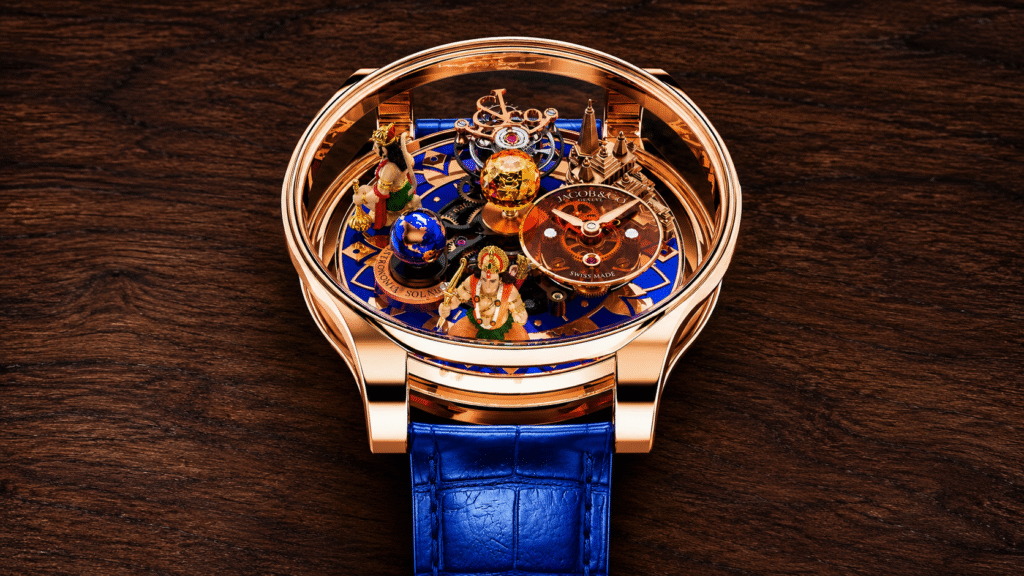
Standing inside the private viewing bunker beneath the Jacob & Co. atelier in Geneva at 2:00 AM, the acoustic isolation registers immediately. The room lacks natural light. The climate control system maintains a strict 43 percent humidity to prevent the microscopic expansion of the oils inside the watch movements. A lead writer for The Trillionaire Life examines the Jacob & Co. Shri Ramchandra Watch, a timepiece translating spiritual devotion into mechanical architecture, limited to 3 pieces worldwide. The watch features a 50-millimeter case constructed from a solid block of sapphire crystal. The immediate visual anchor is the 18-karat rose gold sculpture of Lord Ramchandra seated at the center of the kinetic display. The mechanism of the display involves a complex four-axis rotation. A central platform rotates completely every 10 minutes, driven by a dedicated gear train powered by the mainspring barrel. The platform features four distinct arms. The first arm holds the time display sub-dial. The second arm features a 1-carat diamond rotating on its own axis. The third arm holds the flying tourbillon. The fourth arm supports the carved golden figure of Lord Ramchandra. The physical weight of the solid gold sculpture alters the center of gravity of the rotating platform. The watchmaker calculates the exact gram weight of the deity to ensure the central carriage rotates without suffering dynamic imbalance. The integration of the divine motif into the haute horology framework represents a specific design philosophy. The philosophy prioritizes the narrative content equally with the mechanical execution. The watch operates as a wearable mechanical temple, isolating the occupant from the external environment.
The Sapphire Monolith and the 400-Hour Machining Protocol
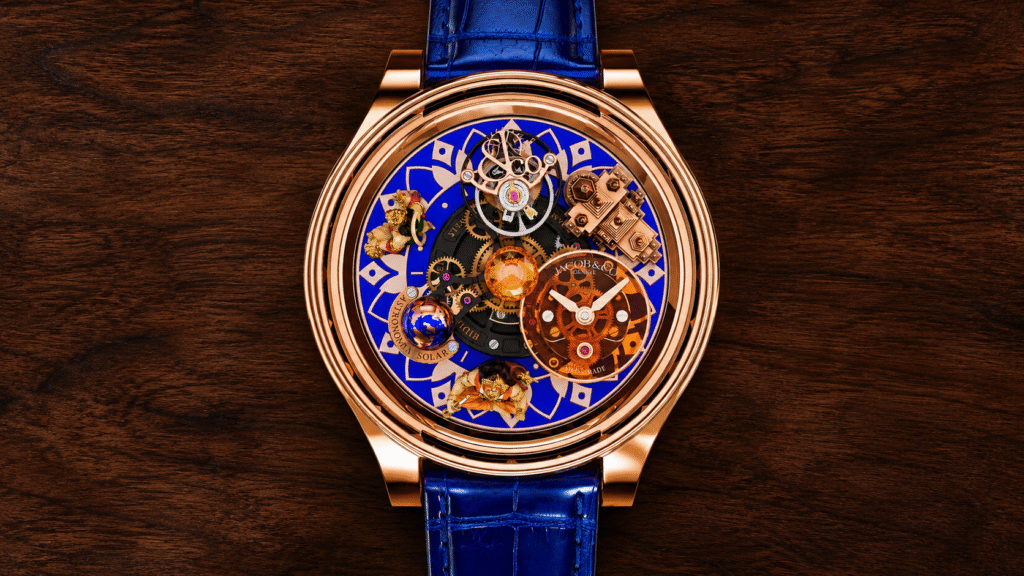
Machining the sapphire dome of the case requires a multi-axis CNC mill running for 400 continuous hours. The crystal starts as a solid block of synthetic corundum, grown in a laboratory over two weeks to eliminate any optical impurities. The mechanism of the machining involves a diamond-tipped cutting tool shaving away microscopic layers of the crystalline structure. The friction generated during this process requires a continuous flood of liquid coolant to prevent thermal cracking. The sapphire possesses a Mohs hardness of 9, making the case virtually scratch-resistant. The optical clarity allows a 360-degree view of the internal movement. The transparency eliminates the concept of a hidden dial. The light enters the case from every angle, illuminating the gear trains and the winding mechanism. The sapphire dome seals against a titanium case ring utilizing a specialized fluoropolymer gasket. The gasket compresses, creating an airtight environment protecting the delicate internal components from moisture and dust. The bezel surrounding the sapphire features a hand-applied brushed finish, reducing the glare and directing the eye inward toward the kinetic display. The architecture dictates the crystal serves as an invisible barrier, a structural wall disappearing into the ambient light. The engineers utilized finite element analysis software to calculate the stress loads on the sapphire. The calculations ensure the dome withstands the atmospheric pressure changes experienced during international flight. The material sourcing dictates the extreme capital expenditure required to produce a single case.
The Carving Mechanics of Lord Ramchandra in Solid Gold
The visual anchor of the timepiece is the sculpture of Lord Ramchandra, machined from a solid block of 18-karat rose gold. The engineering of this figure requires a 5-axis CNC mill utilizing specialized audio frequencies to monitor the cutting tool wear. The artisans carve the figure to a scale where the individual toes and facial creases measure less than a millimeter across. The mechanism of the finishing involves hand polishing. The polishers utilize specialized wooden tools coated in diamond paste to reach the deep recesses of the carvings. The rose gold alloy contains a specific percentage of copper, giving the metal a warm, distinct hue contrasting with the cold titanium chassis. The weight of the solid gold figure alters the mass distribution of the rotating platform. The watchmaker adds microscopic amounts of platinum to the internal counterweights to achieve perfect dynamic balance. The figure sits on a machined titanium base, secured by microscopic screws disappearing into the architecture of the platform. The carving transforms the raw gold ingot into a detailed narrative element, anchoring the kinetic movement to a specific cultural motif. The density of the gold provides a distinct tactile weight. The surface will develop a specific patina over decades of contact with the skin, reflecting the biological reality of the wearer.
The Caliber JCAA53 and the Four-Axis Rotation Mechanics

The movement powering this complication is the hand-wound Caliber JCAA53. The mechanism features a complex architecture designed specifically to accommodate the four-axis rotation and the carved deity. The movement consists of 451 individual components. The engineers arranged the components to maximize the acoustic volume of the rotation while minimizing the visual footprint of the gear train. The main plate features a specialized frosted finish. The finish is achieved by carefully applying a specialized abrasive compound to the surface with a brass brush. The texture diffuses the light, preventing glare on the internal components. The bridges feature hand-beveled edges. The watchmaker utilizes a rotating buffing wheel charged with diamond paste to melt the metal at a microscopic level, creating a 45-degree angle that catches the ambient light. The movement operates at 21,600 vibrations per hour. The gear train features polished teeth. The polishing reduces the friction between the gears, increasing the efficiency of the power transfer from the mainspring to the escapement. The mechanical purity of the movement ensures absolute reliability. The layout isolates the kinetic components from the timekeeping components, preventing the vibrations of the rotation from interfering with the oscillation of the balance wheel. The four-axis rotation requires absolute precision in the placement of the jewel bearings.
The Flying Tourbillon and the Gravitational Constant
Mounted on one of the arms of the rotating platform is the flying tourbillon. The tourbillon cage completes a single rotation every 60 seconds. The mechanism of the tourbillon counteracts the negative effects of gravity on the hairspring of the balance wheel. Placing the escapement and balance wheel in a rotating cage averages out the positional errors over the course of a minute. The vertical orientation of the tourbillon in the Jacob & Co. Shri Ramchandra Watch ensures the mechanism remains constantly visible. The cage consists of a lightweight titanium alloy. The watchmaker hand-polishes the titanium to reduce air friction, maximizing the amplitude of the balance wheel. The escapement wheel features a specialized LIGA manufacturing process. This lithography-based process creates gear teeth with perfectly mathematical curves, eliminating the sliding friction plaguing traditional machined gears. The balance wheel oscillates at 21,600 vibrations per hour. The inertia of the balance wheel provides the heartbeat of the mechanism. The tourbillon operates as a visual anchor. The continuous rotation of the cage draws the eye, demonstrating the physical reality of kinetic energy transferring through a mechanical system. The engineering requires absolute precision in the placement of the jewel bearings. A microscopic misalignment would cause the cage to rub against the bridge, halting the movement.
The Differential Gear System for Timekeeping

As the central platform rotates, the time display sub-dial must remain upright to remain readable. The mechanism ensuring this orientation is a differential gear system. The differential gear sits at the pivot point of the sub-dial arm. As the platform rotates clockwise, the differential gear rotates the sub-dial counter-clockwise at the exact same speed. The mechanism requires absolute precision in the gear tooth counts. A single miscalculation in the gear ratio would result in the time display slowly turning upside down as the platform spins. The sub-dial features skeletonized hands. The hands utilize a swept-back design to minimize air resistance during the rapid rotation of the platform. The hour and minute hands are driven by a specialized gear train routed through the central hub of the movement. The power flows from the mainspring, through the central axis, and out to the sub-dial. The sub-dial sits on a friction-fit clutch. The clutch allows the wearer to manually set the time without risking damage to the delicate gear train. The differential gear system represents a specific engineering solution to a self-created problem. The kinetic nature of the platform forces the watchmaker to engineer a system maintaining absolute static orientation within a dynamic environment.
The Power Reserve and the Mainspring Tension
The Caliber JCAA53 utilizes two separate mainspring barrels. The first barrel powers the timekeeping function and the rotating platform. The second barrel is held in reserve. The mechanism of the twin barrels ensures the complex rotation does not drain the timekeeping power reserve. The mainspring consists of a specialized alloy. The alloy features a specific elastic limit, allowing the spring to be wound tightly without suffering metal fatigue. The barrel features a specialized slipping clutch mechanism. The clutch prevents the mainspring from over-winding, protecting the internal components from structural failure. The power reserve exceeds 72 hours. The isolation of the power sources guarantees the amplitude of the balance wheel remains constant, preserving the chronometric precision of the timepiece even after the platform has been rotating continuously. The ratchet wheel clicks audibly as the spring tightens. The tactile feedback of the winding crown provides the user with a physical connection to the stored kinetic energy. The engineering of the power reserve ensures the watch operates flawlessly regardless of the frequency of the platform rotation. The friction of the gear train remains absolutely constant, driven by the unwinding of the mainspring barrel.
The Environmental Sealing and the Sapphire Integration
Protecting the complex movement from the environment requires a specific sealing architecture. The mechanism of the sealing involves a series of gaskets placed at every point of entry into the case. The sapphire dome seals against the titanium chassis utilizing a specialized fluoropolymer gasket. The gasket features a specific cross-section. The cross-section utilizes a D-shape. The flat side of the D sits against the sapphire. The curved side sits against the chassis. The geometry ensures the gasket compresses evenly, creating a uniform seal. The case back utilizes a similar gasket system. The winding crown features twin O-rings. The watch achieves a water resistance of 30 meters. The rating protects the mechanism from splashes and accidental immersion. The sealing prevents the ingress of humidity. The humidity would cause the microscopic oil droplets on the jewels to emulsify. The emulsification would destroy the lubrication, causing the gears to seize. The environmental sealing ensures the internal environment remains completely isolated from the external climate. The physical reality of the seal ensures the watch will function perfectly for decades without requiring a complete overhaul. The engineering prioritizes absolute biological stability. The seal ensures the internal environment remains completely isolated from the external climate.
The Tactile Weight and the Ergonomic Geometry
Picking up the watch reveals a specific tactile weight. The density of the 18-karat gold and the solid titanium chassis anchors the object to the wrist. The watch weighs exactly 175 grams. The center of gravity sits directly over the movement. The case measures 50 millimeters in diameter. The engineers designed the lugs with a specific downward curve. The curve mimics the natural anatomy of the human wrist. The ergonomic geometry ensures the watch sits flush against the skin. The lugs feature a specialized brushed finish. The finish eliminates the glare occurring with a polished surface. The tactile feedback of the winding crown provides a distinct detent feel. The crown features a specific knurling pattern. The knurling provides a high friction grip for the fingers. The user can operate the crown with wet fingers. The weight of the watch alters the physical experience of wearing it. The density of the materials provides a constant physical reminder of the mechanical complexity hidden beneath the dial. The ergonomic integration of the complex case geometry required extensive 3D scanning of human wrist profiles. The scanning ensures the 50-millimeter diameter does not create an uncomfortable pressure point on the bone. The engineering prioritizes absolute anatomical precision.
The Acoustic Dampening of the Movement
The rotation of the platform and the oscillation of the tourbillon generate specific acoustic frequencies. The mechanism of the acoustic dampening involves the physical architecture of the case. The titanium chassis acts as a soundboard. The engineers utilized a specialized acoustic modeling software to calculate the resonant frequency of the case. They placed specific mass-loading blocks inside the chassis. The blocks consist of a dense tungsten alloy. The tungsten absorbs the high-frequency vibrations generated by the gear teeth. The case back features a specialized groove. The groove holds a specialized silicone gasket. The gasket compresses against the sapphire crystal, creating a barrier preventing the transmission of acoustic energy to the exterior. The acoustic profile of the watch features a distinct, low-frequency hum. The hum originates from the rotation of the ceramic ball bearings. The sound is continuous, providing a physical reminder of the kinetic energy stored within the mechanism. The dampening ensures the acoustic signature does not become a distraction. The watch operates in a specific acoustic bandwidth, isolating the mechanism from the ambient noise of the environment. The acoustic architecture operates as a functional piece of engineering.
The Thermal Treatment of the Titanium Chassis
The structural chassis of the watch utilizes grade 5 titanium. The titanium undergoes a specific thermal treatment process to maximize tensile strength. The mechanism involves heating the metal to 700 degrees Celsius in a vacuum furnace. The vacuum prevents the titanium from reacting with oxygen, preventing the creation of a brittle oxide layer. The metal is held at this temperature for four hours. The furnace cools at a precise rate of 50 degrees per hour. The slow cooling allows the crystalline structure of the titanium to realign, relieving the internal stresses created during the machining process. The resulting metal possesses extreme rigidity, preventing the chassis from flexing under the dynamic load of the rotating platform. The titanium features a specialized Physical Vapor Deposition coating. The coating applies a layer of black ceramic to the surface. The process occurs in a vacuum chamber. A titanium-aluminide target is bombarded with electrons. The vaporized atoms bond to the chassis, creating a micro-thin, scratch-resistant layer. The black coating absorbs light, creating a stark visual contrast against the bright gold of the deity and the transparent sapphire. The thermal treatment ensures the chassis remains absolutely rigid, preventing any structural deformation that could compromise the alignment of the gear train.
The Microscopic Assembly of the Escapement
Assembling the escapement of the tourbillon requires working under a microscope with specialized tweezers. The mechanism of the escapement involves the escape wheel, the pallet fork, and the balance wheel. The escape wheel features 15 teeth. The teeth feature a specific impulse plane transmitting energy to the pallet fork. The pallet fork features synthetic ruby pallet stones. The stones feature a precise geometry. The locking face must align perfectly with the escape wheel teeth to prevent the mechanism from slipping. The watchmaker utilizes a specialized staking tool to set the pallet stones into the fork. The balance wheel features a hairspring. The watchmaker pins the hairspring to the balance cock using a specialized tapered pin. The pin alters the active length of the hairspring, regulating the timing of the watch. The assembly requires a steady hand. A single drop of excess Moebius oil will cause the amplitude to drop, affecting accuracy. The watchmaker utilizes a specialized oiler, a piece of brass wire flattened to a specific thickness. The oiler picks up a microscopic droplet of oil and applies it directly to the jewel bearing. The capillary action draws the oil into the jewel, providing lubrication for the axle. The assembly reflects the extreme capital required to control the physical infrastructure of the movement.
The Three-Piece Limitation and the Economic Architecture
The valuation of the Jacob & Co. Shri Ramchandra Watch stems from the economics of absolute scarcity and biological labor. The financial mechanism of haute horology bypasses standard retail metrics. The cost of the raw materials, the gold, titanium, and sapphire, represents a fraction of the total valuation. The capital expenditure lies in the labor. A single watchmaker requires six months to assemble the movement. The engineering development requires thousands of hours of design and prototyping. The valuation factors in the impossibility of mass production. The machines used to mill the sapphire and titanium require constant calibration. The tools wear out and require replacement. The limitation to three pieces worldwide dictates the extreme valuation. The three-piece edition ensures the absolute exclusivity of the asset. The buyer values the mechanical complexity and the spiritual narrative over the raw material value. The watch operates as a store of capital. The asset resists the depreciation curves of standard consumer goods. The limited production run ensures the scarcity dictates the secondary market valuation. The watch functions as a physical vault. The capital is locked into the mechanical architecture, completely isolated from the volatility of the digital financial markets. The economic architecture of the three-piece edition ensures the assets remain immune to the fluctuations of the global stock markets. The valuation of the watch relies on the absolute provenance of the movement numbers and the historical documentation of the assembly process. The acquisition of the watch requires a direct, private transaction, completely bypassing the traditional consumer retail environment.
The Bespoke Commissioning and the Client Ritual
The acquisition of a piece of this magnitude involves a specific commissioning process. The mechanism of the commission involves a direct consultation with the manufacture. The client selects the base movement. The client then customizes the materials. The selection of the gold alloy for the deity, the PVD coating color, and the specific engraving of the caseback requires direct input. The manufacture creates a digital rendering of the final piece. The client reviews the rendering. The manufacture begins the machining process. The bespoke process allows for extreme personalization. The client can request specific engravings on the caseback. The client can alter the luminescent color of the deity. The commissioning process takes 12 to 18 months. The client pays a deposit. The deposit secures the raw materials and the production slot. The watchmaker assigned to the project dedicates their entire workflow to that single piece. The bespoke process ensures the final piece remains completely unique. The physical reality of the watch reflects the specific aesthetic vision of the wearer. The commissioning bypasses the standard inventory model. The watch is built to order. The engineering prioritizes absolute personalization. The bespoke process ensures the absolute exclusivity of the product. The client acquires a physical manifestation of their specific aesthetic preferences. The friction of the commissioning process ensures the physical asset remains a highly customized piece of engineering. The engineering prioritizes absolute material precision. The physical reality of the commissioning process reflects the extreme capital required to control the physical infrastructure.
The Permanence of Mechanical Devotion
The acquisition of the Jacob & Co. Shri Ramchandra Watch establishes a permanent architectural shift in the owner’s collection. The physical reality of the watch outlasts the media cycle of the release. The mechanical friction creating the kinetic display forces a direct physical link between the wearer and the machine. The 18-karat gold gears will outlast the silicon chips driving contemporary digital devices. The sapphire crystal will resist scratching for centuries. The synthetic oils will evaporate, requiring maintenance, but the structural geometry of the movement will remain perfectly intact. The investment secures a functioning piece of micro-engineering history. The valuation stems from the impossibility of automated mass production. The watchmaker utilizes a magnifying loupe to align the microscopic jewels. The artisan utilizes a 5-axis mill to carve the solid gold figure. The object stands as a testament to the physical limits of human precision. The permanence of the mechanics ensures the timepiece will function perfectly when the digital infrastructure of the modern world fails. The physical reality of the gear teeth ensures the rotation of the platform will remain absolutely constant, driven by the unwinding of the mainspring. The asset stands as a testament to the physical limits of biomechanical engineering precision. The physical weight of the sapphire and the gold ensures the watch will remain anchored to the earth, outlasting the transient digital wealth that facilitated its acquisition.
FAQ
What makes the Jacob & Co. Shri Ramchandra Watch unique?
The watch features a central sculpture of Lord Ramchandra carved from 18-karat rose gold, integrated into a four-axis rotating platform. Limited to 3 pieces worldwide, the timepiece combines a hand-wound Caliber JCAA53 movement with a flying tourbillon and a differential gear system that keeps the time display sub-dial upright as the platform rotates every 10 minutes.
How is the figure of Lord Ramchandra manufactured?
The figure is machined from a solid block of 18-karat rose gold using a 5-axis CNC mill. The artisans utilize specialized audio frequencies to monitor cutting tool wear, and the exact gram weight of the sculpture is calculated to ensure the dynamic balance of the rotating platform. The surface is hand-polished with wooden tools coated in diamond paste to reach the deep recesses of the carvings.
What movement powers the Jacob & Co. Shri Ramchandra Watch?
The hand-wound Caliber JCAA53 features a complex four-axis rotation, a flying tourbillon, and a differential gear system. The movement consists of 451 individual components operating at 21,600 vibrations per hour. It utilizes two separate mainspring barrels providing a 72-hour power reserve, with one barrel dedicated to timekeeping and the other held in reserve.
What material is the watch case constructed from?
The 50-millimeter case is constructed from a solid block of synthetic sapphire crystal. The machining requires 400 continuous hours of multi-axis CNC milling with a diamond-tipped cutting tool under a continuous flood of liquid coolant. The sapphire dome seals against a thermally treated grade 5 titanium chassis utilizing a specialized fluoropolymer gasket, achieving 30 meters of water resistance.
Why is the watch limited to 3 pieces worldwide?
The limitation to 3 pieces stems from the economics of absolute scarcity and biological labor. A single watchmaker requires six months to assemble the movement, and the sapphire case requires 400 hours of continuous machining. The impossibility of mass production and the extreme capital required to engineer the bespoke components dictate the strict three-piece edition, ensuring the absolute exclusivity of the asset.