The Corner of Casino Square
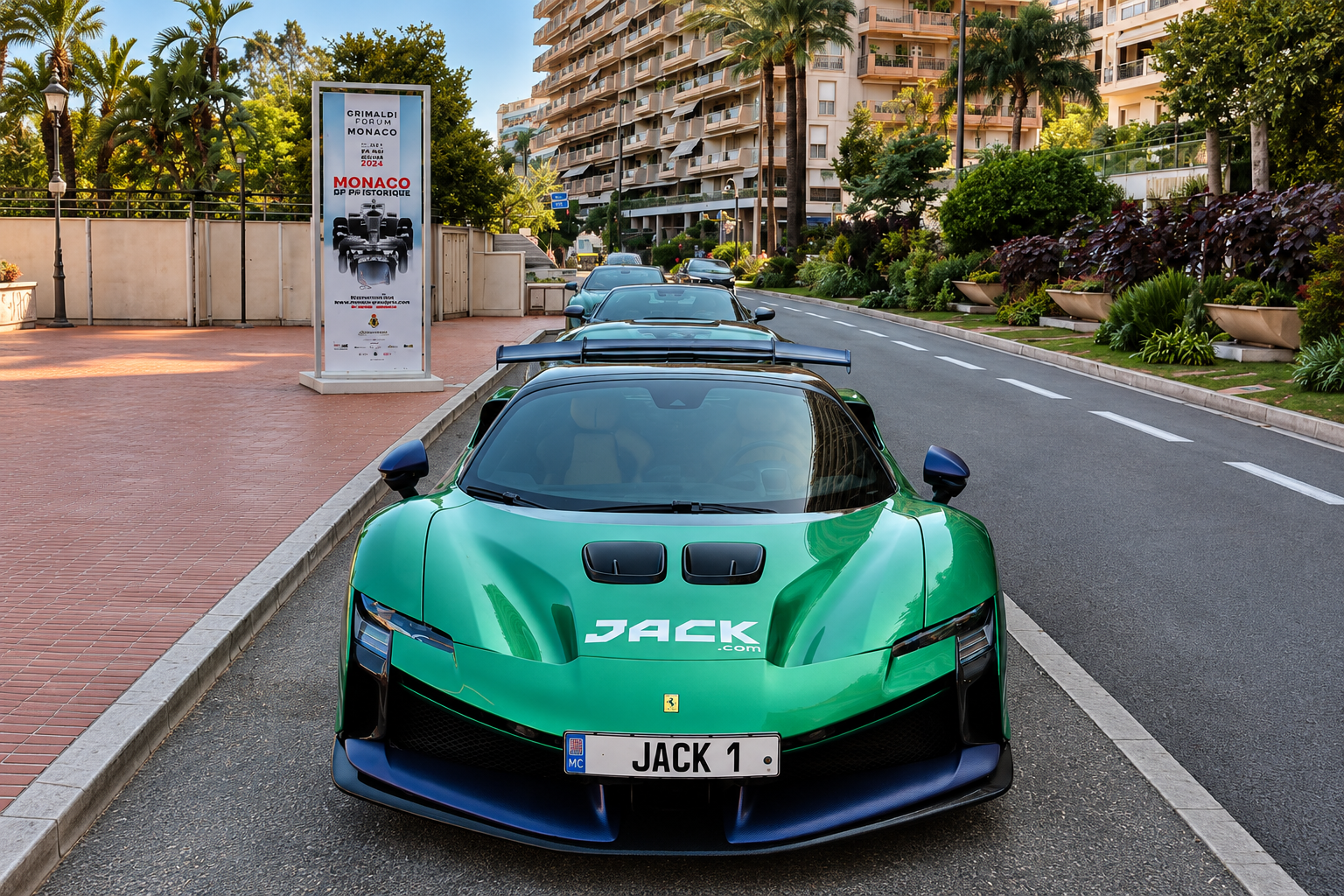
The smell of burnt clutch and high-octane exhaust hangs in the humid air at the corner of Casino Square. A crowd of tourists stands three deep on the sidewalk, holding their phones horizontally. The sun reflects off the chromium wrap of a Jack.com branded supercar, blinding a driver in the opposite lane. The traffic director waves a gloved hand, signaling the line of hypercars to crawl forward. The engine of the lead car, a neon green Lamborghini, revs to 8,000 RPM. The sound ricochets off the stone facade of the Hotel de Paris. The crowd gasps. A teenager in the front row hits record on his TikTok app. The Jack Supercars Monaco phenomenon operates on this exact sensory feedback loop. The driver receives the attention, the crowd receives the dopamine hit of the algorithm, and the car remains a stationary object of desire trapped in the gridlock. The heat radiating from the rear diffuser warms the ankles of the pedestrians standing closest to the curb.
The Fleet Visual Saturation
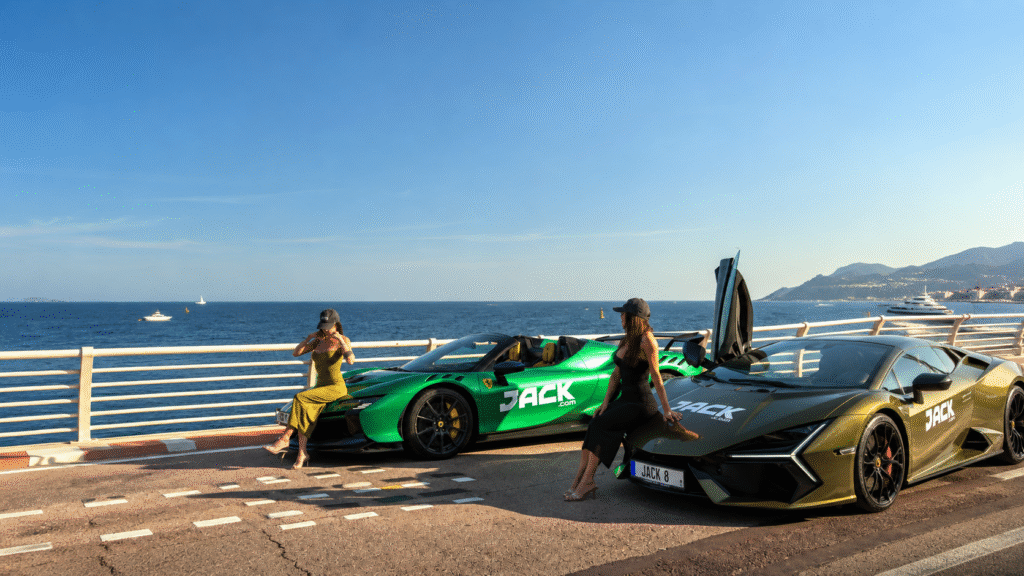
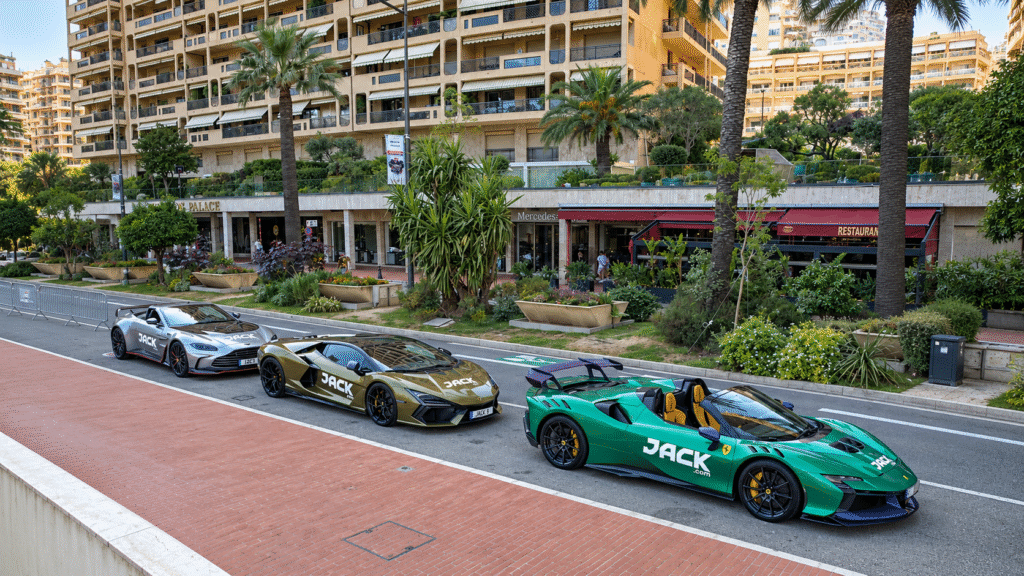
The Jack.com fleet relies on extreme visual saturation. The cars feature a uniform livery. A subtle, geometric Jack.com logo sits on the front fender, but the real identifier is the wrap. The company avoids traditional automotive colors. The fleet consists entirely of chrome vinyl, neon yellow, and a deep, matte violet. This strategy guarantees visual intrusion in a principality saturated with standard Rosso Corsa Ferraris and traditional McLaren Orange. The wraps are designed for camera sensors. The neon hues clip the auto-focus algorithms of modern smartphones, ensuring the car remains the central focal point of the video even in low-light conditions. The fleet visual saturation strategy prioritizes digital reproduction over physical elegance. The cars look better on a screen than they do in the metal. The wraps also act as a protective layer, shielding the original paint from the stone chips thrown up on the tight mountain roads.
The Viral Video Mechanics
The algorithm favors specific types of visual data. A stationary shot of a luxury car generates minimal engagement. A video of a car accelerating, featuring a loud exhaust note and a blurred background, triggers the retention metrics. The Jack.com drivers understand these mechanics intuitively. They accelerate hard out of the Fairmont hairpin, knowing the traction control will cut the power, creating a dramatic chirp from the rear tires. They rev the engine in the tunnel connecting Fontvieille to Monte Carlo, utilizing the natural echo to amplify the sound. The viral video mechanics require a performance. The driver treats the public road as a closed set. The resulting footage, shot by tourists and uploaded to social media, acts as an organic marketing campaign for the rental fleet. The algorithm distributes the content globally, driving rental inquiries from demographics that would never see a traditional magazine advertisement.
The Audio Compression Manipulation
The viral nature of these videos relies heavily on audio manipulation. Smartphone microphones cannot handle the high decibel levels of a supercar exhaust. The internal microphone clips, distorting the sound into a flat, digital rasp. The content creators working with Jack.com use external, directional microphones mounted close to the exhaust tips. They record the audio separately. The engine revving creates a specific frequency that struggles to survive Instagram’s compression algorithm. The creators boost the mid-range frequencies during post-production to compensate. This process restores the harmonic overtones of the flat-plane crank V8. The final video features an audio track that sounds richer and more mechanical than the actual live experience. The audio compression algorithm forces the creators to engineer the sound profile specifically for smartphone speakers, creating a hyper-real version of the exhaust note. The manipulation ensures the video triggers the algorithmic preference for high-engagement audio.
The Monaco Topography
The physical layout of Monaco dictates the behavior of the supercar fleet. The principality features steep gradients. Avenue des Ligures climbs at a severe angle, requiring the drivers to ride the clutch in first gear to avoid rolling backward into the traffic behind them. The tight, blind corners force the drivers to brake late, creating a dramatic visual of the brake discs glowing through the alloy wheels. The echo chambers created by the high-rise apartments and the tunnel infrastructure amplify the exhaust notes to deafening levels. The Monaco topography turns a simple drive to the grocery store into a highly theatrical event. The roads are too narrow for high-speed driving, so the performance is measured in decibels and visual presence rather than velocity. The geography forces the cars into a slow, agonizing crawl, maximizing the exposure time for the cameras lining the sidewalks.
The Police Tolerance Threshold
The Monegasque police operate with a strict, quantifiable tolerance for vehicular excess. The principality relies on the spectacle of wealth to fuel its economy, but it demands order. The police enforce a specific decibel limit. A Jack.com supercar with an aftermarket exhaust often exceeds this limit. The officers carry sound meters. They flag the offending vehicles, issuing fines that the rental company pays without hesitation. The cost of the fine is built into the daily rental rate. The police tolerate the revving at specific hours, but they draw a hard line at wheelspin and reckless overtaking. A driver who crosses this threshold faces immediate impoundment. The police tolerance threshold maintains a delicate balance. The authorities allow the carnival to continue because it serves the tourist economy, but they intervene the second the performance threatens the physical safety of the pedestrians or the structural decorum of the state.
The Target Demographic Split
The Jack.com phenomenon serves two distinct demographics. The primary demographic is the renter, a young, high-net-worth individual who wants the social media clout of driving a hypercar in Monaco. They often lack the physical coordination to handle 700 horsepower on a steep hill, leading to the frequent smell of burnt clutch. The secondary demographic is the viewer, a global audience consuming the content on short-form video platforms. The viewer never sets foot in Monaco. They experience the Principality through the lens of a smartphone, engaging with the content by liking, sharing, and commenting. The target demographic split reveals the true business model of Jack.com. The rental fee pays for the physical depreciation of the car. The viewers generate the brand equity. The company monetizes the attention of the global audience to subsidize the operational costs of the fleet, creating a self-sustaining loop of digital engagement and physical wear.
The Rental Economics
Renting a Jack.com supercar in Monaco requires significant capital. A standard Ferrari 488 costs roughly 1,500 euros per day. A limited-edition hypercar commands upwards of 5,000 euros per day. The rental agreement includes a massive security deposit, often exceeding 20,000 euros, held on a credit card to cover potential damage. The insurance policy carries a colossal excess, shifting the financial risk of a minor scrape onto the renter. The demand spikes during the Grand Prix weekend and the yacht show. During these peak periods, the daily rates double. The rental economics favor short, high-intensity bursts of usage. A client rents the car for four hours, drives it around Casino Square ten times, captures the footage, and returns it. The car spends more time being prepared and detailed than it does actually moving under its own power.
The Extreme Spec Choice
The Jack.com fleet managers order their cars with specific, aggressive specifications. They avoid comfort options. The cars feature carbon fiber bucket seats that force the occupant into a rigid, legs-splayed position. The suspensions are set to the stiffest damper setting, turning the cobblestones of the Old Town into a violent, kidney-punishing experience. The exhausts are switched to the bypass mode, bypassing the mufflers and ejecting the combustion gases directly into the atmosphere. The extreme spec choice prioritizes the theatrical experience over drivability. A comfortable Grand Tourer would not generate the same viral engagement. The car must be loud, stiff, and visually oppressive. The spec sheet is designed to elicit a reaction from the crowd on the sidewalk, even at the expense of the physical comfort of the person paying the rental fee.
The Driving Dynamics in Traffic
Driving a Jack.com supercar in Monaco traffic is an exercise in thermal management and clutch control. The cars are designed to dissipate heat at 200 miles per hour on a racetrack. In stop-and-go traffic on a steep hill, the engine coolant temperatures climb dangerously close to the redline. The transmissions fight the slow crawl, hunting for gears and jerking the occupants forward. The driver must manipulate the throttle with millimeter precision to avoid stalling the engine or boiling the brake fluid. The driving dynamics in traffic remove any romantic notion of open-road freedom. The experience is tense, sweaty, and physically demanding. The driver must constantly monitor the mirrors for smaller cars trying to squeeze past. The supercar becomes a cage, trapping the driver in a slow-motion parade while the engine screams against its rev limiter.
The Crowd Reaction Mechanics
The crowd on the sidewalk operates with a pack mentality. A single person raising a phone to record triggers a cascade. Within seconds, a dozen phones are tracking the neon green Lamborghini as it crawls past the Hermitage. The crowd members shout, pointing at the driver. They request revs, holding up their hands and making a twisting motion. The driver obliges, pulling the downshift paddle and stamping the throttle. The exhaust explodes with a crackle map, firing unburnt fuel into the hot exhaust pipes. The crowd erupts in cheers. The crowd reaction mechanics feed the ego of the driver. The driver performs for the phones, seeking the validation of the digital metrics. The interaction is purely transactional. The driver provides the noise and the visual, and the crowd provides the audience and the content distribution.
The Exhaust Note Engineering
The sound of the Jack.com fleet is a carefully engineered product. Modern turbocharged engines lack the natural, high-pitched scream of the older naturally aspirated V12s. The manufacturers program a synthetic crackle and pop into the ECU. When the driver lifts off the throttle, the fuel injection system keeps firing a small amount of fuel into the cylinders. This fuel ignites in the hot exhaust manifold, creating the loud bangs that the crowd demands. The exhaust note engineering fakes the drama of a race car downshifting into a corner. The sound serves no mechanical purpose. It exists entirely for the entertainment of the sidewalk audience. The engineering maximizes the decibel output while keeping the emissions technically compliant with European regulations during the actual testing phase.
The Traffic Choreography
Monaco operates a one-way system that funnels all traffic through a specific set of high-visibility corridors. The route from the Monte Carlo Casino down to the Larvotto Beach becomes a continuous loop for the supercar fleet. The drivers circle this loop repeatedly, ensuring maximum exposure to the changing crowds. The traffic lights are synchronized to keep the flow moving, but a single tourist stepping into the crosswalk can halt the entire parade for minutes. The traffic choreography forces the drivers into a slow, synchronized dance. The cars travel in packs, three or four abreast, creating a rolling motor show. The Monegasque traffic authorities tolerate this loop because it keeps the spectacle contained to a specific, easily policed geographic area, preventing the cars from spilling into the quieter residential neighborhoods.
The Night Shift Transition
The atmosphere shifts when the sun sets over the harbor. The daytime crowd of tourists gives way to a nighttime crowd of club promoters and high-rollers. The Jack.com supercars change their behavior. The daytime revving stops. The drivers lower the suspension, turn off the loud exhaust modes, and activate the underglow lighting. The cars glide quietly past the Jimmy’z club entrance, relying on the reflection of the neon lights in the chrome wraps to attract attention. The night shift transition prioritizes arrival over performance. The car becomes a luxury transport vehicle, delivering the occupants to the velvet rope in a high-impact visual package. The viral videos from the day remain on the phones of the global audience, but the physical car has moved into a different mode of operation.
The Valet Hierarchy
The valet stand at the Hôtel de Paris operates a strict hierarchy based on financial potential and visual impact. A standard Porsche is relegated to the underground garage. A Jack.com supercar in a neon wrap is parked directly in front of the revolving doors. The valets understand the marketing value of the car. It acts as a billboard for the wealth of the hotel guests. The valet hierarchy ensures the most visually aggressive vehicles occupy the most visible real estate. The Jack.com drivers often refuse the valet service entirely, preferring to park the cars themselves to avoid the risk of a minimum-wage employee grinding the clutch or scraping the front splitter on the steep ramp. The driver circles the block until a space opens up directly on the avenue, taking the spot and leaving the car running to power the air conditioning.
The Content Creator Pipeline
Jack.com operates a formalized content creator pipeline. The rental agency offers specific packages that include a professional videographer. The videographer rides in a chase car, filming the supercar from dynamic angles as it navigates the hairpins. The footage is edited overnight and delivered to the client in a format optimized for Instagram Reels and TikTok. The content creator pipeline guarantees the renter receives usable, high-quality footage. Most amateur smartphone videos fail to capture the speed and the sound of the supercar. The professional videographer uses stabilized gimbals and external microphones, ensuring the final product meets the aesthetic standards required to go viral. The rental package monetizes the desire for digital clout, selling the renter an audience along with the physical vehicle.
The High-Octane Fuel Logistics
Running a fleet of fifty hypercars in a micro-state requires precise fuel logistics. The gas stations in Monaco are limited and expensive. The Jack.com fleet managers maintain accounts at the specific stations that carry 98-octane fuel. The supercars require this high-octane fuel to prevent detonation under high boost pressures. The fuel is pumped from underground tanks that sit beneath the concrete aprons of the station. The high-octane fuel logistics dictate the routes the drivers can take. A driver cannot stray far from the Casino Square area without risking a fuel gauge reading that dips into the critical zone. The rental agreements explicitly forbid taking the cars into the mountains of the French Riviera, restricting the usage to the Monaco loop to ensure the cars remain within range of the approved fuel stations.
The Clutch Replacement Cycle
The physical wear on the Jack.com fleet is immense. The clutches take the worst punishment. The combination of steep hills, heavy traffic, and inexperienced drivers forces the clutches to slip continuously. A standard Ferrari clutch lasts for 30,000 miles under normal driving conditions. A Jack.com rental car requires a clutch replacement every 5,000 miles. The mechanics at the Jack.com depot work continuously, dropping the gearboxes and replacing the friction discs. The clutch replacement cycle represents the single largest maintenance expense for the fleet. The cost is calculated into the daily rental rate. The smell of burnt clutch becomes a permanent feature of the Monaco atmosphere during the summer months, a direct result of the constant punishment inflicted on the drivetrains by the rental clients.
The Insurance Mathematics
Insuring a fleet of neon-wrapped supercars driven by inexperienced renters in the most congested city in Europe requires complex mathematics. The underwriters calculate the premium based on the statistical probability of a low-speed impact. The narrow streets and the tight parking spaces guarantee a high frequency of scratched bumpers and cracked alloy wheels. The policy carries a massive deductible, shifting the cost of minor damage onto the renter. The insurance mathematics exclude coverage for mechanical failure caused by driver abuse. If a renter destroys a clutch by riding it up the hill, the renter pays the 15,000 euro replacement cost out of their security deposit. The insurance covers only catastrophic events, like a high-speed collision or theft. The model relies on the renter assuming the majority of the financial risk for the daily operation.
The Sound Pollution Data
Monaco enforces strict sound pollution regulations. The principality measures the decibel output of vehicles at specific checkpoints. A standard passenger car registers at 70 decibels. A Jack.com supercar with the exhaust bypass open registers at 110 decibels. This level of noise exceeds the legal limit by a significant margin. The police issue automatic fines when the sound meters trigger. The Jack.com rental agency maintains a standing account with the municipal court to process these fines in bulk. The sound pollution data reveals the environmental cost of the viral trend. The residents of the apartments above Casino Square suffer through a continuous auditory assault during the daylight hours. The principality tolerates this pollution as a trade-off for the global visibility the supercar fleet provides.
The Social Media Metrics
The success of the Jack.com brand is measured entirely in social media metrics. The company tracks the number of times their hashtag appears on Instagram and TikTok. They monitor the engagement rate on the videos posted by the renters and the tourists. A single video of a neon Lamborghini revving in the Monte Carlo tunnel can accumulate 10 million views in 48 hours. The social media metrics translate directly into rental revenue. When a specific car color or model goes viral, the demand for that exact spec spikes. The fleet managers adjust their purchasing orders based on the performance of the previous week’s viral content. The data dictates the physical composition of the fleet, ensuring the cars on the street match the aesthetic preferences of the algorithm.
The Competitor Differentiation
Monaco hosts dozens of luxury car rental agencies. The traditional agencies operate out of airport terminals, renting silver Mercedes and black Porsche Cayennes to business executives. Jack.com differentiates itself through extreme visual presentation and a youth-focused marketing strategy. The traditional agencies prioritize discretion and comfort. Jack.com prioritizes volume and spectacle. The competitor differentiation allows Jack.com to charge a premium for an inferior driving experience. The renter pays for the audience, not the car. A Jack.com Lamborghini without the neon wrap and the social media package would struggle to command a higher rate than a standard rental. The brand equity resides entirely in the viral potential of the vehicle, not in the engineering excellence of the automobile.
The Branding Execution
The Jack.com logo is applied to the supercars using a specific, high-tack vinyl. The placement is calculated to appear in the corner of a vertical smartphone video. The logo sits on the front fender, just behind the wheel arch. This position ensures the brand name is visible when the car is filmed from the standard tracking angle by a pedestrian on the sidewalk. The font is sans-serif, entirely white, designed to contrast with the dark tints of the windows and the bright neon wraps. The branding execution avoids the roof and the hood, areas often cropped out of the 9:16 aspect ratio favored by TikTok. The branding strategy is optimized for the screen, acknowledging that the primary audience experiences the car through a digital interface.
The Ownership Structure
The Jack.com fleet is owned by a complex web of holding companies registered in jurisdictions with favorable tax structures. The cars are depreciated as business assets, offsetting the massive maintenance costs against the rental revenue. The individual cars are leased to the operating company, isolating the physical assets from the liabilities of the brand. The ownership structure allows the fleet to rotate quickly. When a car reaches the end of its warranty period, the holding company sells it to a dealer in the Middle East, replacing it with a new model. This rapid turnover prevents the fleet from aging. The streets of Monaco always feature the latest model year, maintaining the visual supremacy of the brand and the viral potential of the content.
The Permanence of the Digital Footprint
The clutch of the neon Lamborghini slips on the steep incline of Avenue Princesse Grace. The driver rides the brake, burning the friction material down to the rivets. The rental period ends in four hours. The car will return to the Jack.com depot, where a mechanic will replace the clutch disc under the glare of fluorescent shop lights. The tourists will leave Monaco. The videos will remain on the servers of TikTok and Instagram, accumulating views long after the car is shipped to Dubai for the winter season. The physical supercar is a consumable, designed to be used and repaired. The digital video is permanent. The Jack Supercars Monaco trend will outlast the specific fleet of cars. The algorithm favors the aesthetic of loud, colorful speed in Monaco. The next fleet will arrive to satisfy the demand. The videos of the current fleet will continue to play on screens around the world, documenting a very specific, very loud moment in the life of the principality.
FAQ
Why are Jack.com supercars so popular in Monaco right now?
The popularity stems from a deliberate visual saturation strategy optimized for social media algorithms. The Jack.com fleet uses extreme vinyl wraps in neon colors and chrome finishes that clip the auto-focus of smartphone cameras, ensuring the cars dominate the frame. The drivers perform for the crowds by revving engines and activating loud exhaust crackle maps, generating high-decibel audio that performs well on TikTok and Instagram Reels. The content created by tourists acts as organic marketing. The algorithm distributes these videos globally, driving rental demand from young, high-net-worth individuals who want the social media clout associated with driving a highly visible hypercar in Casino Square.
How do the viral videos actually capture the engine sound so well?
Smartphone microphones cannot handle the high decibel levels of a supercar exhaust, resulting in distorted, flat audio. The content creators and renters associated with Jack.com use external directional microphones mounted near the exhaust tips to record the sound separately. They then boost the mid-range frequencies during post-production to compensate for the compression algorithms used by platforms like Instagram. This process restores the harmonic overtones of the engine, creating a hyper-real audio track that sounds richer and more mechanical than the actual live experience. The engineered audio is specifically tailored to trigger the engagement metrics of social media algorithms.
What does it cost to rent a supercar from Jack.com in Monaco?
Renting a Jack.com supercar requires substantial capital. A standard model like a Ferrari 488 costs roughly 1,500 euros per day, while limited-edition hypercars command upwards of 5,000 euros per day. The rates double during peak events like the Grand Prix weekend. The rental agreement includes a massive security deposit, often exceeding 20,000 euros, held on a credit card. The insurance policy carries a colossal deductible, shifting the financial risk of minor scrapes onto the renter. The cost reflects the viral potential of the vehicle. The renter pays for the audience and the social media clout, as well as the physical depreciation of the car.
How does the Monaco police handle the loud supercar fleet?
The Monegasque police operate with a strict, quantifiable tolerance for vehicular noise. They carry sound meters and enforce specific decibel limits. Jack.com supercars frequently exceed these limits with their aftermarket exhausts. The police flag the offending vehicles and issue fines, which the rental company pays in bulk without hesitation. The cost of the fines is built into the daily rental rate. The authorities tolerate the revving because the spectacle fuels the tourist economy, but they intervene immediately if a driver engages in wheelspin or reckless overtaking. A driver who crosses the safety threshold faces immediate impoundment of the vehicle.
Why do the Jack.com rental cars smell like burnt clutch?
The steep gradients and heavy traffic of Monaco force drivers to ride the clutches in first gear to avoid rolling backward. The majority of Jack.com renters are inexperienced with 700-horsepower vehicles, leading to poor clutch modulation on the steep inclines. This constant slipping causes immense friction, burning the friction material down to the rivets. A standard Ferrari clutch lasts for 30,000 miles under normal conditions, but a Jack.com rental car requires a clutch replacement every 5,000 miles. The replacement cost is calculated into the rental rate, and the renter is held financially responsible for any clutch destruction caused by driver abuse through the security deposit.