A Quiet Evening in Monaco and a Yacht Unlike Anything Before It
The first impression is not the length, the glass, or the dramatic profile cutting through the harbor skyline. It is the absence of assumptions. Standing on the dock as renderings of the Aqua concept circulate among brokers, designers, and yacht owners, the conversation quickly moves beyond aesthetics. The focus shifts toward possibility. For decades, superyachts have measured progress through size, speed, and increasingly elaborate amenities. The hydrogen powered superyacht Sinot Aqua proposes something different. It asks whether the future flagship vessel of a billionaire owner could be defined by energy innovation rather than engine displacement. The concept arrives at a moment when yacht builders, regulators, and owners are examining how sustainability may influence the next generation of luxury vessels. Aqua is not simply a design study. It is a glimpse into how technology, environmental responsibility, and ultra-premium lifestyle expectations may eventually occupy the same deck.
The Vision Behind Aqua: Why Sinot Wanted to Rewrite the Rulebook
Most concept yachts evolve existing ideas. Aqua attempts to challenge foundational assumptions about what powers a superyacht and how that choice influences every aspect of design. Sinot approached the project with a broader ambition than creating a visually striking vessel. The objective involved reimagining propulsion, onboard systems, guest experiences, and operational philosophy through the lens of hydrogen technology. This required questioning conventions that have shaped luxury yachting for generations. Traditional marine diesel systems influence everything from engine room layouts to fuel storage requirements. By starting with hydrogen as the core energy source, designers gained freedom to rethink spatial arrangements, weight distribution, and interior experiences. The result feels less like an incremental evolution and more like a conceptual blueprint for where luxury maritime design could eventually head as environmental expectations continue to evolve.
What Makes Aqua Different From Every Other Superyacht
Luxury yacht concepts often compete through dramatic features. Aqua’s distinction begins beneath the surface. The defining characteristic is not a swimming pool, beach club, or helicopter deck. It is the decision to build the vessel around hydrogen fuel cell technology. That choice transforms the entire narrative surrounding ownership. Instead of discussing only range, speed, or guest accommodations, conversations expand into energy production, emissions reduction, and long-term sustainability. The hydrogen powered superyacht Sinot Aqua occupies a category few vessels have seriously explored. Rather than adapting alternative fuels to existing yacht architecture, the concept integrates clean energy thinking into the vessel’s identity from the beginning. This approach creates a compelling proposition for owners interested in innovation as much as luxury.
Mechanism Reveal: How Hydrogen Propulsion Actually Works on Aqua
The most fascinating element of Aqua lies within the propulsion system. Hydrogen stored in specialized tanks feeds fuel cells that generate electrical energy through a chemical process involving hydrogen and oxygen. Unlike traditional combustion engines, the system produces electricity without relying on fossil fuel combustion. The resulting energy powers electric motors that drive the vessel. The primary byproduct is water rather than conventional marine emissions. This mechanism changes the conversation around performance because efficiency and environmental impact become closely linked. For yacht owners accustomed to conventional propulsion systems, the technology represents a significant shift in operational philosophy. Aqua demonstrates how engineering innovation can influence luxury experiences without diminishing comfort, capability, or prestige.
Exterior Design: A Floating Sculpture Inspired by Motion
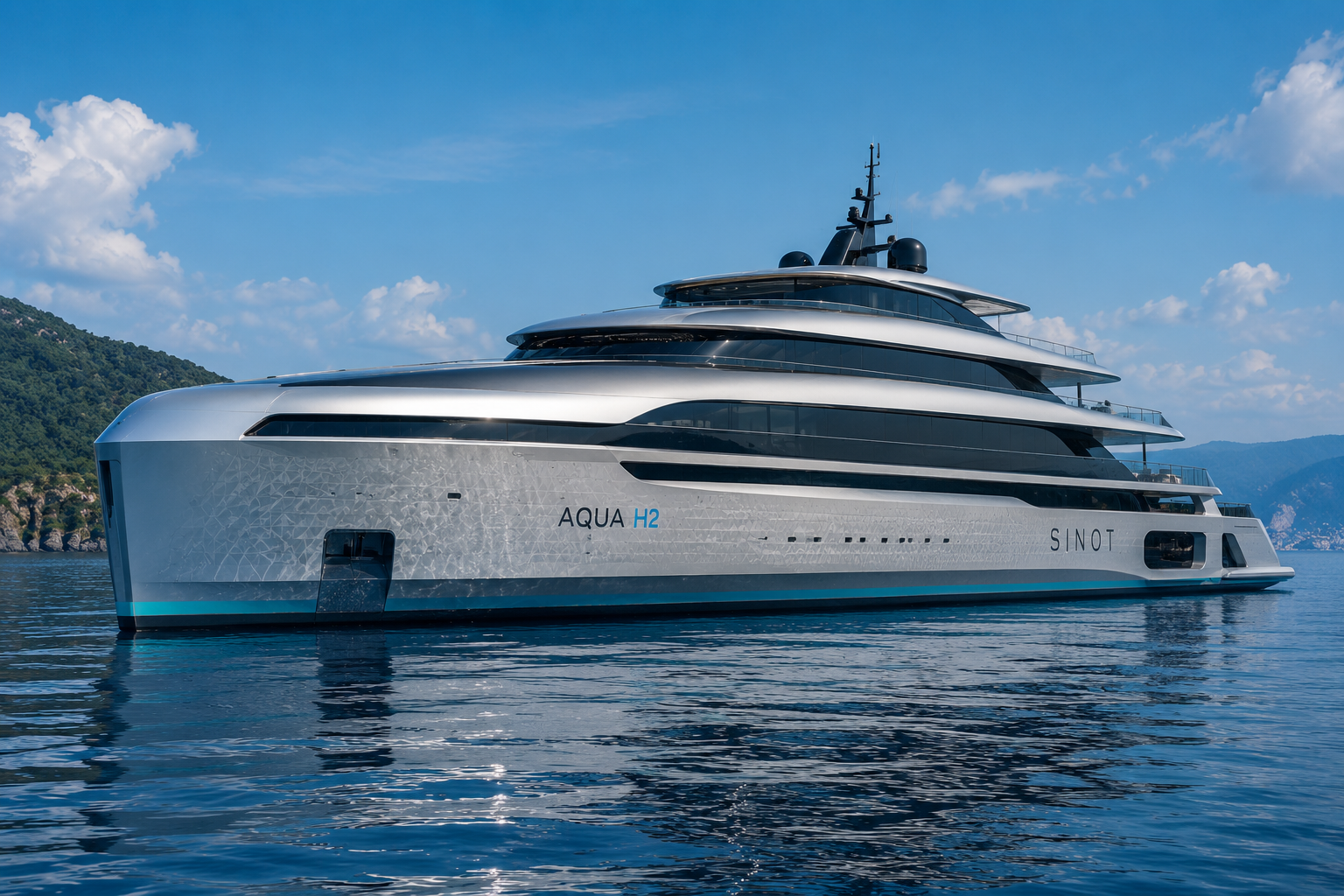
Viewed from a distance, Aqua appears almost fluid. The exterior architecture avoids the aggressive styling cues commonly found on many contemporary superyachts. Instead, the lines feel organic, emphasizing movement and continuity. Large expanses of glass blur the boundary between interior and exterior spaces. The profile remains elegant without becoming restrained. One of the most striking aspects of the design is how the vessel appears lighter than its dimensions suggest. The visual language supports the broader sustainability narrative by conveying efficiency rather than excess. Every angle contributes to an impression of purposeful sophistication. Aqua looks less like a conventional yacht and more like an architectural statement floating above the waterline.
Inside the Yacht: The Luxury Experience Beyond Sustainability
Innovation alone cannot justify a superyacht. Owners still expect extraordinary comfort, privacy, and craftsmanship. Aqua addresses these expectations through an interior environment designed to feel contemporary, spacious, and deeply connected to the sea. Floor-to-ceiling glazing creates uninterrupted views while maximizing natural light. Materials emphasize refinement without relying on excessive ornamentation. Guest spaces prioritize openness and tranquility. Rather than overwhelming visitors with decorative complexity, the design encourages attention toward the surrounding environment. The interior experience reflects a growing trend among affluent buyers who increasingly value serenity, wellness, and authentic experiences over purely demonstrative luxury. Aqua’s accommodation concept aligns naturally with this evolving preference.
The Owner’s Suite: A New Definition of Waterfront Living
Among the most discussed aspects of Aqua is the owner’s suite. Positioned to maximize privacy and panoramic views, the space feels more like an exclusive coastal residence than a traditional yacht cabin. Expansive glazing creates a continuous visual connection with the ocean. Natural materials soften the contemporary architecture. Every design decision appears intended to reinforce calm rather than spectacle. For ultra-high-net-worth individuals, privacy remains one of the rarest luxuries available. Aqua’s approach acknowledges this reality by creating environments that feel personal, secluded, and highly curated. The owner’s suite therefore becomes a central expression of the vessel’s broader philosophy.
Sustainability and Status: The New Luxury Equation
Historically, sustainability and luxury often occupied separate conversations. That distinction is beginning to change. Many wealthy buyers now evaluate products through multiple lenses, including environmental impact, technological sophistication, and long-term relevance. Aqua reflects this shift. The hydrogen powered superyacht Sinot Aqua does not treat sustainability as a marketing feature attached to a traditional yacht. Instead, sustainability becomes part of the vessel’s identity. This approach appeals to a growing segment of owners who view innovation as an extension of prestige. The ability to own something technologically pioneering increasingly carries cultural value alongside traditional measures of luxury.
Challenges Facing Hydrogen Superyachts
Every transformative idea encounters practical obstacles. Hydrogen infrastructure remains limited compared to conventional marine fueling networks. Storage requirements present engineering challenges. Regulatory frameworks continue evolving. Aqua therefore exists at the intersection of aspiration and feasibility. Yet many revolutionary technologies begin in precisely this position. Concept vehicles, aircraft, and yachts often serve as exploratory platforms that influence future development even if the original vision evolves over time. Understanding these challenges provides context for evaluating Aqua realistically while appreciating its significance as a catalyst for industry discussion.
Could Aqua Change the Future of Yachting?
The influence of Aqua extends beyond whether the exact concept reaches production. Its importance lies in demonstrating what becomes possible when designers and engineers begin with different assumptions. The project encourages shipyards, suppliers, regulators, and owners to consider alternative approaches to propulsion and vessel design. Innovation rarely moves in a straight line. Concepts introduce ideas that eventually shape mainstream products in unexpected ways. Aqua’s hydrogen-first philosophy may influence future yacht projects even if individual design elements change along the way. The conversation itself has already become part of the concept’s legacy.
Who Would Buy a Yacht Like Aqua?
The ideal Aqua owner is unlikely to be motivated solely by traditional luxury metrics. This individual probably values innovation, technological leadership, and participation in emerging industries. Entrepreneurs, technology founders, sustainability-focused investors, and collectors of pioneering assets represent natural audiences for a project of this nature. Ownership becomes a statement about curiosity and future orientation rather than simple acquisition. Aqua appeals to buyers interested in defining what comes next rather than preserving what already exists.
A Concept That May Outlast Its Own Blueprint
The most memorable detail about Aqua is not a specification or design feature. It is the question the yacht leaves behind. Standing at the edge of a marina filled with conventional superyachts, Aqua invites a different vision of maritime luxury. The hydrogen powered superyacht Sinot Aqua challenges assumptions about energy, ownership, engineering, and environmental responsibility. Whether the exact vessel enters production matters less than the ideas it introduces. Concepts capable of reshaping an industry often achieve significance long before construction begins. Years from now, yacht design will continue evolving. Propulsion technologies will advance. Sustainability expectations will rise. Aqua may ultimately be remembered as one of the moments when luxury yachting began seriously imagining a different future.
FAQ
What is the Sinot Aqua superyacht?
Sinot Aqua is a luxury yacht concept designed around hydrogen fuel cell technology, aiming to combine sustainable energy solutions with ultra-premium superyacht experiences.
How does the hydrogen powered superyacht Sinot Aqua work?
The yacht uses hydrogen stored in specialized tanks to supply fuel cells, which generate electricity that powers electric propulsion systems while producing water as the primary byproduct.
Is the Sinot Aqua currently in production?
Aqua was introduced as a concept yacht and remains primarily a visionary design project showcasing future possibilities for sustainable luxury yachting.
Why is hydrogen important for future superyachts?
Hydrogen offers the potential for cleaner marine propulsion by reducing traditional emissions while supporting the performance and operational requirements expected by luxury yacht owners.
Could hydrogen become common in the superyacht industry?
Industry experts continue exploring hydrogen technology as infrastructure, regulations, and engineering capabilities advance. While challenges remain, hydrogen is widely viewed as one of the promising long-term options for sustainable maritime transportation.