A Stadium Before Kickoff, Where the Future Already Feels Different
An hour before the first whistle, the stadium is already alive. Executives discuss broadcasting rights from private suites while supporters draped in national colors fill every section. Camera drones glide above immaculate grass, and analysts study formations that will be debated across continents within minutes. Yet the biggest story is happening long before the ball moves. FIFA’s New World Cup Rules are reshaping the structure of the most watched sporting event on earth, influencing qualification, scheduling, commercial partnerships, player workloads, and global football economics. The tournament is no longer simply a championship. It has evolved into an international platform where sport, media, technology, and investment intersect. Every adjustment to its rules carries consequences extending far beyond ninety minutes on the pitch.
Why FIFA Keeps Reinventing the World’s Biggest Tournament
The World Cup has always reflected football’s evolution. New nations emerge, television audiences expand, sponsorship models mature, and fan expectations continue shifting. Tournament organizers therefore face the challenge of preserving tradition while accommodating unprecedented global growth. Rule changes rarely exist in isolation. They influence broadcasting strategies, travel logistics, commercial opportunities, competitive balance, and long-term development across every football federation participating in the competition.
The Expansion That Changes Everything
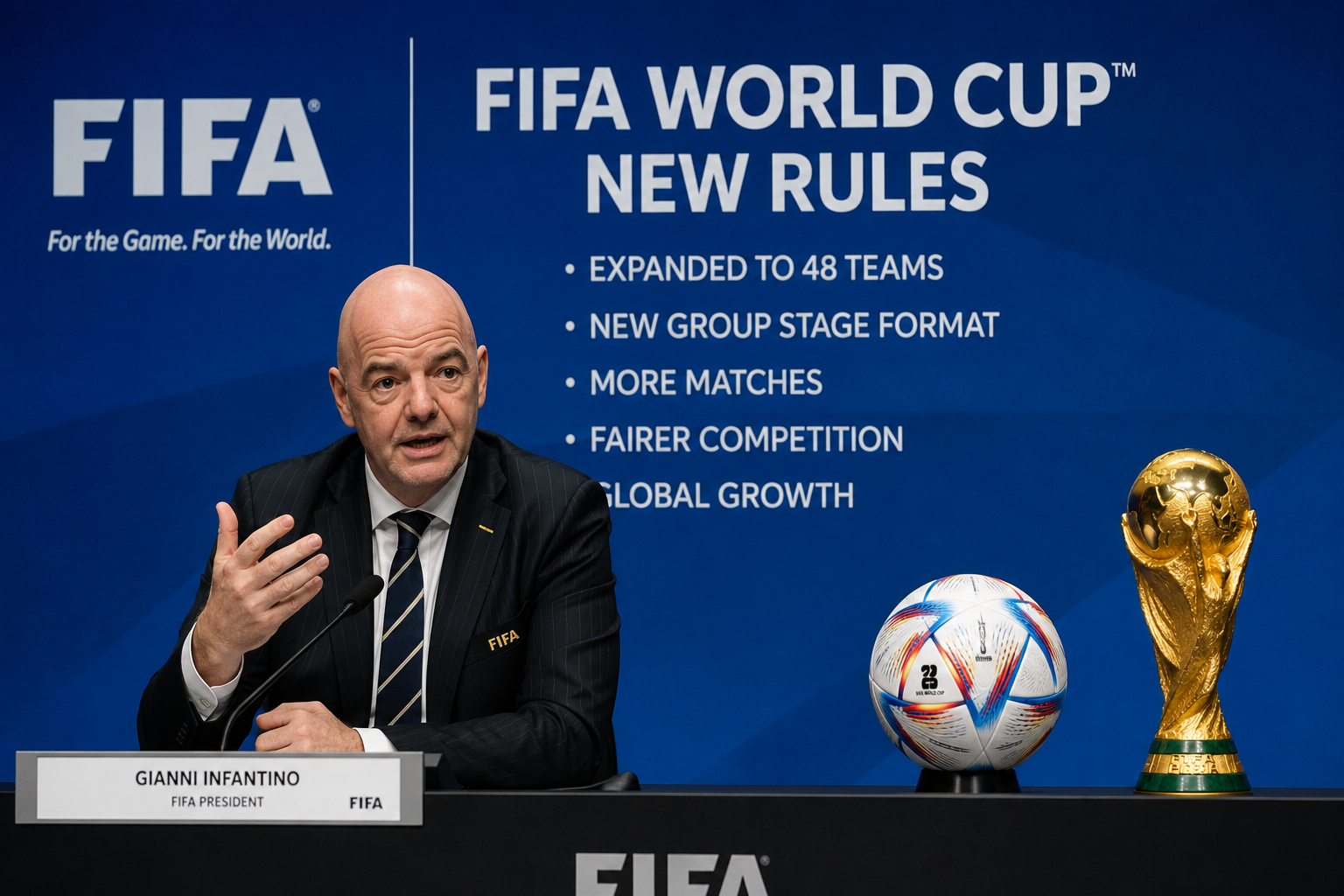
One of the most significant developments involves tournament expansion, creating opportunities for more national teams to compete on football’s largest stage. Emerging football nations gain greater visibility while established powers encounter increasingly diverse tactical opponents. More matches generate additional storytelling, broader international representation, and expanded commercial potential. At the same time, organizers must balance opportunity with scheduling complexity, player recovery, and overall tournament quality.
More Nations, More Global Influence
Football’s greatest strength has always been its universality. Expanded participation allows regions historically underrepresented at elite tournaments to showcase talent, culture, and sporting ambition before worldwide audiences. National federations gain financial incentives to invest in youth development while domestic leagues benefit from increased international attention. The tournament gradually becomes a more comprehensive reflection of global football rather than an exclusive gathering of traditional powers.
How The New Format Creates Different Strategies
Tournament structure directly shapes tactical planning. Coaches evaluate squad rotation differently when additional matches become part of the pathway toward the final. Sports science departments assume greater importance as recovery periods influence performance. Depth replaces individual brilliance as the defining competitive advantage. Elite nations with extensive talent pools may benefit, although disciplined emerging teams can exploit changing dynamics through organization, adaptability, and efficient game management.
Why Tournament Rules Influence Football Economics
The most fascinating aspect of FIFA’s New World Cup Rules lies beyond the field itself. Every additional match increases broadcasting inventory, sponsorship visibility, hospitality opportunities, merchandising activity, tourism revenue, and digital engagement. Broadcasters gain premium content while host cities attract greater international attention. Football associations receive enhanced financial support capable of funding grassroots development and infrastructure improvements. Rule changes therefore operate as economic mechanisms connecting sport, entertainment, investment, and national branding within one extraordinary global event.
The Player Workload Debate
Modern football calendars already challenge athletes through domestic leagues, continental competitions, international fixtures, and commercial tours. Expanded tournaments naturally intensify conversations surrounding fatigue, injury prevention, and career longevity. Clubs, national teams, governing bodies, and players each approach scheduling from different perspectives. Sports medicine, data analytics, and recovery science consequently become increasingly influential components of elite football preparation. The future of competition depends as much on intelligent workload management as tactical innovation.
Broadcasting Is Entering a New Era
Global audiences no longer consume football exclusively through traditional television broadcasts. Streaming platforms, mobile viewing, interactive statistics, multilingual commentary, and personalized digital experiences continue reshaping fan engagement. Tournament expansion creates additional premium content while encouraging investment in immersive technologies capable of bringing supporters closer to every moment. Football increasingly functions as a continuous digital experience extending well beyond matchday itself.
Luxury Hospitality and the Modern World Cup
Premium travel has become an integral part of major sporting events. Private aviation, ultra-luxury hotels, exclusive hospitality lounges, curated cultural experiences, and executive networking opportunities transform the World Cup into a destination attracting business leaders alongside football supporters. Expanded tournaments create additional opportunities for luxury brands, global sponsors, and high-net-worth travelers seeking experiences unavailable through conventional tourism. Sport evolves into a sophisticated lifestyle ecosystem.
How Smaller Nations Could Benefit
Qualification opportunities influence national football development for decades. Increased access encourages investment in coaching education, youth academies, sports infrastructure, and professional league standards. A single successful qualification campaign can inspire generations while attracting sponsorship and government support. The broader football landscape therefore becomes more competitive, more diverse, and potentially more unpredictable as new nations challenge established hierarchies.
Technology Continues Changing Decision Making
Video review systems, semi-automated officiating tools, advanced performance analytics, and artificial intelligence increasingly support modern football administration. Rule evolution naturally accompanies technological progress because accuracy, fairness, and transparency remain central priorities. Future tournaments may integrate even more sophisticated decision-support systems while preserving the pace and emotional intensity that define the sport’s global appeal.
Why Commercial Partners Welcome Change
The World Cup represents one of the most valuable marketing platforms in international sport. Expanded participation introduces new regional markets, additional sponsorship inventory, greater media exposure, and increased audience engagement. Luxury brands, technology companies, financial institutions, automotive manufacturers, and hospitality groups all benefit from longer tournament narratives capable of sustaining consumer attention across multiple weeks and continents.
The Cultural Impact Beyond Football
Every World Cup becomes a shared global conversation connecting languages, cultures, generations, and communities. Rule changes therefore influence more than competition formats. They reshape travel patterns, international media coverage, fashion collaborations, music events, tourism campaigns, and digital culture. Football serves as a universal language where national identity and global entertainment coexist on an extraordinary scale.
The Future of FIFA’s New World Cup Rules
The discussion surrounding FIFA’s New World Cup Rules extends beyond expanded participation or revised scheduling. It reflects football’s transformation into a global ecosystem connecting technology, investment, entertainment, luxury hospitality, and cultural influence. Future tournaments will likely continue balancing tradition with innovation while adapting to changing audience expectations and commercial realities. Success will depend on preserving competitive authenticity while embracing thoughtful evolution.
The Tournament Keeps Changing Because the World Does Too
The World Cup has never remained static. Every generation experiences a slightly different version shaped by new technologies, emerging nations, changing business models, and evolving styles of play. Rule changes inevitably create debate because football belongs emotionally to billions of supporters. Yet history suggests the tournament’s greatest strength lies in its ability to adapt while preserving its unmistakable identity. Years from now, individual formats may be forgotten, but the moments created under those evolving rules will continue defining football’s global story.
FAQ
What are FIFA’s New World Cup Rules?
They include significant structural changes affecting tournament format, participating nations, scheduling, qualification pathways, and overall competition organization.
Why is FIFA expanding the World Cup?
Expansion increases global representation, creates new commercial opportunities, encourages football development, and allows more nations to compete on the sport’s biggest stage.
How do the new rules affect players?
Longer tournaments and additional matches increase the importance of squad depth, sports science, recovery planning, and workload management.
Will smaller football nations benefit from the new format?
Greater qualification opportunities may encourage investment in youth development, coaching, infrastructure, and long-term national football programs.
How will FIFA’s New World Cup Rules shape the future of football?
The changes are expected to influence competition structure, broadcasting, sponsorship, fan engagement, and the continued globalization of the world’s most popular sport.