
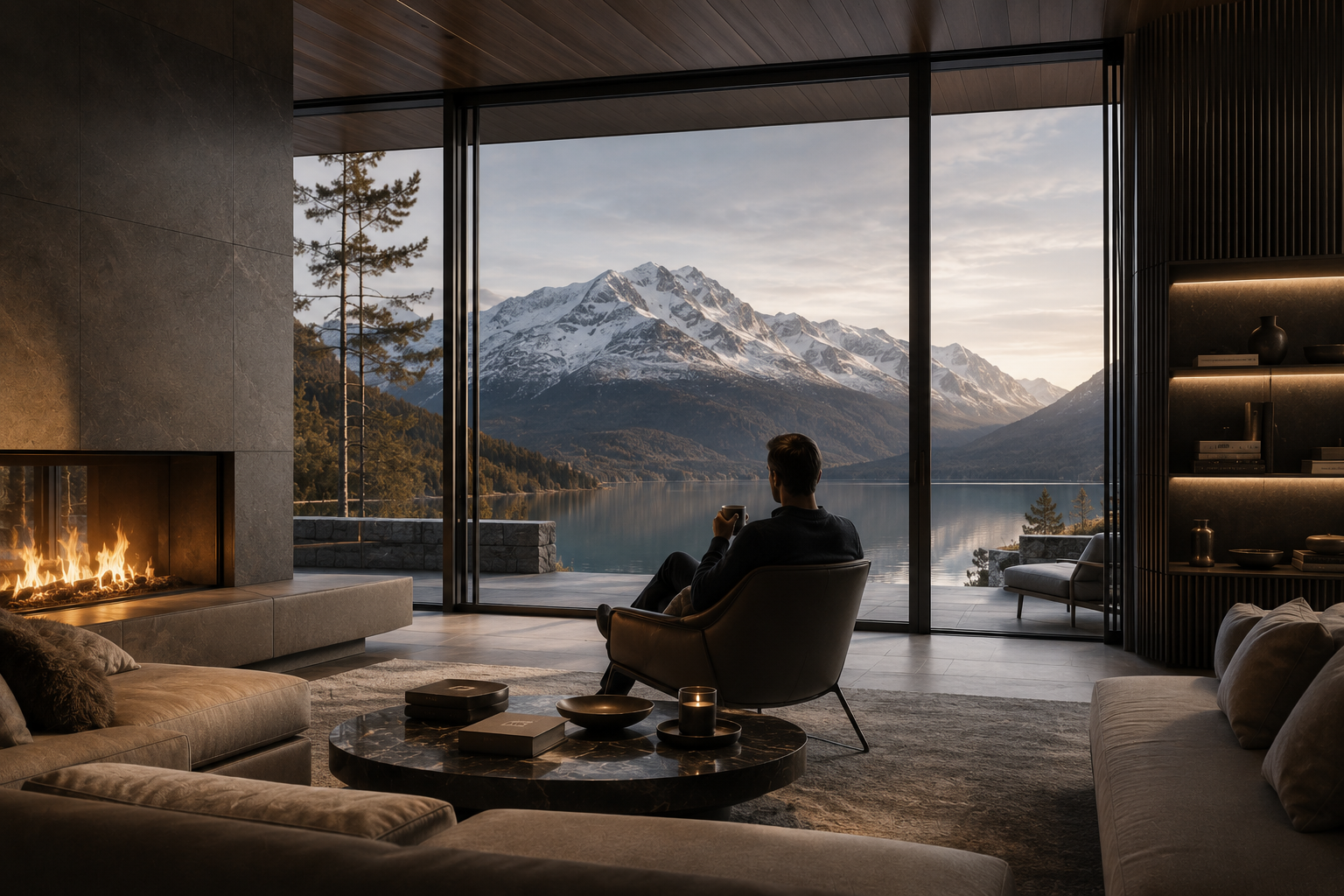
The Sound of a Room Where Nothing Happens
Picture a penthouse high above one of the world’s busiest financial districts. Helicopters cross the skyline, traffic grinds along the avenues far below, and a city of millions keeps moving at full volume. Inside, someone sets a crystal glass down on a stone countertop, and the small click is startlingly clear, because there is nothing else to hear.
That quiet is not an accident. It was designed, engineered and paid for. Among the world’s wealthiest homeowners, silence has become one of the most sought-after features a residence can offer, sitting alongside location, views and architecture on the list of non-negotiables. The interest in billionaire luxury of silence soundproof homes 2026 reflects a simple truth: when you can buy almost anything, the hardest things to find become the most valuable.
A New Definition of Luxury
For most of modern history, luxury meant more. More rooms, more marble, more cars in the garage, more staff. For people who already have all of that, the calculation changes. Comfort and convenience stop being aspirations and become the baseline.
What remains scarce is control over one’s own environment. A home that filters out the noise of the city, the hum of machinery and the constant interruptions of modern life offers something money has traditionally struggled to buy: uninterrupted time and attention. That is why acoustic privacy now shows up in the briefs that wealthy buyers give their architects, often ahead of features that would once have been considered essential status symbols.
Why Silence Is So Hard to Find
Noise has quietly become one of the defining features of 21st-century life. Cities keep growing, flight paths keep multiplying, and phones, speakers and appliances keep adding layers of sound to every room. Even remote estates are not immune; private aviation, boats and road traffic travel a long way across open land and water.
Wealth can buy distance, but distance alone rarely delivers true quiet. A mountain retreat can still carry the noise of its own generators and pumps. A beachfront villa still has wind and surf. Real silence depends on deliberate design decisions made from the very first drawing, which is exactly why it has become so rare, and so prized.
How Soundproof Luxury Homes Actually Work
The key insight behind serious acoustic engineering is that sound travels through structure as much as through air. Thicker walls help, but they are only part of the answer. The real work lies in stopping vibration from moving through a building.
Architects and acoustic consultants typically combine several techniques:
- Structural isolation, where rooms are built as “boxes within boxes” and separated from the main structure by resilient mounts.
- Floating floors, laid on rubber or spring isolators so footsteps and machinery noise do not carry into the slab below.
- Multi-layer walls that mix dense materials with air gaps and absorptive insulation to break up sound energy.
- Acoustic glazing, using laminated glass of different thicknesses so that each pane blocks a different range of frequencies.
- Sealed, slow-moving ventilation, with oversized ducts and silencers so fresh air arrives without a rush or a hum.
Done well, none of this is visible. The rooms simply feel calm, in a way that is hard to describe until you have experienced it.
Why Acoustic Privacy Beats Extra Square Footage
There is a point at which another thousand square feet adds very little to daily life. A well-designed quiet room, on the other hand, changes how a home is used every single day.
That is why the spaces receiving the most acoustic attention in high-end residences tend to be the ones where focus and privacy matter most: home offices where confidential calls take place, libraries, music and recording rooms, cinemas, meditation spaces and primary bedrooms. For executives who spend their days surrounded by noise and demands, a room where conversations stay private and concentration comes easily is worth far more than another guest suite.
Silence as a Wellness Amenity
Wellness has become one of the biggest drivers of luxury design, and quiet is increasingly part of that conversation. Environmental noise is widely recognised as a factor in poor sleep and stress, and many people simply feel better in calmer surroundings.
As a result, developers and designers have started treating acoustics as a core part of the wellness offering rather than an afterthought. Alongside spas, gyms and treatment rooms, the most ambitious homes now include rooms designed purely for rest and stillness, with carefully controlled sound, light and temperature. Bedrooms, in particular, get far more acoustic attention than they used to.
Hotels, Yachts and Jets Are Chasing Quiet Too
The same shift is visible well beyond private homes. Top hotels now market acoustic comfort as part of the guest experience, with suites designed to block corridor and street noise. Superyacht builders invest heavily in isolating engines, generators and stabilisers so that guest areas stay calm even when the boat is working hard.
In private aviation, cabin noise has become a major selling point. Manufacturers regularly highlight how quiet their latest jets are at cruise, because a calmer cabin means less fatigue on long flights. Across every category of high-end travel, quiet has become shorthand for quality.
The Engineering Behind the Calm
Creating a genuinely quiet space is a team effort between architects, structural engineers, mechanical engineers and acoustic specialists. Every element matters. A single poorly sealed door, an undersized air duct or a pipe fixed directly to a wall can undo months of careful work.
Specialists will often analyse vibration from nearby roads or railways, choose mechanical equipment for its noise profile, mount pumps and air handlers on isolation bases, and specify door seals and window frames as carefully as the glass itself. The result is a building where every component has been chosen with sound in mind, even though residents will never see most of it.
Could Quiet Become a Value Driver in Real Estate?
Buyers at the top of the market are already paying closer attention to construction quality, privacy and environmental comfort, not just location and size. Acoustic performance fits naturally into that list. It is difficult to retrofit, expensive to do properly, and immediately noticeable to anyone who walks through a home.
Trends come and go, but the desire for a calm, private place to live is unlikely to fade. Homes that genuinely deliver quiet rely on thoughtful design rather than fashion, which gives them a lasting appeal that more decorative features may not share.
The Loudest Statement Is Saying Nothing
Back in that penthouse, the city carries on outside the glass, and the room stays almost perfectly still. That contrast captures where luxury is heading. The most impressive features in today’s finest homes are often the ones you cannot see: the engineering in the walls, the isolation under the floors, the careful choice of every door and window.
In a world that never stops talking, the ability to stand in the middle of a great city and hear almost nothing may be the most exclusive experience of all.
FAQ
What does billionaire luxury of silence soundproof homes 2026 mean?
It describes the growing preference among ultra-high-net-worth buyers for homes engineered to block outside noise and create exceptionally quiet interiors, using acoustic design techniques that go well beyond standard construction.
Why are wealthy homeowners investing in soundproof homes?
Mainly for privacy, better sleep, focus and overall comfort. A quiet home makes confidential conversations easier, supports rest and gives residents a sense of control over their surroundings.
How do luxury homes achieve near silence?
Through a combination of structural isolation, floating floors, multi-layer walls, laminated acoustic glass, careful sealing and quiet ventilation systems, all designed to stop vibration as well as airborne sound.
Is soundproofing considered a luxury feature?
Yes. High-performance acoustics require specialist design, expensive materials and precise construction, and they are hard to add after a home is built, which places them firmly in the luxury category.
Will acoustic design matter more in future luxury real estate?
It is likely to. As buyers prioritise privacy, wellness and build quality, acoustic performance is becoming one of the features that separates truly exceptional homes from merely expensive ones.