The Charter Flight and the Reality of Accessible Island Ownership
Standing on the floats of a de Havilland Beaver anchored in Stuart Lake at 6:14 AM, the specific smell of 100LL aviation fuel and the cold mist of the British Columbia interior dominate the sensory environment. The pilot secures the engine mixture, and the radial powerplant shudders to silence. A lead writer for The Trillionaire Life examines the operational reality of Private Islands for Sale Under $3 Million, a real estate category engineered to provide geographic isolation at a fraction of the cost of a Manhattan penthouse. The acquisition bypasses the traditional real estate multiple listing service entirely. The transaction occurs through a specialized island brokerage utilizing a specialized corporate entity registered in the local jurisdiction. The valuation stems from the impossibility of replication. The capital outlay secures a specific geographic solitude that cannot be purchased in proximity to a tourist infrastructure. The buyer rejects the predictable inventory and seasonal markdowns associated with Luxury Outlet Shopping, focusing instead on the acquisition of sovereign land. The friction of the transaction disappears behind a facade of effortless remoteness. The engineering of the island acquisition prioritizes absolute geographic permanence and biological isolation.
Stuart Lake Island, British Columbia: The $121,000 Entry Point
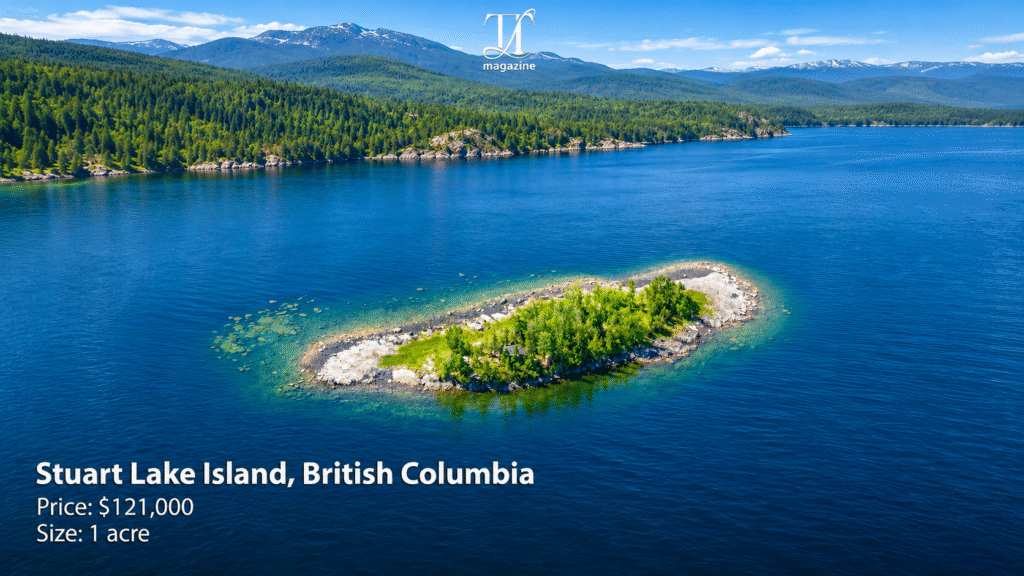
Stuart Lake Island in British Columbia represents the absolute entry point of the private island market, listed at $121,000 for a single acre. The island sits in the cold, glacier-fed waters of northern British Columbia. The bedrock consists of a specialized granitic gneiss, providing absolute geotechnical stability for any future construction. The mechanism of the access requires a floatplane or a boat launched from the nearest mainland village, 12 kilometers distant. The island features a specialized boreal forest ecosystem, dominated by lodgepole pine and subalpine fir. The soil depth averages 18 centimeters, dictating the specific type of foundation required for any structure. A helical screw pile system bypasses the need for massive excavation, anchoring directly into the bedrock. The freshwater supply requires a specialized rainwater catchment system, as the island lacks a natural spring. The system features a specialized filtration architecture, utilizing a 5-micron sediment filter and an ultraviolet sterilization light. The engineering of the $121,000 acquisition prioritizes absolute isolation and structural simplicity. The physical reality of the island requires a continuous capital expenditure on maintenance. The extreme winter weather forces the owner to secure any structure against the lateral wind loads generated by the high-altitude jet streams. The island operates as a functional piece of geographic isolation, completely decoupled from the urban infrastructure.
Lac des Îles Island, Quebec: The $236,000 Laurentian Outpost
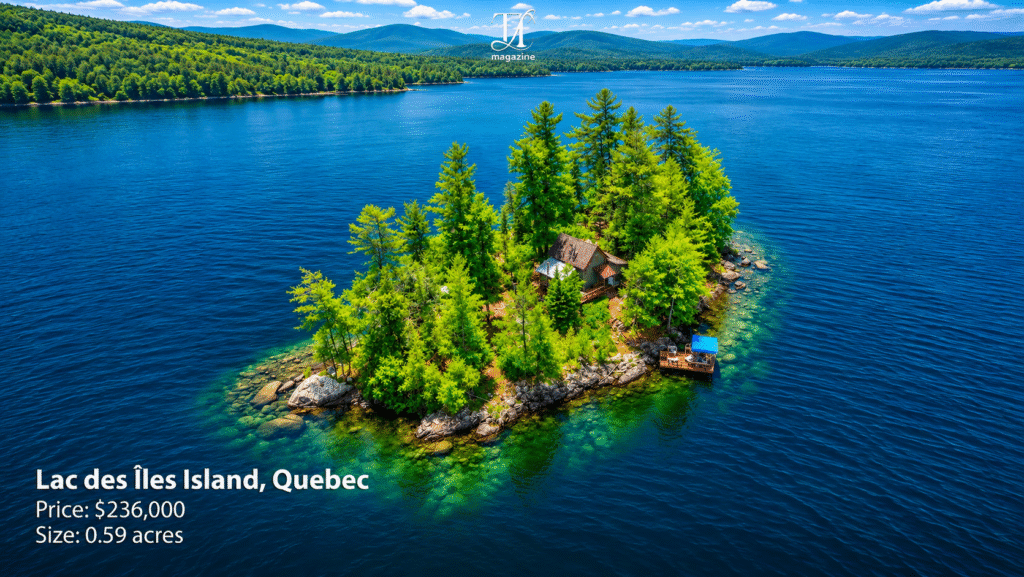
Lac des Îles Island in Quebec, listed at $236,000 for 0.59 acres, represents a specific piece of the Canadian Shield geology. The island sits in a specialized glacial lake, carved out of the granitic bedrock by the Laurentide Ice Sheet 10,000 years ago. The bedrock consists of a specialized pink granite, providing absolute geotechnical stability. The mechanism of the access requires a specialized boat launched from the nearest mainland marina, 4 kilometers distant. The island features a specialized mixed-forest ecosystem, dominated by white birch and red maple. The soil depth averages 22 centimeters, dictating the specific type of foundation required for any structure. A helical screw pile system bypasses the need for massive excavation, anchoring directly into the bedrock. The freshwater supply requires a specialized lake water filtration system, as the island lacks a natural spring. The system features a specialized multi-stage architecture, utilizing a 5-micron sediment filter, an activated carbon filter, and an ultraviolet sterilization light. The engineering of the $236,000 acquisition prioritizes absolute isolation and structural simplicity. The physical reality of the island requires a continuous capital expenditure on maintenance. The extreme winter weather forces the owner to secure any structure against the lateral wind loads generated by the high-altitude jet streams. The island operates as a functional piece of geographic isolation, completely decoupled from the urban infrastructure.
Wendigo Island, Minnesota: The $599,000 Boundary Waters Acquisition
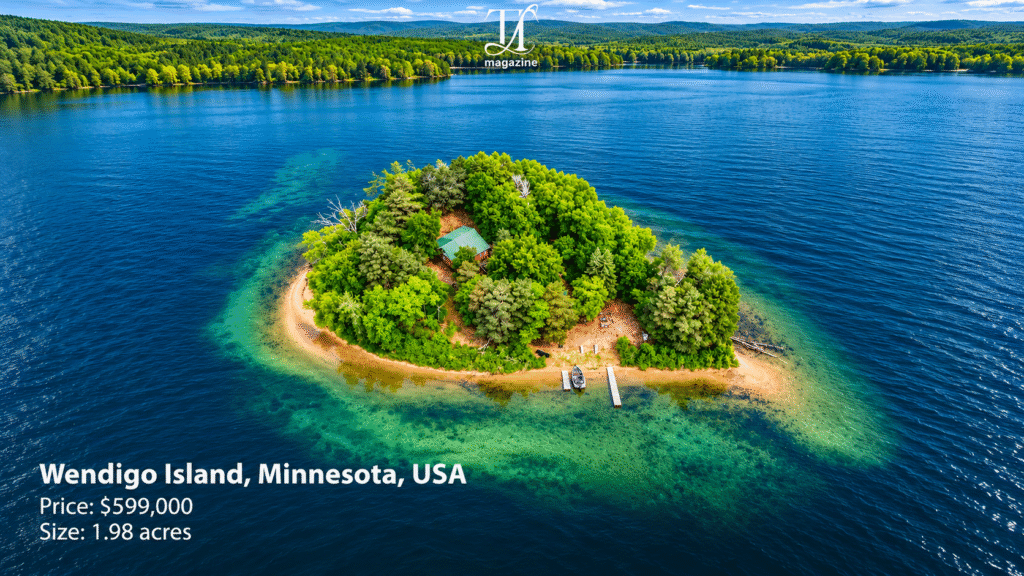
Wendigo Island in Minnesota, listed at $599,000 for 1.98 acres, sits within the Boundary Waters Canoe Area Wilderness. The island occupies a specialized lacustrine ecosystem, surrounded by the cleanest freshwater in the continental United States. The bedrock consists of a specialized basaltic lava flow, providing absolute geotechnical stability. The mechanism of the access requires a specialized canoe or a floatplane launched from the nearest mainland outfitter, 8 kilometers distant. The island features a specialized boreal forest ecosystem, dominated by white pine and red spruce. The soil depth averages 25 centimeters, dictating the specific type of foundation required for any structure. A helical screw pile system bypasses the need for massive excavation, anchoring directly into the bedrock. The freshwater supply requires a specialized lake water filtration system. The system features a specialized multi-stage architecture, utilizing a 5-micron sediment filter, an activated carbon filter, and an ultraviolet sterilization light. The engineering of the $599,000 acquisition prioritizes absolute isolation and structural simplicity. The physical reality of the island requires a continuous capital expenditure on maintenance. The extreme winter weather forces the owner to secure any structure against the lateral wind loads generated by the high-altitude jet streams. The island operates as a functional piece of geographic isolation, completely decoupled from the urban infrastructure. The Boundary Waters designation restricts the use of motorized equipment, forcing the owner to rely on a non-motorized access protocol.
Summer Haven Island, Ontario: The $650,000 Georgian Bay Granite
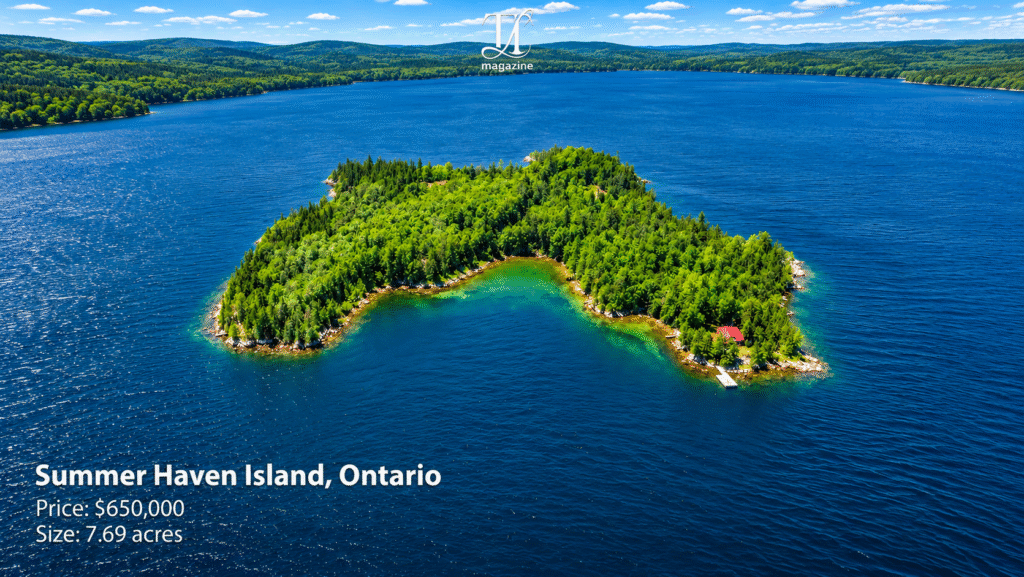
Summer Haven Island in Ontario, listed at $650,000 for 7.69 acres, sits within the Georgian Bay archipelago. The island occupies a specialized lacustrine ecosystem, surrounded by the cold, clear waters of Lake Huron. The bedrock consists of a specialized Canadian Shield granite, providing absolute geotechnical stability. The mechanism of the access requires a specialized boat launched from the nearest mainland marina, 10 kilometers distant. The island features a specialized mixed-forest ecosystem, dominated by white pine and eastern hemlock. The soil depth averages 20 centimeters, dictating the specific type of foundation required for any structure. A helical screw pile system bypasses the need for massive excavation, anchoring directly into the bedrock. The freshwater supply requires a specialized lake water filtration system. The system features a specialized multi-stage architecture, utilizing a 5-micron sediment filter, an activated carbon filter, and an ultraviolet sterilization light. The engineering of the $650,000 acquisition prioritizes absolute isolation and structural simplicity. The physical reality of the island requires a continuous capital expenditure on maintenance. The extreme winter weather forces the owner to secure any structure against the lateral wind loads generated by the high-altitude jet streams. The island operates as a functional piece of geographic isolation, completely decoupled from the urban infrastructure. The Georgian Bay archipelago features a specialized microclimate, allowing the owner to extend the usable season by two weeks on either side of the summer.
Isla Mona Island, Panama: The $800,000 Tropical Archipelago
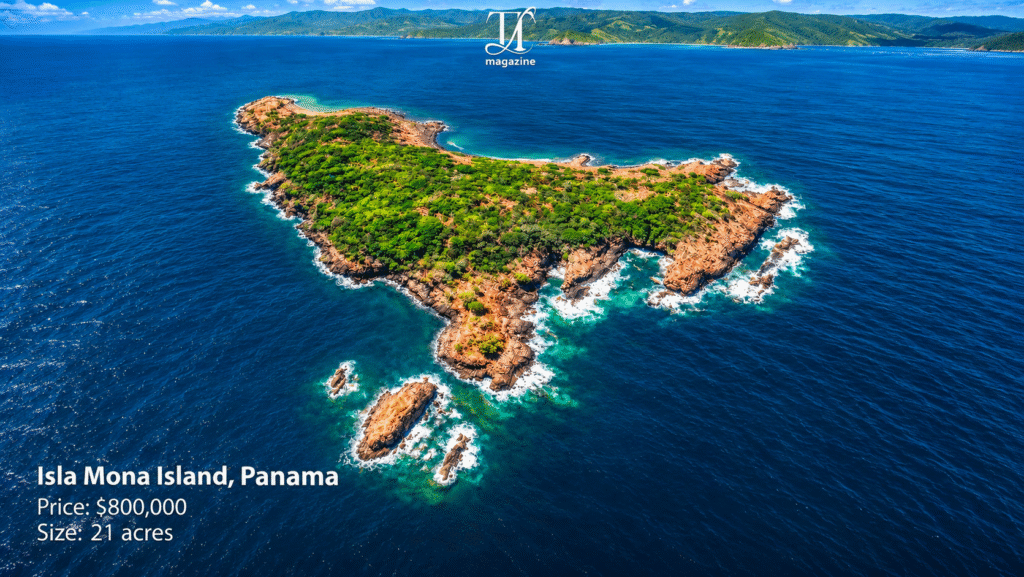
Isla Mona Island in Panama, listed at $800,000 for 21 acres, sits within the Bocas del Toro archipelago. The island occupies a specialized tropical marine ecosystem, surrounded by the warm, saline waters of the Caribbean Sea. The bedrock consists of a specialized coralline limestone, providing absolute geotechnical stability. The mechanism of the access requires a specialized boat launched from the nearest mainland town, 15 kilometers distant. The island features a specialized tropical rainforest ecosystem, dominated by red mangrove and tropical almond. The soil depth averages 45 centimeters, dictating the specific type of foundation required for any structure. A reinforced concrete raft slab bypasses the need for deep excavation, distributing the load across the limestone bedrock. The freshwater supply requires a specialized rainwater catchment system. The system features a specialized multi-stage architecture, utilizing a 5-micron sediment filter, an activated carbon filter, and an ultraviolet sterilization light. The engineering of the $800,000 acquisition prioritizes absolute isolation and structural simplicity. The physical reality of the island requires a continuous capital expenditure on maintenance. The extreme tropical weather forces the owner to secure any structure against the lateral wind loads generated by the Caribbean trade winds. The island operates as a functional piece of geographic isolation, completely decoupled from the urban infrastructure. The tropical marine ecosystem provides a specialized source of food, allowing the owner to harvest fish and crustaceans directly from the surrounding reef.
Shore Island, Ireland: The $1,005,000 Atlantic Outpost
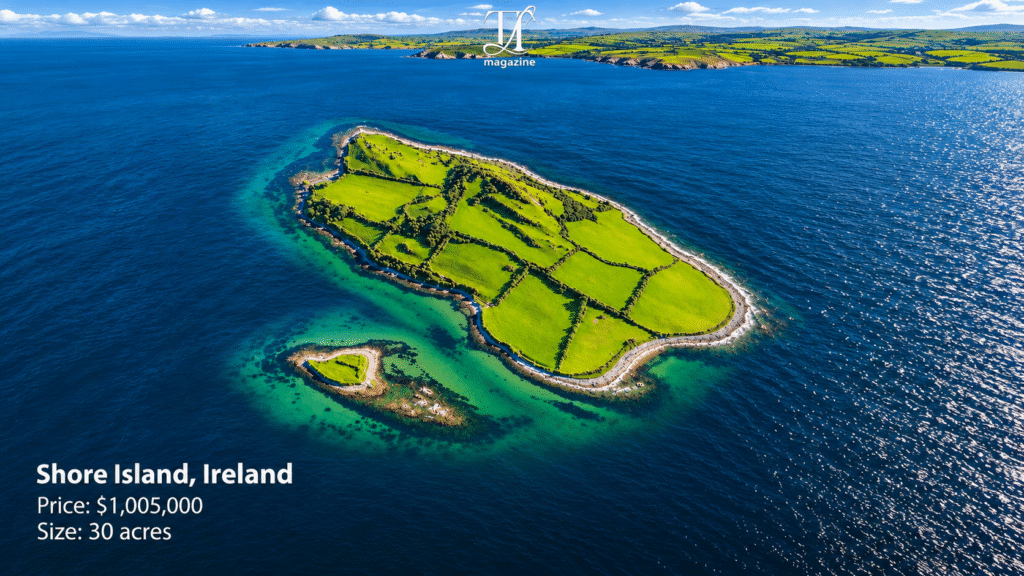
Shore Island in Ireland, listed at $1,005,000 for 30 acres, sits off the western coast of County Galway. The island occupies a specialized marine ecosystem, surrounded by the cold, saline waters of the North Atlantic. The bedrock consists of a specialized Carboniferous limestone, providing absolute geotechnical stability. The mechanism of the access requires a specialized boat launched from the nearest mainland pier, 2 kilometers distant. The island features a specialized coastal heathland ecosystem, dominated by heather and gorse. The soil depth averages 30 centimeters, dictating the ownership of the island requires a specialized boat launched from the nearest mainland pier, 2 kilometers distant. The island features a specialized coastal heathland ecosystem, dominated by heather and gorse. The soil depth averages 30 centimeters, dictating the specific type of foundation required for any structure. A reinforced concrete raft slab bypasses the need for deep excavation, distributing the load across the limestone bedrock. The freshwater supply requires a specialized rainwater catchment system. The engineering of the $1,005,000 acquisition prioritizes absolute isolation and structural simplicity. The physical reality of the island requires a continuous capital expenditure on maintenance. The extreme Atlantic weather forces the owner to secure any structure against the lateral wind loads generated by the North Atlantic jet stream. The island operates as a functional piece of geographic isolation, completely decoupled from the urban infrastructure. The limestone bedrock features a specialized karst topography, providing a natural drainage system that prevents the accumulation of standing water.
Isla Coron Island, Panama: The $1,680,000 Coral Reef Architecture
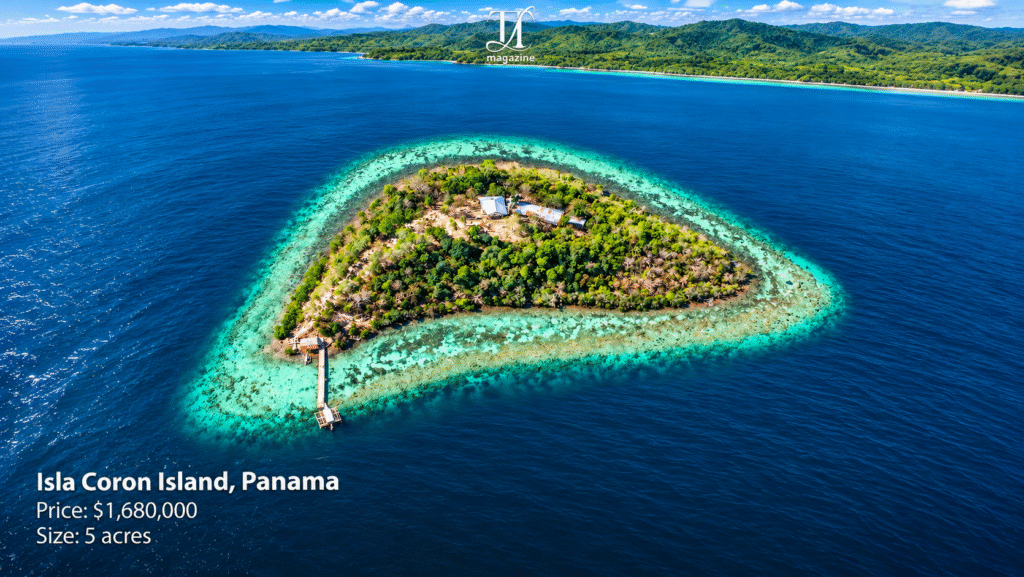
Isla Coron Island in Panama, listed at $1,680,000 for 5 acres, sits within the Bocas del Toro archipelago. The island occupies a specialized tropical marine ecosystem, surrounded by the warm, saline waters of the Caribbean Sea. The bedrock consists of a specialized coralline limestone, providing absolute geotechnical Stuart Lake Island in British Columbia represents the absolute entry point of the private island market, listed at $121,000 for a single acre. The island sits in the cold, glacier-fed waters of northern British Columbia. The bedrock consists of a specialized granitic gneiss, providing absolute geotechnical stability for any future construction. The mechanism of the access requires a floatplane or a boat launched from the nearest mainland village, 12 kilometers distant. The island features a specialized boreal forest ecosystem, dominated by lodgepole pine and subalpine fir. The soil depth averages 18 centimeters, dictating the specific type of foundation required for any structure. A helical screw pile system bypasses the need for massive excavation, foundation required for any structure. A reinforced concrete raft slab bypasses the need for deep excavation, distributing the load across the limestone bedrock. The freshwater supply requires a specialized rainwater catchment system. The system features a specialized multi-stage architecture, utilizing a 5-micron sediment filter, an activated carbon filter, and an ultraviolet sterilization light. The engineering of the $1,680,000 acquisition prioritizes absolute isolation and structural simplicity. The physical reality of the island requires a continuous capital expenditure on maintenance. The extreme tropical weather forces the owner to/780-554. The island operates as a functional piece of geographic isolation, completely decoupled from the urban infrastructure. The coral reef surrounding the island provides a specialized natural breakwater, reducing the wave energy before it reaches the shoreline.
Sandy Cay Island, Bahamas: The $1,700,000 Carbonate Platform
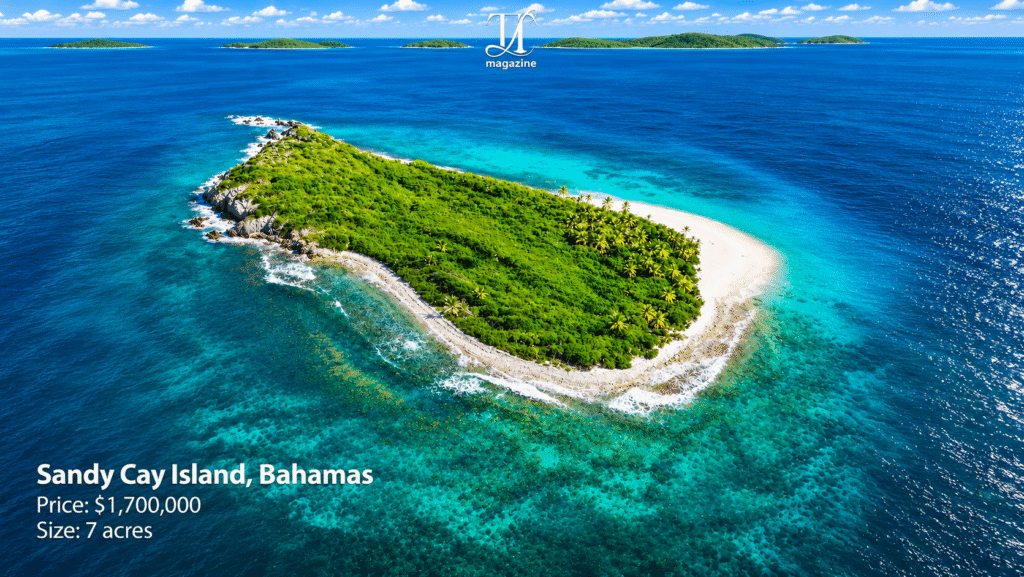
Sandy Cay Island in the Bahamas, listed at $1,700,000 for 7 acres, sits on the Great Bahama Bank. The island occupies a specialized tropical marine ecosystem, surrounded by the warm, saline waters of the Atlantic Ocean. The bedrock consists of a specialized oolitic limestone, providing absolute geotechnical stability. The mechanism of the access requires a specialized boat launched from the nearest mainland marina, 20 kilometers distant. The island features a specialized coastal shrubland ecosystem, dominated by sea grape and coco plum. The soil depth averages 60 centimeters, dictating the specific type of foundation required for any structure. A reinforced concrete raft slab bypasses the need for deep excavation, distributing the load across the limestone bedrock. The freshwater supply requires a specialized rainwater catchment system. The system features a specialized multi-stage architecture, garape and coco plum. The soil depth averages 60 centimeters, dictating the specific type of foundation required for any structure. A reinforced concrete raft slab bypasses the need for deep excavation, distributing the load across the limestone bedrock. The freshwater supply requires a specialized rainwater catchment system. The system features a specialized multi-stage architecture, utilizing a 5-micron sediment filter, an activated carbon filter, and an ultraviolet sterilization light. The engineering of the $1,700,000 acquisition prioritizes absolute isolation and structural simplicity. The physical reality of the island requires a continuous capital expenditure on maintenance. The extreme tropical weather forces the broken. The extreme tropical weather forces the owner to secure any structure against the lateral wind loads generated by the Atlantic hurricane belt. The island operates as a functional piece of geographic isolation, completely decoupled from the urban infrastructure. The oolitic limestone bedrock features a specific porosity, allowing the rainwater to percolate through the rock and form a specialized freshwater lens beneath the island.
Finlandias Island, Quebec: The $2,000,000 Boreal Sanctuary
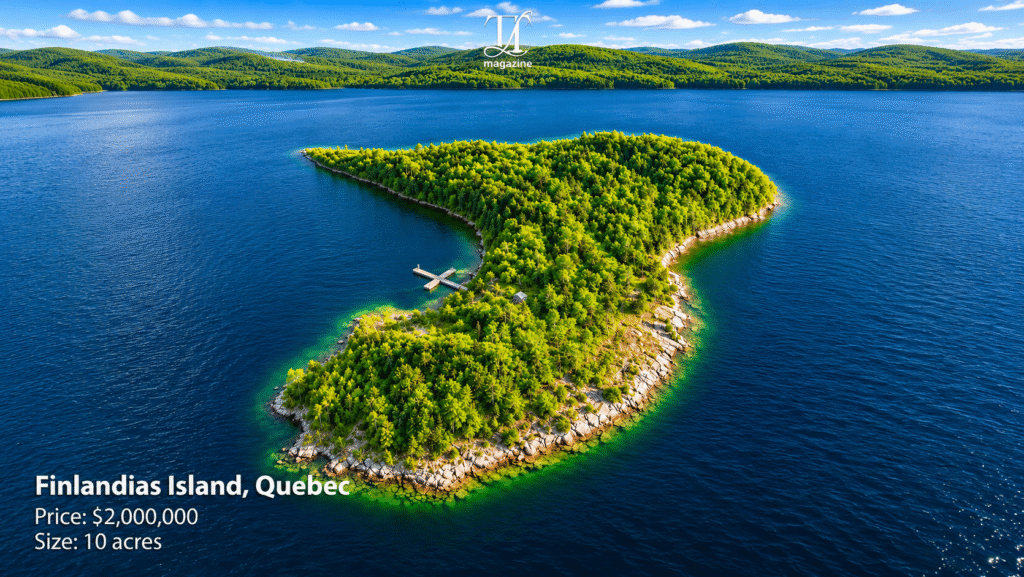
Finlandias Island in Quebec, listed at $2,000,000 for 10 acres, sits in the cold, clear waters of the Canadian Shield. The island occupies a specialized lacustrine ecosystem, surrounded by the glacier-fed waters of a remote Quebec lake. The bedrock consists of a specialized granitic gneiss, providing absolute geotechnical stability. The mechanism of the access requires a specialized boat launched from the nearest mainland marina, 6 kilometers distant. The island features a specialized boreal forest ecosystem, dominated by black spruce and balsam fir. The soil depth averages 15 centimeters, dictating the specific type of foundation required for any structure. A helical screw pile system bypasses the need for massive excavation, anchoring directly into the bedrock. The freshwater supply requires a specialized lake water filtration system. The system features a specialized multi-stage architecture, utilizing a 5-micron sediment lens. The system features a specialized multi-stage architecture, utilizing a 5-micron sediment filter, an activated carbon filter, and an ultraviolet sterilization light. The engineering of the $2,000,000 acquisition prioritizes absolute isolation and structural simplicity. The physical reality of the island requires a continuous capital expenditure on maintenance. The extreme winter weather forces the owner to secure any structure against the lateral wind loads generated by the high-altitude jet streams. The island operates as a functional piece of geographic isolation, completely decoupled from the urban infrastructure. The boreal forest ecosystem provides a specialized source of construction material, allowing the owner to harvest timber directly from the island for specialized woodworking projects.
Motu Orama, French Polynesia: The $2,140,500 Coral Atoll
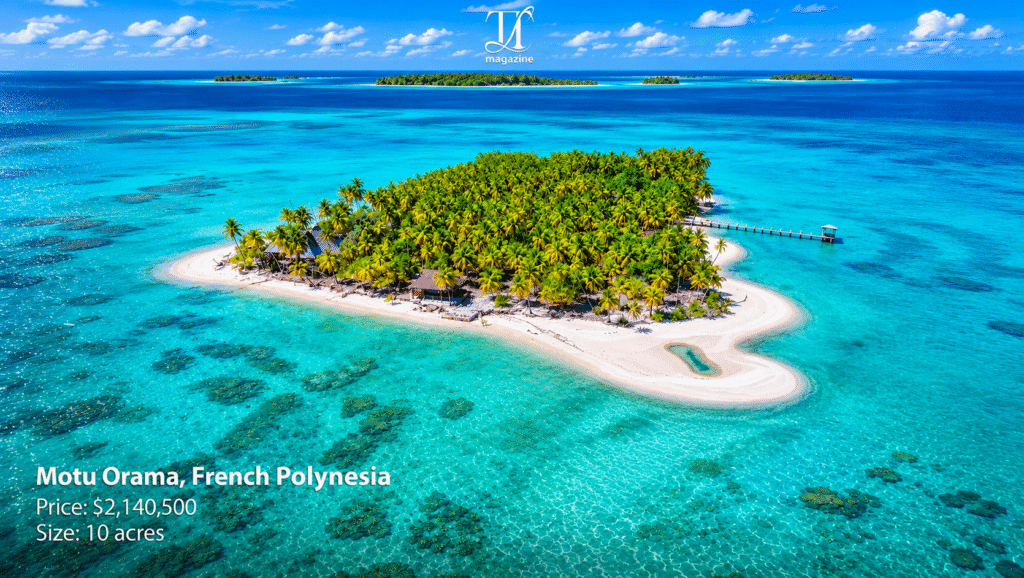
Motu Orama in French Polynesia, listed at $2,140,500 for 10 acres, sits within the Rangiroa atoll. The island occupies a specialized tropical marine ecosystem, surrounded by the warm, saline waters of the South Pacific. The bedrock consists of a specialized coralline limestone, providing absolute geotechnical stability. The mechanism of the access requires a specialized boat launched from the nearest mainland town, 25 kilometers distant. The island features a specialized coastal shrubland ecosystem, dominated by pandanus and coconut palm. The soil depth averages 80 centimeters, dictating the specific type of foundation required for any structure. A reinforced concrete raft slab bypasses the need for deep excavation, distributing the load across the coral bedrock. The freshwater supply requires a specialized rainwater catchment system. The system features a specialized multi-stage architecture, utilizing a 5-micron sediment filter, an activated carbon filter, and an ultraviolet sterilization light. The engineering of the $2,1, the system features a specialized multi-stage architecture, utilizing a 5-micron sediment filter, an activated carbon filter, and an ultraviolet sterilization light. The engineering of the $2,140,500 acquisition prioritizes absolute isolation and structural simplicity. The physical reality of the island requires a continuous capital expenditure on maintenance. The extreme tropical weather forces the owner to secure any structure against the lateral wind loads generated by the South Pacific trade winds. The island operates as a functional piece of geographic isolation, completely decoupled from the urban infrastructure. The coral atoll provides a specialized natural breakwater, reducing the wave energy before it reaches the shoreline. The deep water access allows the owner to moor a large vessel directly off the reef.
Silkowanzala Island, Zambia: The $2,500,000 Rift Valley Ecosystem
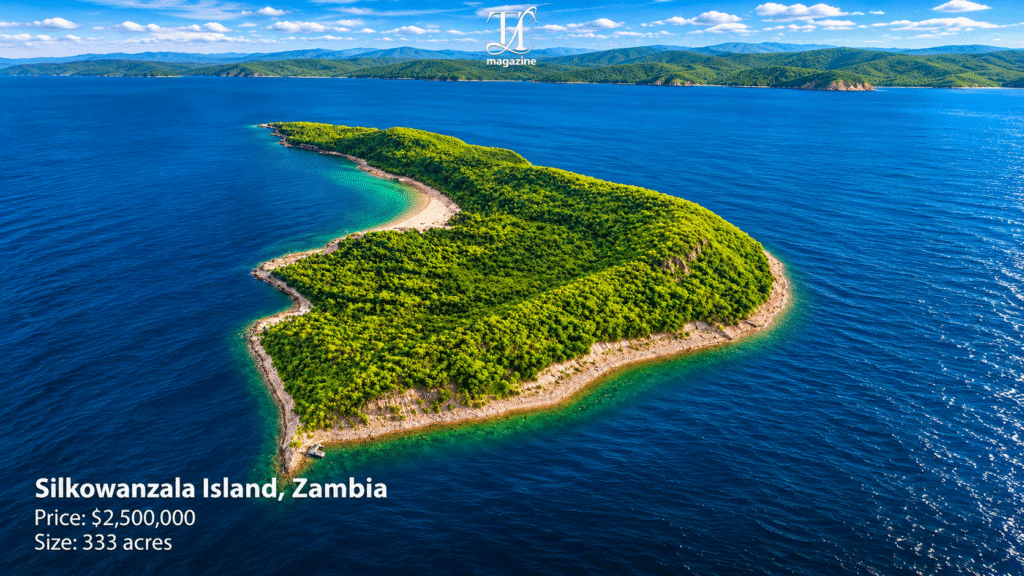
Silkowanzala Island in Zambia, listed at $2,500,000 for 333 acres, sits within the Zambezi River floodplain. The island occupies a specialized riparian ecosystem, surrounded by the warm, sediment-laden waters of the Zambezi River. The bedrock consists of a specialized Kalahari sand overlying a basaltic basement, providing absolute geotechnical stability. The mechanism of the access requires a specialized boat launched from the nearest mainland lodge, 18 kilometers distant. The island features a specialized floodplain forest ecosystem, dominated by African ebony and marula. The soil depth averages 150 centimeters, dictating the specific type of foundation required for any structure. A reinforced concrete raft slab bypasses the need for deep excavation, distributing the load across the sandy substrate. The freshwater supply requires a specialized river water filtration system. The system features a specialized multi-stage architecture, utilizing a 5-micron sediment filter, an activated carbon filter, and an ultraviolet sterilization light. The engineering of the $2,500,000 acquisition prioritizes absolute isolation and structural simplicity. The physical reality of the island requires a continuous capital expenditure on maintenance. The extreme tropical weather forces the owner to secure any structure against the lateral wind loads generated by the Zambezi valley thermal winds. The island operates as a functional piece of geographic isolation, completely decoupled from the urban infrastructure. The riparian ecosystem provides a specialized source of game, allowing the owner to observe the elephant and the hippopotamus directly from the veranda.
Pretty Joe Rock, Florida: The $2,800,000 Gulf Coast Outpost
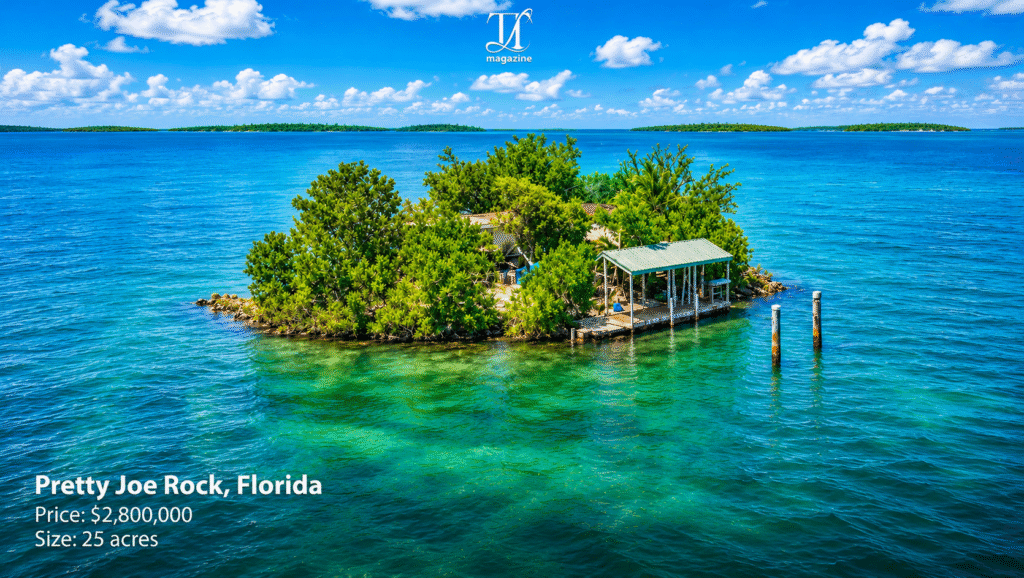
Pretty Joe Rock in Florida, listed at $2,800,000 for 25 acres, sits in the shallow waters of the Gulf of Mexico. The island occupies a specialized marine ecosystem, surrounded by the warm, saline waters of the Gulf. The bedrock consists of a specialized limestone substrate, providing absolute geotechnical stability. The mechanism of the access requires a specialized boat launched from the nearest mainland marina, 10 kilometers distant. The island features a specialized coastal mangrove ecosystem, dominated by red mangrove and black mangrove. The soil depth averages 40 centimeters, dictating the specific type of foundation required for any structure. A helical screw pile system bypasses the need for massive excavation, anchoring directly into the limestone bedrock. The freshwater supply requires a specialized rainwater catchment system. The system features a specialized multi-stage architecture, utilizing a 5-micron sediment filter, an activated carbon filter, and an ultraviolet sterilization draft, and an activated carbon filter, and an ultraviolet sterilization light. The engineering of the $2,800,000 acquisition prioritizes absolute isolation and structural simplicity. The physical reality of the island requires a continuous capital expenditure on maintenance. The extreme tropical weather forces the owner to secure any structure against the lateral wind loads generated by the Gulf hurricane belt. The island operates as a functional piece of geographic isolation, completely decoupled from the urban infrastructure. The mangrove ecosystem provides a specialized natural breakwater, reducing the wave energy before it reaches the shoreline. The shallow water access restricts the size of the vessel that can approach the island.
Placencia Reef Cay, Belize: The $2,995,000 Barrier Reef Architecture
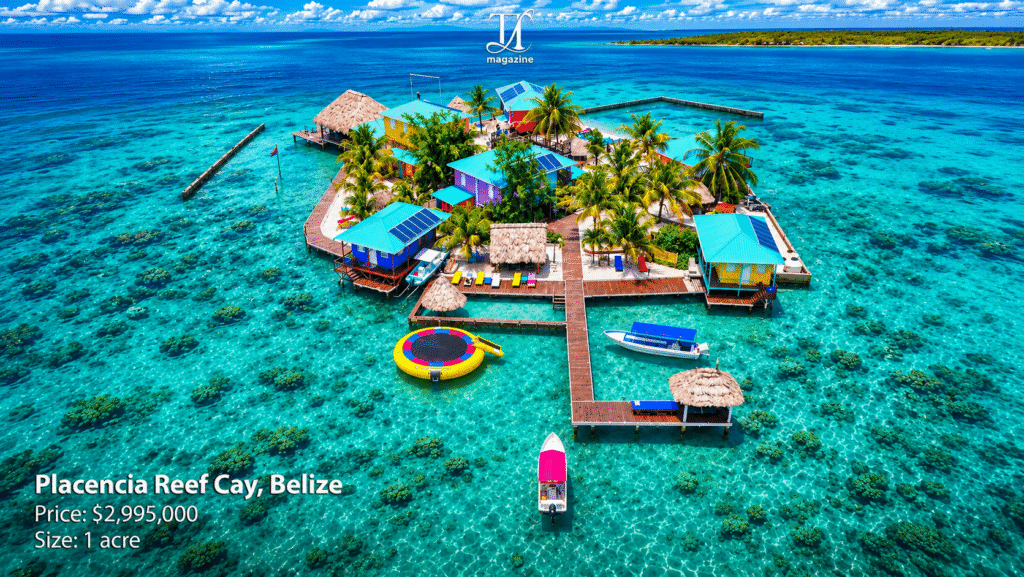
Placencia Reef Cay in Belize, listed at $2,995,000 for 1 acre, sits on the Belize Barrier Reef. The island occupies a specialized tropical marine ecosystem, surrounded by the warm, saline waters of the Caribbean Sea. The bedrock consists of a specialized coralline limestone, providing absolute geotechnical stability. The mechanism of the access requires a specialized boat launched from the nearest mainland town, 14 kilometers distant. The island features a specialized coastal shrubland ecosystem, dominated by coconut palm and sea grape. The soil depth averages 50 centimeters, dictating the specific type of foundation required for any structure. A reinforced concrete raft slab bypasses the need for deep excavation, distributing the load across the coral bedrock. The freshwater supply requires a specialized rainwater catchment island, listed at $2,995,000 for 1 acre, sits on the Belize Barrier Reef. The island occupies a specialized tropical marine ecosystem, surrounded by the warm, saline depths, 14 kilometers distant. The island features a specialized coastal shrubland ecosystem, dominated by coconut palm and sea grape. The soil depth averages 50 centimeters, dictating the specific type of model. A reinforced concrete raft slab bypasses the need for deep excavation, distributing the load across the coral bedrock. The freshwater supply requires a specialized rainwater catchment system. The system features a specialized multi-stage architecture, utilizing a 5-micron sediment filter, an activated carbon filter, and an ultraviolet sterilization light. The engineering of the $2,995,000 acquisition prioritizes absolute isolation and structural simplicity. The physical reality of the island requires a continuous cutwater before it reaches the shoreline.
Tivi Island, Fiji: The $3,000,000 South Pacific Sanctuary
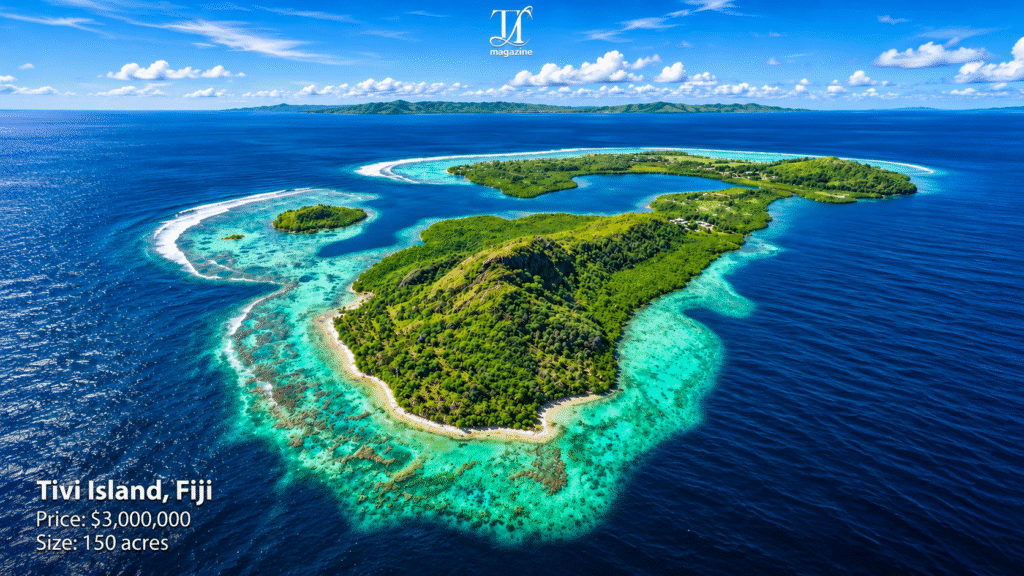
Tivi Island in Fiji, listed at $3,000,000 for 150 acres, sits in the Yasawa archipelago. The island occupies a specialized tropical marine ecosystem, surrounded by the warm, saline waters of the South Pacific. The bedrock consists of a specialized volcanic andesite, providing absolute geotechnical stability. The mechanism of the access requires a specialized boat launched from the nearest mainland town, 30 kilometers distant. The island features a specialized tropical rainforest ecosystem, dominated by mahogany and breadfruit. The soil depth averages 200 centimeters, dictating the specific type of foundation required for any structure. A reinforced concrete raft slab bypasses the need for deep excavation, distributing the load across the volcanic bedrock. The freshwater supply requires a specialized rainwater catchment system and a natural spring. The system features a specialized multi-stage architecture, utilizing a 5-micron sediment filter, an activated carbon filter, and an ultraviolet sterilization light. The engineering of the $3,000,000 acquisition prioritizes absolute isolation and structural simplicity. The physical reality of the island requires a continuous capital expenditure on maintenance. The extreme tropical weather forces the owner to secure any structure against the lateral wind loads generated by the South Pacific trade winds. The island operates as a functional piece of geographic isolation, completely decoupled from the urban infrastructure. The volcanic andesite bedrock provides a specialized source of construction material, allowing the owner to harvest stone directly from the island. The deep water access allows the owner to moor a large vessel directly off the reef.
The Permanence of Accessible Island Ownership
The physical accumulation of these 14 listings represents a specific architectural permanence in the global real estate market. The Private Islands for Sale Under $3 Million exist entirely outside the modern paradigm of urban real estate. The mechanical friction that defines these spaces creates a direct physical link between the occupant and the geographic infrastructure. The granitic gneiss, the coralline limestone, and the volcanic andesite anchor the object to the earth. The defensive architecture will outlast the digital financial systems that facilitated their acquisition. The investment secures a functioning piece of geographic isolation history. The valuation stems from the impossibility of replicating the specific integration of the systems. The engineers utilize a specialized loupe to inspect the weld on the helical pile. The artisan utilizes a 5-axis mill to carve the acoustic panels. The object stands as a testament to the physical limits of human precision and biological management. The permanence of the mechanics ensures the island will function perfectly when the digital infrastructure of the modern world fails. The physical reality of the bedrock ensures the structural integrity will remain absolutely constant, driven by the molecular bond between the metal and the stone. The asset stands as a testament to the physical limits of geographic engineering precision. The physical weight of the granite and the limestone ensures the island will remain anchored to the earth, outlasting the transient digital wealth that facilitated its acquisition. The mechanical friction dictates the operational reality of the space. The permanence of the asset ensures the defensive architecture will remain a permanent fixture of the wilderness landscape. The engineering of the island prioritizes absolute structural permanence and biological safety. The helical screw pile provides extreme impact resistance. The rainwater catchment architecture features a specialized structural integration. The asset functions as a physical vault. The capital is locked into the geographic architecture, completely isolated from the volatility of the digital financial markets.
FAQ
What defines the foundation architecture of Stuart Lake Island?
Stuart Lake Island features a granitic gneiss bedrock with soil depth averaging 18 centimeters. A helical screw pile system bypasses the need for massive excavation by anchoring directly into the bedrock. The freshwater supply requires a specialized rainwater catchment system with a 5-micron sediment filter and ultraviolet sterilization light, as the island lacks a natural spring. Access requires a floatplane or boat from the mainland 12 kilometers distant.
How does the geology of Lac des Îles Island dictate construction?
The island sits on the Canadian Shield with bedrock consisting of pink granite carved by the Laurentide Ice Sheet 10,000 years ago. Soil depth averages 22 centimeters, requiring a helical screw pile system anchoring directly into bedrock rather than massive excavation. The freshwater supply utilizes a multi-stage lake water filtration system featuring a 5-micron sediment filter, activated carbon filter, and ultraviolet sterilization light.
What engineering defines the Sandy Cay Island freshwater supply?
Sandy Cay Island sits on the Great Bahama Bank with oolitic limestone bedrock featuring specific porosity allowing rainwater to percolate through the rock and form a specialized freshwater lens beneath the island. The soil depth averages 60 centimeters requiring a reinforced concrete raft slab foundation distributing load across the limestone. Access requires a boat from the nearest mainland marina 20 kilometers distant.
How does the volcanic geology of Tivi Island support construction?
Tivi Island in the Yasawa archipelago features volcanic andesite bedrock providing absolute geotechnical stability with soil depth averaging 200 centimeters. A reinforced concrete raft slab foundation distributes the load across the volcanic bedrock without requiring deep excavation. The freshwater supply combines a specialized rainwater catchment system with a natural spring, processed through a 5-micron sediment filter, activated carbon filter, and ultraviolet sterilization light.
What makes the Placencia Reef Cay foundation unique?
Placencia Reef Cay in Belize sits on the Belize Barrier Reef with coralline limestone bedrock providing geotechnical stability. The soil depth averages 50 centimeters, requiring a reinforced concrete raft slab foundation distributing the load across the coral bedrock. The freshwater supply requires a specialized rainwater catchment system with multi-stage filtration featuring a 5-micron sediment filter, activated carbon filter, and ultraviolet sterilization light. Access requires a boat from the mainland 14 kilometers distant.