The Architecture of October Wealth Migration
Stepping off a Gulfstream G650 onto the damp tarmac of Le Bourget Airport at 2:00 AM, the chilled autumn air immediately interacts with the thermal exhaust of the carbon braking system. The logistics of moving ultra-high-net-worth individuals across the globe during the tenth month of the year require a highly coordinated architecture of private aviation slots, bonded cargo handlers, and specialized security details. The accumulation of capital concentrates in specific geographic coordinates during this period, driven by a calendar of cultural and sporting fixtures that dictate the movement of the 0.001 percent. The ecosystem of Exclusive Events for Billionaires in October bypasses the traditional consumer retail environment entirely. These individuals completely ignore the predictable inventory and seasonal markdowns associated with Luxury Outlet Shopping, focusing instead on the acquisition of fractional assets, thoroughbred genetics, and bespoke mechanical engineering. The physical infrastructure required to support this migration involves subterranean vaults, climate-controlled transport networks, and hyper-specific material science. The valuation of these gatherings stems from the friction of entry. The capital required to secure a berth at a marina, a stud farm, or a private viewing suite dictates the operational reality of the ecosystem. The physical permanence of these events relies on the precise engineering of the temporary structures and the logistical mechanics that sustain them. The friction of the transaction disappears behind a facade of effortless luxury, anchored entirely by the structural steel and fiber optics hidden beneath the surface. The migration of extreme wealth alters the micro-economy of the host city, forcing a continuous capital expenditure on infrastructure to accommodate the specific sensory and security requirements of the demographic. The events function as physical nodes in a global network of capital preservation, where the handshake and the visual inspection of an asset remain the ultimate validation of a transaction.
F1 Singapore Grand Prix
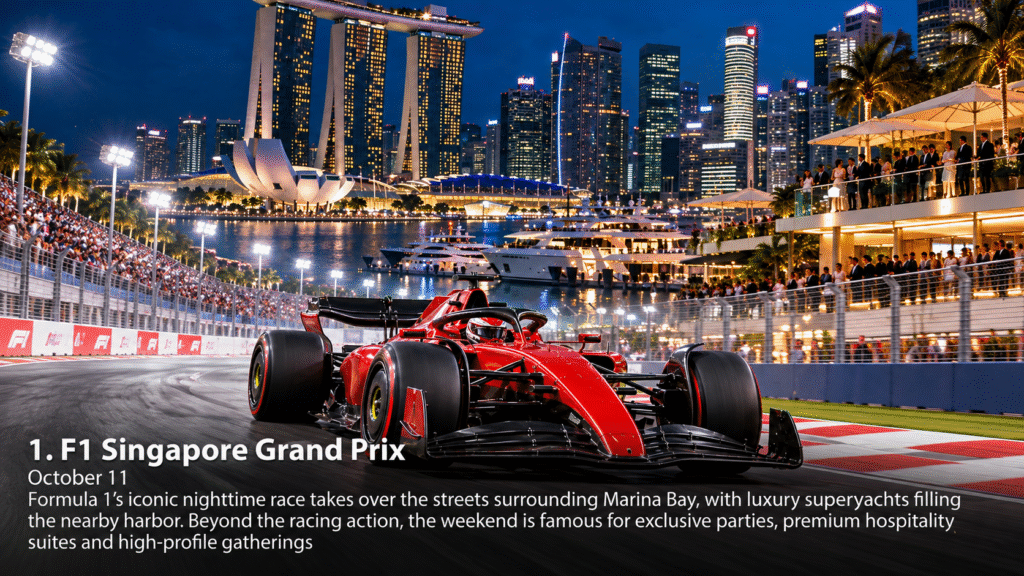
Standing on the aft deck of a 100-meter superyacht moored in Marina Bay, the acoustic shockwave of a 1.6-liter turbocharged V6 engine reverberates through the titanium hull at exactly 8:00 PM. The F1 Singapore Grand Prix operates as a highly engineered nocturnal spectacle, relying entirely on a massive temporary lighting infrastructure to eliminate the thermal and visual shadows that plague traditional circuits. The mechanism of the illumination involves 1,500 light projectors mounted on specialized aluminum trusses positioned 12 meters above the track surface. The projectors utilize a specialized prism reflector that diffuses the light uniformly, simulating daylight conditions at an intensity of 3,000 lux without generating the extreme heat of standard halogen bulbs. The presence of luxury superyachts in the harbor dictates a specific logistical architecture. The vessels require specialized mooring rigs that anchor into the deep silt of the bay, utilizing GPS-guided dynamic positioning systems to maintain a precise distance from the seawall. The onboard HVAC systems must overcome the immense radiant heat generated by the track lighting, utilizing massive chilled water loops to maintain the interior climate at a strict 21 degrees Celsius. The Paddock Club functions as a secondary architectural layer, constructed entirely from modular glass and steel components. The structure features displacement ventilation systems that push conditioned air through a porous marble floor, preventing the acoustic harshness of forced-air ductwork. The telemetry data from the cars routes directly to encrypted tablets via a localized radio network, allowing the high-net-worth spectators to monitor the tire degradation metrics and the brake bias adjustments in real time. The engineering data provides the access. The kinetic energy recovery system utilizes a carbon fiber flywheel spinning at 45,000 revolutions per minute inside a vacuum-sealed housing, harvesting energy during braking and deploying it as electrical power. The social ecosystem of the paddock operates on a strict hierarchy, requiring an invitation to the upper decks to access the team principals. The physical reality of the race relies entirely on aerodynamic precision and the immense capital required to engineer the machines. The exhaust system features a specialized Inconel superalloy that resists oxidation at temperatures exceeding 1000 degrees Celsius. The event creates a localized micro-economy of extreme wealth, completely bypassing the standard retail environment. The physical integration of the circuit into the urban grid forces a continuous manipulation of the city’s infrastructure, ensuring the event remains a permanent fixture of the October calendar. The temporary architecture demands absolute structural integrity, utilizing base-isolated bearings to decouple the grandstands from the low-frequency vibrations generated by the passing vehicles. The visual spectacle masks the intense thermodynamic management required to keep the composite bodywork from delaminating under the extreme thermal load of the tropical climate.
Breeders’ Cup World Championships
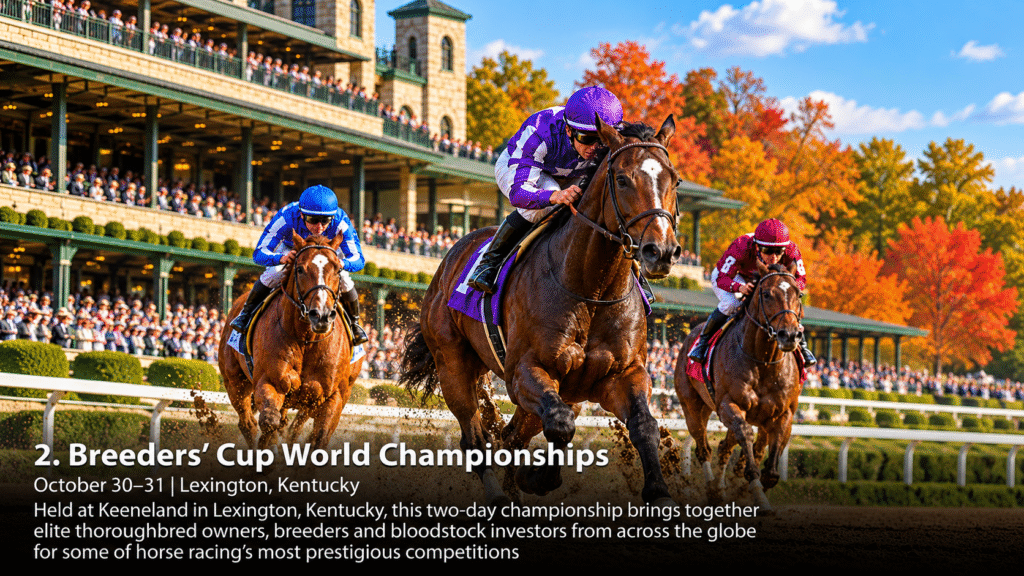
Walking the betting ring at Keeneland in Lexington, Kentucky, the specific muscular tension of a multi-million dollar thoroughbred registers in the tight wraps of the handler’s grip. The Breeders’ Cup World Championships brings together elite thoroughbred owners and bloodstock investors for a highly concentrated display of genetic engineering. The mechanism of the equine athletic performance involves a specific biomechanical adaptation. The horses undergo rigorous training regimes to develop their fast-twitch muscle fibers. The hindquarters act as a massive kinetic engine, generating a forward thrust that propels the 500-kilogram animal across the dirt track at speeds exceeding 40 miles per hour. The infrastructure of Keeneland features a specialized subterranean drainage system beneath the turf course. The system utilizes a network of perforated pipes laid in a herringbone pattern to remove excess water in 10 minutes, ensuring the track maintains a specific firmness. The veterinary infrastructure includes a mobile surgical unit with portable digital radiography equipment. The pre-purchase exams involve a full set of radiographs and an ultrasound of the suspensory ligaments. The economics of the event operate on massive capital flows. The acquisition of a top-tier stallion requires an investment exceeding $50 million. The genetic material is harvested and frozen using liquid nitrogen, ensuring the cryogenic preservation of the bloodline for decades. The stands feature luxury seating areas designed to provide absolute sightlines to the finish line, utilizing specialized optical glass that eliminates glare. The architecture of the private boxes features bespoke millwork and hand-stitched leather wall coverings. The climate control systems maintain a constant temperature to protect the occupants from the fluctuating Kentucky weather. The economics of the sport dictate a strict hierarchy, where the prize money represents a fraction of the total economic value, with the true capital lying in the breeding rights and the genetic permutations of the champions. The physical reality of the horse dictates the operational logistics of the event, forcing a continuous adaptation of the infrastructure to accommodate the specific biological needs of the equine athletes. The biomechanics of the gallop dictate the preparation of the track surface, requiring a precise ratio of sand, silt, and clay to provide the necessary shear strength without causing catastrophic limb failure. The acoustic profile of the auction ring features specialized micro-perforated wood paneling that absorbs the mid-range frequencies of the auctioneer’s voice, ensuring absolute clarity for the bid spotters. The event functions as a physical manifestation of extreme agricultural wealth, completely isolating the biological assets from the volatility of the global financial markets. The physical integration of the stables into the site requires massive reinforced concrete foundations, isolating the horses from the transmission of infectious airborne pathogens.
World Series
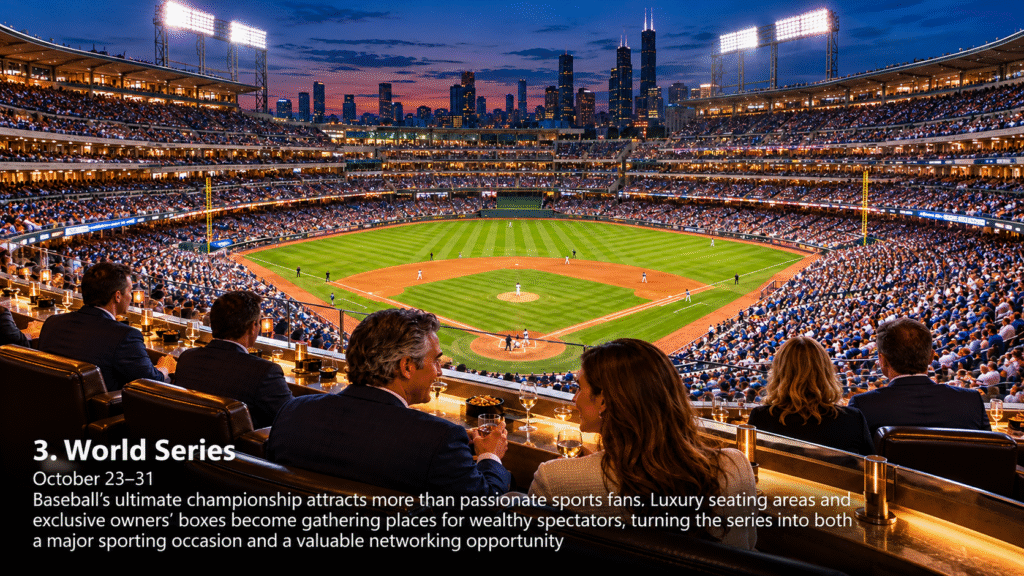
Sitting in the enclosed glass of an exclusive owners’ box at the World Series, the acoustic dampening of the structural glazing separates the corporate quiet from the roaring concrete bowl below. The baseball championship attracts a demographic that values the networking opportunity over the athletic spectacle. The architecture of the luxury suite dictates the operational reality of the experience. The boxes feature specialized HVAC systems that utilize a variable refrigerant flow architecture, routing refrigerant directly to compact fan coil units hidden within the ceiling bulkheads. The system eliminates the need for massive forced-air ductwork, maintaining a completely silent environment. The glass separating the suite from the stadium bowl consists of a specialized acoustic laminate. The interlayer blocks specific frequency ranges, eliminating the harshness of the crowd noise while maintaining visual clarity. The interior features bespoke millwork, utilizing a specific quarter-sawn white oak veneer that matches the aesthetic of the owner’s primary residence. The catering operates on a specialized induction cooking system. The system utilizes a high-frequency alternating magnetic field to heat the cookware directly, preventing the generation of ambient heat in the enclosed space. The presence of wealthy spectators transforms the stadium into a highly visible networking environment. The boxes become gathering places for private equity founders and institutional investors. The transaction bypasses the traditional retail ecosystem entirely. The individuals completely ignore the predictable inventory and seasonal markdowns of mass-market retail, focusing instead on the structural integration of the corporate hospitality. The physical reality of the stadium requires immense structural engineering. The cantilevered concrete decks feature massive post-tensioned steel cables that prevent deflection under the weight of the crowd. The engineering ensures the structural integrity of the luxury suites remains absolute. The event functions as a physical anchor for the sports industry, dictating the capital flows of the media rights and the franchise valuations. The permanence of the architecture ensures the stadium will remain a fixture of the urban landscape, outlasting the transient nature of the individual games. The integration of the digital infrastructure requires massive server rooms located deep beneath the stands, processing the high-speed telemetry from the radar systems that track the velocity and the spin rate of the baseball. The data routes to encrypted tablets in the luxury suites, allowing the high-net-worth spectators to analyze the biomechanics of the pitchers in real time. The structural engineering of the roof features a specialized tensile fabric, utilizing a polytetrafluoroethylene coating that reflects 80 percent of the solar radiation. The material minimizes the thermal load on the interior environment, reducing the energy consumption of the climate control systems. The architecture of the stadium operates as a highly engineered machine, designed to isolate the occupants from the physical discomfort of the external environment while providing absolute acoustic and visual access to the athletic spectacle.
Alba White Truffle Fair
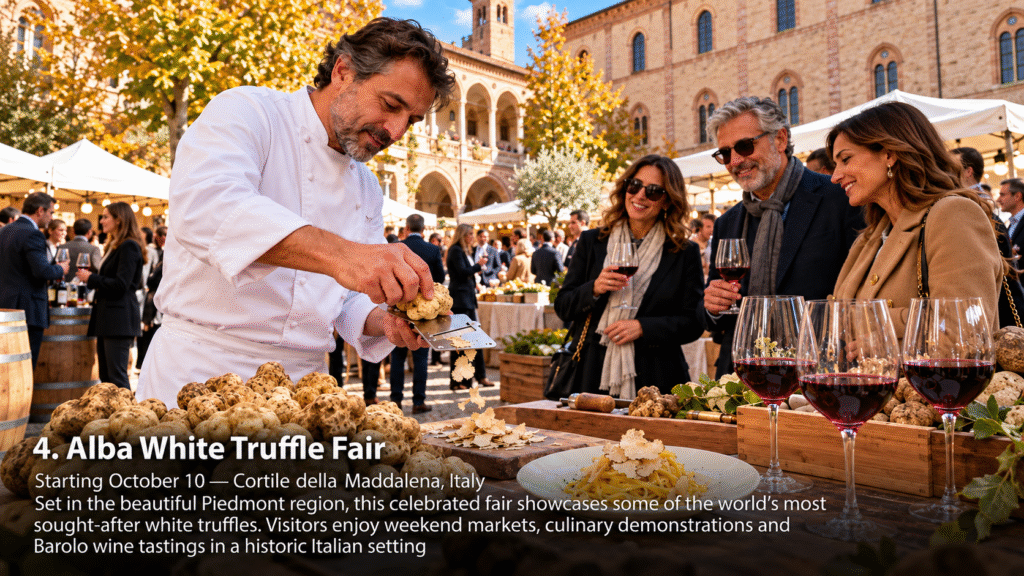
Entering the Cortile della Maddalena in the Piedmont region of Italy, the specific olfactory density of the Tuber magnatum hits before the visual of the wooden stalls registers. The Alba White Truffle Fair operates as a highly specialized agricultural market, driven by the extreme scarcity of the subterranean fungi. The mechanism of the truffle’s aroma involves a complex chemical signature, dominated by dimethyl sulfide and a specific mixture of volatile organic compounds. The compound evaporates rapidly upon exposure to the air, creating a highly localized sensory environment. The preservation of the truffle requires a highly specific environmental protocol. The fungi sit in custom-milled aluminum containers, layered with specialized sterile paper towels and dry rice. The rice absorbs the excess moisture without dehydrating the flesh. The containers feature a specialized humidity control system that maintains the environment at exactly 80 percent relative humidity, preventing the degradation of the cellular structure. The valuation of the truffle stems from the impossibility of mass cultivation. The fungi require a specific symbiotic relationship with the root systems of the host trees, relying on the precise soil composition of the Langhe hills. The landscape architecture of the region dictates the yield. The calcareous clay soil provides the specific mineral profile required for the fungi to thrive. The visitors engage in Barolo wine tastings that require a highly calibrated sensory architecture. The tasting rooms feature specialized displacement ventilation systems that prevent the cross-contamination of the olfactory profiles. The wine glasses feature a specialized titanium crystal geometry that directs the volatile compounds directly to the olfactory epithelium. The event bypasses the traditional retail environment, catering to a demographic that values the extreme biological rarity of the product. The physical reality of the fair relies on the precise manipulation of the microclimate to preserve the integrity of the harvest. The infrastructure of the fair operates as a temporary marketplace for extreme agricultural wealth, completely isolating the fungi from the thermal fluctuations of the external environment. The logistics of moving the truffles from the forest to the market require specialized bonded couriers. The couriers travel in climate-controlled vehicles, maintaining the exact temperature required to prevent the rapid breakdown of the organic compounds. The acquisition of the truffle functions as a direct transfer of capital from the ultra-wealthy to the specialized agriculturalists. The physical weight of the truffle dictates the valuation, measured on highly calibrated digital scales that operate to a tolerance of 0.01 grams. The engineering of the scale features a specialized vibration-dampening system that isolates the weighing platform from the ambient footsteps of the market crowd. The event establishes a temporary physical connection between the subterranean biology of the region and the extreme capital of the international collectors.
Art Basel Paris
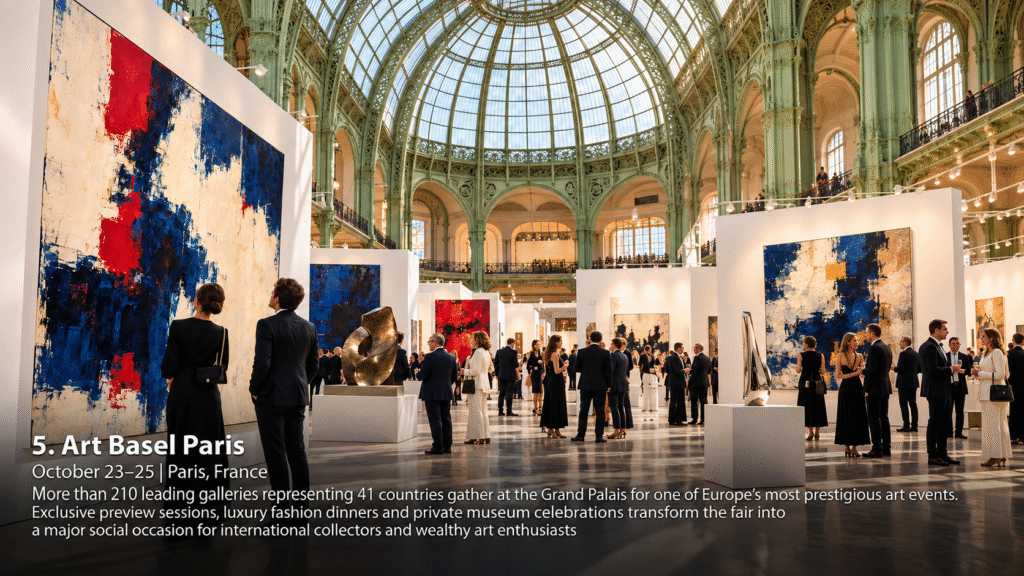
Walking the restored glass nave of the Grand Palais, the acoustic profile of 210 leading galleries hums with the specific frequency of high-value capital exchange. Art Basel Paris transforms the historic structure into a highly engineered commercial environment. The mechanism of the art fair involves the precise manipulation of the interior climate. The Grand Palais features a specialized HVAC system that maintains a strict 21 degrees Celsius and 45 percent relative humidity. The environmental control is necessary to prevent the microscopic expansion of the canvas supports and the degradation of the historical pigments. The flooring consists of a specialized modular acoustic vinyl. The material absorbs the impact noise of the thousands of attendees, preventing the acoustic harshness that plagues traditional exhibition halls. The international collectors navigate the fair via a specialized VIP preview architecture. The preview operates 24 hours before the public opening, allowing the ultra-wealthy to acquire the multi-million dollar pieces before the general market gains access. The lighting features a specialized 3000 Kelvin color temperature that enhances the warm tones of the paint without emitting ultraviolet radiation. The UV filtration prevents the photochemical degradation of the artwork. The logistics of moving the art require a specialized secure network. The pieces travel in climate-controlled shipping containers, utilizing specialized vibration-dampening suspension systems. The customs clearance process occurs via a specialized bonded warehouse, allowing the international buyers to move the art across borders without suffering immediate tax attrition. The luxury fashion dinners associated with the event operate as highly exclusive networking environments. The dinners feature bespoke culinary architecture, utilizing specialized induction cooking systems to maintain the precise temperature of the dishes. The event functions as a physical concentration of extreme cultural capital, completely bypassing the traditional retail ecosystem. The physical reality of the fair relies on the absolute precision of the environmental engineering to protect the financial value of the assets on display. The structural engineering of the Grand Palais features massive steel arches that span the nave. The steel features a specialized lead-based paint that prevents the oxidation of the structural members. The restoration of the glass panels required a specialized diamond-tipped CNC mill to recreate the exact geometry of the original ironwork. The integration of the modern climate control systems into the historic structure required the installation of a specialized secondary steel framework, isolating the modern ductwork from the historic facade. The architecture of the fair prioritizes the absolute security of the assets. The perimeter features specialized pressure-sensitive flooring that detects the exact weight distribution of the attendees, alerting the security personnel to any abnormal congregation near the high-value pieces. The physical integration of the art into the global financial system occurs within the temporary walls of the fair, establishing a localized market that dictates the valuation of global cultural assets.
Paris Motor Show
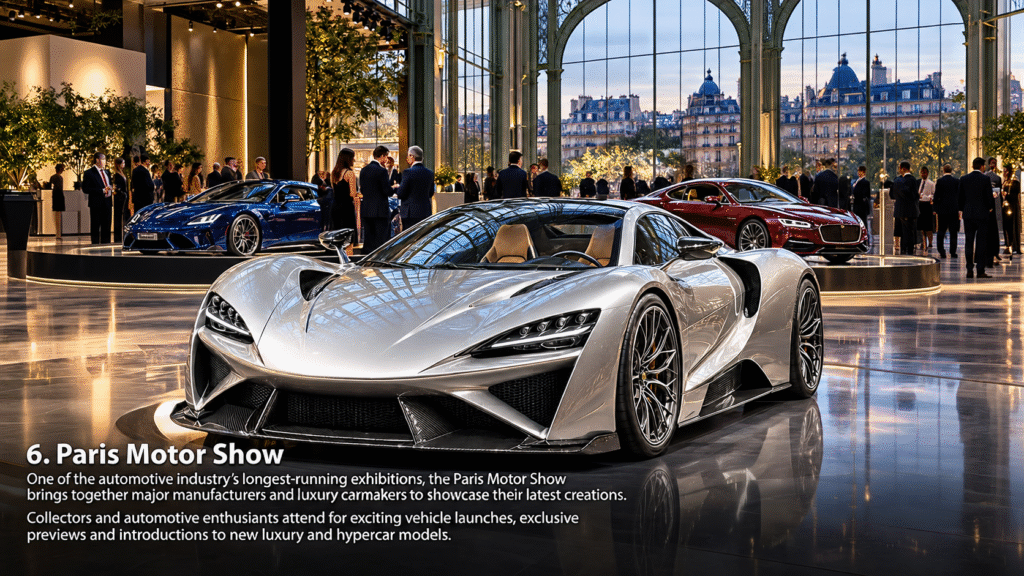
Standing on the polished terrazzo of the Paris Motor Show, the smell of high-gloss automotive paint mixed with the ozone from high-voltage EV displays dominates the sensory environment. The exhibition brings together major manufacturers and luxury carmakers to showcase the absolute pinnacle of mechanical engineering. The mechanism of the hypercar display involves the precise integration of advanced materials science. The chassis of the vehicles features a carbon fiber monocoque. The engineers utilized a proprietary resin transfer molding process to construct the chassis, utilizing a T800 grade carbon weave layered in specific orientations to maximize torsional rigidity. The display stands feature specialized structural glazing. The glass consists of massive panes of low-iron material that feature an electrochromic film, changing opacity based on the ambient UV index to manage the solar heat gain. The collectors and automotive enthusiasts attend the event for the exclusive previews of new hypercars. The VIP access requires a specialized biometric scan. The system maps the unique vascular pattern of the user’s hand, preventing unauthorized entry. The vehicles feature specialized acoustic engineering. The exhaust system utilizes a specialized Inconel superalloy that tunes the sound frequency to a specific harmonic resonance. The event operates as a physical marketplace for extreme mechanical engineering, bypassing the traditional automotive retail environment. The valuation of the vehicles stems from the impossibility of mass production. The capital required to engineer a one-off cooling manifold exceeds the total development budget of a standard production vehicle. The physical reality of the show relies on the massive logistical architecture required to move the multi-ton vehicles into the exhibition hall. The engineering of the event ensures the structural integrity of the displays remains absolute, creating a highly controlled environment for the exchange of extreme capital. The thermal management of the electric vehicles on display requires a specialized cooling architecture. The lithium-ion battery packs feature a specialized liquid cooling loop that circulates a glycol solution through the battery cells, preventing the thermal runaway that plagues standard electric vehicles. The integration of the charging infrastructure into the exhibition hall requires a massive upgrade to the electrical grid. The high-voltage cables route through specialized conduits beneath the terrazzo floor, delivering 400 amps of direct current to the individual display stands. The physical reality of the automotive engineering dictates the operational parameters of the event. The suspension geometry of the hypercars features specialized pushrod actuated systems, routing the suspension forces through a series of pullrods and bell cranks to the inboard dampers. The engineering of the vehicles on display represents the absolute limit of human precision, utilizing 5-axis CNC mills to carve the structural components from solid blocks of aerospace-grade aluminum. The permanence of the mechanical engineering ensures the vehicles will function perfectly for decades, outlasting the digital infrastructure of the modern world.
The Permanence of Ultra-Wealth Infrastructure
The physical accumulation of these six events represents a specific architectural permanence in the global flow of extreme capital. The ecosystem of Exclusive Events for Billionaires in October dictates the movement of immense wealth across international borders, creating temporary concentrations of financial power. The mechanical friction that defines these gatherings creates a direct physical link between the ultra-wealthy and the physical infrastructure required to sustain them. The 18-karat gold, the carbon fiber monocoques, and the thoroughbred genetics anchor these events to the earth. The bespoke structural geometries ensure the experiences cannot be easily replicated. The artisans who hand-trowel the plaster and the engineers who design the HVAC systems leave a specific physical trace on the materials. The valuation of these gatherings stems from the impossibility of mass participation. The capital required to engineer a 100-meter superyacht or a climate-controlled art vault exceeds the standard budget of a national government. The permanence of the mechanics ensures these events will function perfectly when the digital infrastructure of the modern world evolves. The physical reality of the gear teeth, the subterranean truffles, and the structural steel ensures the architecture remains absolutely constant, driven by the molecular bond between the materials and the bedrock. The assets stand as a testament to the physical limits of human engineering precision. The physical weight of the titanium and the limestone ensures these machines and structures will remain anchored to the earth, outlasting the transient digital wealth that facilitated their acquisition. The October calendar establishes a rhythm of capital migration, forcing the continuous reinvestment in the physical infrastructure of the host cities. The friction of the events generates a massive economic multiplier effect, funding the specialized labor required to maintain the hyper-specific material science of the assets. The gatherings operate as physical nodes in a global network of wealth preservation, where the handshake and the visual inspection of an asset remain the ultimate validation of a transaction.
FAQ
What defines the infrastructure of the F1 Singapore Grand Prix for billionaires?
The infrastructure relies on a massive temporary lighting grid utilizing 1,500 projectors with prism reflectors to simulate daylight at 3,000 lux without generating extreme heat. Superyachts in Marina Bay utilize GPS-guided dynamic positioning systems to maintain precise mooring distances, while the Paddock Club features modular glass and steel with displacement ventilation to prevent acoustic harshness.
How does the Breeders’ Cup accommodate the biological needs of thoroughbreds?
The infrastructure at Keeneland features a subterranean drainage system of perforated pipes laid in a herringbone pattern to remove excess water in 10 minutes. The turf requires a precise ratio of sand, silt, and clay to provide necessary shear strength, and the veterinary infrastructure includes mobile surgical units with portable digital radiography equipment.
What engineering is required for the luxury suites at the World Series?
The luxury suites utilize variable refrigerant flow HVAC systems to eliminate forced-air ductwork noise. The glass separating the suite from the stadium bowl consists of a specialized acoustic laminate with an interlayer that blocks specific frequency ranges, and the catering uses induction cooking systems to prevent ambient heat generation.
Why is the Alba White Truffle Fair considered an exclusive event for billionaires?
The fair showcases Tuber magnatum, a subterranean fungi requiring a specific symbiotic relationship with host tree roots and calcareous clay soil. The truffles are stored in custom-milled aluminum containers with specialized humidity control at 80 percent relative humidity to prevent cellular degradation, and the valuation stems from the impossibility of mass cultivation.
How is art protected during Art Basel Paris at the Grand Palais?
The Grand Palais features a specialized HVAC system maintaining a strict 21 degrees Celsius and 45 percent relative humidity to prevent microscopic expansion of canvas supports. The lighting utilizes a 3000 Kelvin color temperature without ultraviolet radiation, and the flooring consists of modular acoustic vinyl to absorb impact noise and prevent vibrations.