
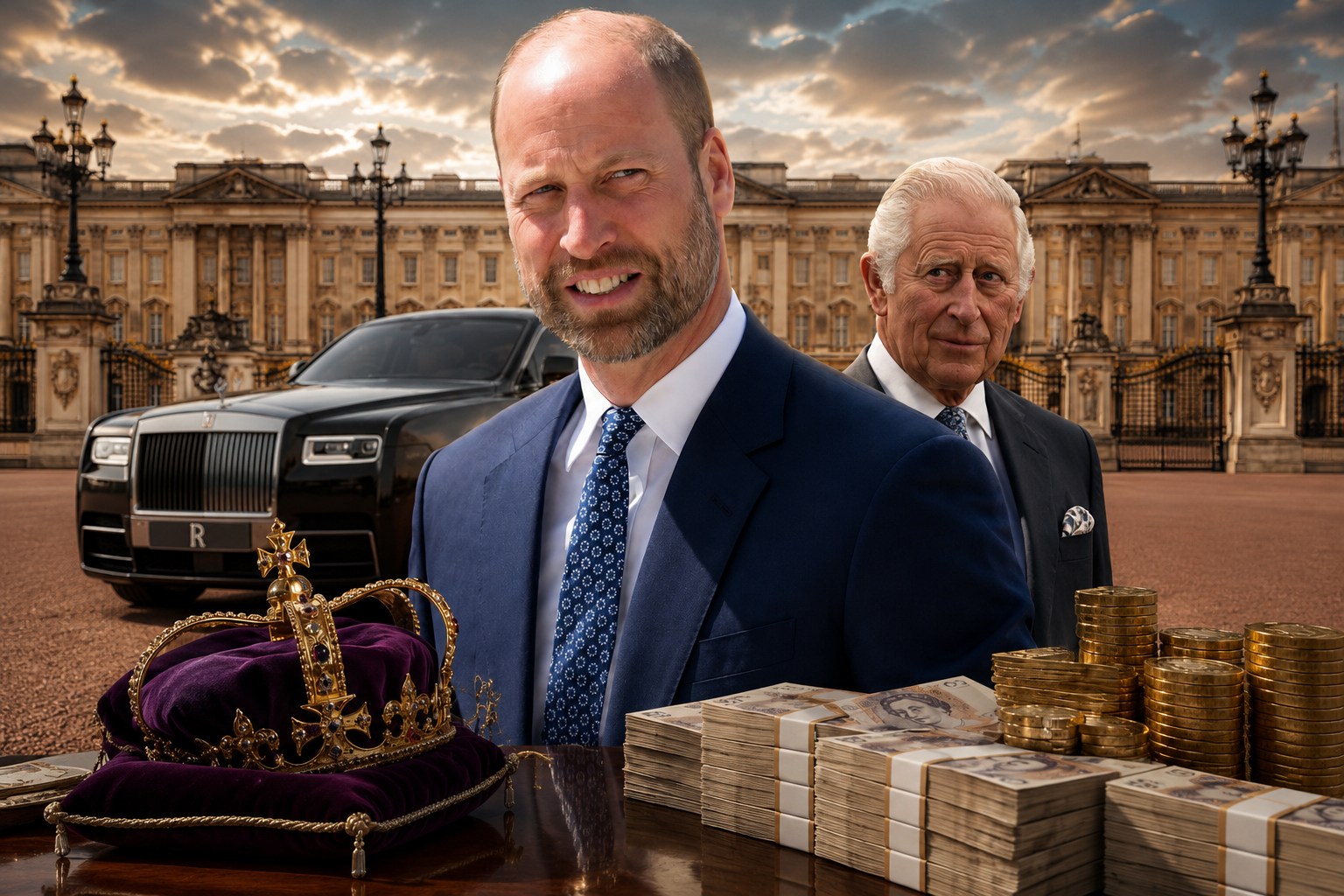
For most of his life, Prince William has been one of the most recognisable people on the planet. In 2026, he also became one of the wealthiest royals in the world on paper. UK media reports in June estimated his net worth at around £1.2 billion (about $1.6 billion), placing him in the billionaire club and, notably, ahead of his father, King Charles III, whose personal fortune was estimated at roughly $850 million.
But Prince William’s net worth is not as simple as it sounds, because most of it comes from an estate he does not own outright.
A Milestone That Changed the Conversation
Headlines about a royal “joining the billionaire club” naturally attracted global attention. The comparison with the King added to the interest. Yet the figure mostly reflects the value of the Duchy of Cornwall, a centuries-old estate that provides income to the heir to the throne, rather than money in a bank account.
Understanding the Figure
Wealth estimates for royals are calculated by journalists and analysts, not published by the royal family. They typically combine the value of assets the individual controls, their income and any known personal holdings. Because royal finances involve unique legal structures, different publications often arrive at different numbers.
The Duchy of Cornwall
The Duchy of Cornwall was created in 1337 by Edward III to provide an income for the heir to the throne. When Charles became King in September 2022, William became Duke of Cornwall and took over the estate.
The Duchy owns land, property and financial investments across England and Wales, including farmland, residential and commercial properties, and parts of Cornwall and the Isles of Scilly. Its annual surplus provides the Prince of Wales with his private income: about $28.5 million in the 2025-26 financial year, according to the latest accounts reported in the press.
Why Royal Wealth Is Different
Unlike typical billionaires, William cannot sell the Duchy and keep the proceeds. He is entitled to its income, but the capital is held for future heirs. In that sense, he is more a custodian than an owner.
That is a key reason why comparisons with business billionaires can be misleading.
William Versus Charles
The King’s personal fortune includes private estates such as Sandringham in Norfolk and Balmoral in Scotland, plus investments and other assets. As monarch, his official duties are funded through the Sovereign Grant, and the Duchy of Lancaster provides him with a private income.
Because the Duchy of Cornwall is included in many estimates of William’s wealth, while equivalent royal holdings are treated differently for Charles, William can appear wealthier on paper.
What the Duchy Owns
Holdings include tens of thousands of hectares of land, farms, residential and commercial property, and a financial investment portfolio. One of its best-known projects is Poundbury in Dorset, the urban extension developed under Charles’s guidance.
Income Matters More Than the Headline
For understanding William’s finances, the Duchy’s annual income is more meaningful than its total value. That income funds his public, charitable and private activities, as well as those of his family. He voluntarily pays income tax on it, and reports suggest he has paid more than $26 million in tax since becoming Prince of Wales.
The Financial Structure Behind the Prince
The Duchy is managed by a council and professional staff, with accounts published annually. William has signalled a more activist approach, including plans to sell around a fifth of the estate over the next decade and use proceeds to support affordable housing and environmental projects, while also tackling issues such as homelessness on Duchy land.
Why Estimates Keep Changing
Property values, investment returns and accounting methods all affect royal wealth estimates, as do changes in exchange rates when figures are converted into dollars. That is why reported numbers can shift significantly from year to year and between publications.
Public Interest in Royal Wealth
Royal finances attract intense interest, in part because they mix public and private money. Supporters argue the monarchy brings significant value through tourism and soft power. Critics question whether such large estates should be held for the benefit of a single family. The debate is likely to continue.
In the Context of Global Wealth
By global standards, $1.6 billion is substantial but modest compared with the fortunes of tech founders or Gulf royal families. William’s wealth is also tied to tradition and duty rather than entrepreneurial success.
Why the Estate Matters More Than the Number
Ultimately, the more lasting story is how William uses the Duchy. Its land, housing and investments affect thousands of tenants and communities. How he manages it may shape his reputation more than any headline about his net worth.
FAQ
What is Prince William’s net worth?
UK media reports in 2026 estimated it at around £1.2 billion, or about $1.6 billion, largely due to the Duchy of Cornwall.
How did he become so wealthy?
He inherited control of the Duchy of Cornwall, and its income, when his father became King in 2022.
Does Prince William own the Duchy outright?
No. He receives its income but cannot sell it for personal gain; it passes to the next heir.
Is he wealthier than King Charles?
On paper, according to 2026 estimates. Charles’s personal fortune was estimated at around $850 million, although the two are measured differently.
Why do royal net worth estimates differ?
Because they rely on outside calculations of complex assets, and publications use different methods.