A Design Studio, a Blank Screen, and a Different Kind of Architect
The first sketches did not emerge from a notebook. No designer stood beside a drafting table tracing curves onto paper. Instead, a series of prompts, simulations, design parameters, and computational models began generating possibilities. Hours later, forms appeared that looked familiar enough to be a superyacht, yet different enough to start conversations across the industry. The arrival of the AI designed superyacht 2026 OceanCo Lightscape represents more than another concept unveiling. It introduces a question that extends far beyond yachting. What happens when artificial intelligence becomes part of the creative process traditionally reserved for human designers? OceanCo’s Lightscape occupies a fascinating position between technology experiment and luxury statement. It challenges assumptions about authorship, innovation, aesthetics, and the future of design itself while remaining rooted in the expectations of ultra-high-net-worth yacht ownership.
Why Lightscape Matters Beyond the Yachting Industry
Most concept yachts influence only a narrow segment of the luxury market. Lightscape feels different because it sits at the intersection of several powerful trends. Artificial intelligence is reshaping industries. Luxury consumers increasingly embrace technological innovation. Design disciplines continue experimenting with generative tools capable of exploring possibilities beyond conventional workflows. Lightscape therefore functions as more than a maritime project. It becomes a case study in how technology and creativity might collaborate. Architects, automotive designers, product developers, and luxury brands are all watching closely because the implications extend well beyond yacht construction. The vessel introduces a broader conversation about the future relationship between human expertise and machine-assisted creativity.
What Exactly Is an AI-Designed Superyacht?
The phrase often creates confusion because it suggests a machine independently created an entire vessel. The reality is considerably more sophisticated. Artificial intelligence serves as a design partner rather than a replacement for naval architects, engineers, and designers. Human teams establish objectives, performance requirements, aesthetic directions, technical constraints, and operational priorities. AI systems then generate alternatives, identify efficiencies, and explore design solutions that might otherwise remain undiscovered. The AI designed superyacht 2026 OceanCo Lightscape therefore reflects collaboration rather than automation. Understanding this distinction is essential because it explains why the project remains grounded in practical yacht design despite its futuristic reputation.
The Exterior Design: Why Lightscape Looks Different
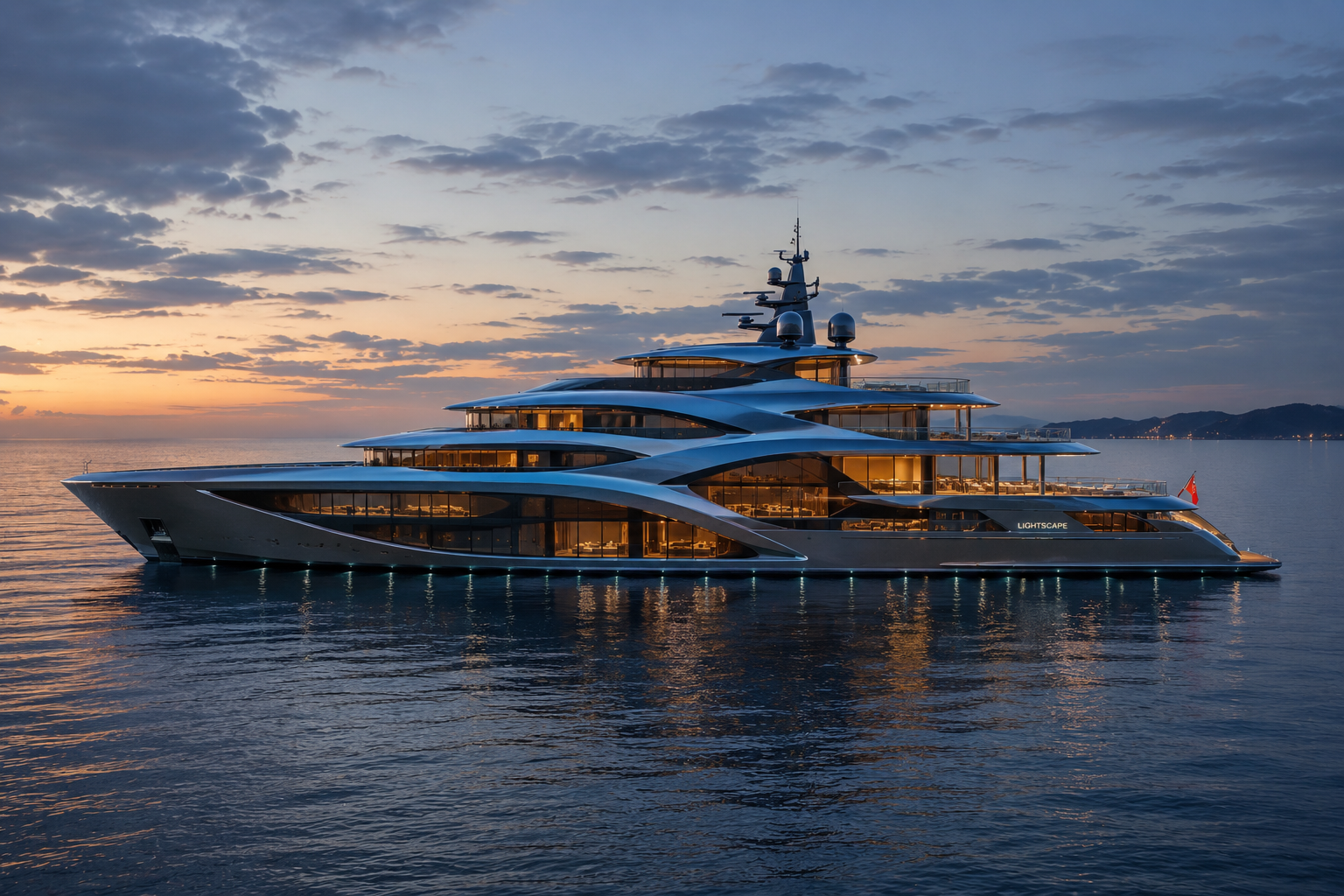
The most immediate impression comes from the yacht’s visual presence. Lightscape avoids many of the conventions that have dominated superyacht design for decades. Traditional boundaries between decks appear softened. Lines flow with greater continuity. The profile emphasizes openness and connection to the surrounding environment. Glass surfaces play a significant role in shaping the overall aesthetic. Rather than creating isolated interior zones, the architecture seeks to dissolve barriers between guests and the sea. The result feels less like a floating mansion and more like a carefully integrated living environment. This shift reflects a broader movement within luxury design toward transparency, natural light, and experiential architecture.
The Philosophy Behind the Name ‘Lightscape’
Names often reveal deeper intentions. Lightscape derives much of its identity from the relationship between architecture and natural illumination. Designers focused heavily on how sunlight interacts with surfaces, interior spaces, and guest environments throughout the day. The objective extends beyond visual appeal. Light influences mood, spatial perception, and the overall onboard experience. By treating light as a core architectural material rather than a secondary consideration, the yacht embraces a design philosophy centered on atmosphere. This approach contributes significantly to the vessel’s distinctive character and reinforces its departure from more conventional superyacht aesthetics.
Mechanism Reveal: How AI Actually Influenced the Design Process
The most interesting aspect of Lightscape lies not in the final shape but in how that shape emerged. Artificial intelligence systems processed thousands of variables simultaneously. These included spatial efficiency, guest circulation patterns, structural considerations, environmental performance, and aesthetic objectives. Instead of producing a single solution, the system generated multiple design pathways. Human designers evaluated, refined, and adapted those outputs according to practical and artistic criteria. The mechanism resembles an extraordinarily powerful brainstorming partner capable of exploring possibilities at a scale impossible through traditional methods alone. The final design remains human-directed, yet AI expanded the creative landscape available during development.
Interior Spaces: Rethinking Luxury at Sea
The interior concept reflects changing priorities among wealthy yacht owners. Large formal rooms are becoming less important than flexible environments supporting wellness, privacy, and connection to nature. Lightscape embraces this evolution through open layouts, adaptable spaces, and extensive visual access to the surrounding environment. Interior architecture prioritizes flow rather than compartmentalization. Guests move naturally between social, recreational, and private areas. Materials emphasize warmth, texture, and understated sophistication. The atmosphere feels contemporary without becoming sterile. Luxury emerges through spatial quality rather than decorative excess.
Sustainability and Intelligent Design
Modern yacht projects increasingly face questions regarding environmental responsibility. Lightscape addresses these concerns through intelligent design strategies rather than superficial sustainability gestures. AI-assisted modeling helped evaluate efficiency opportunities throughout the vessel. Energy management systems, material selection strategies, and operational considerations contribute to a more thoughtful overall approach. While no large superyacht can claim complete environmental neutrality, projects such as Lightscape demonstrate how technology can support more responsible design decisions. The emphasis lies on measurable improvements rather than symbolic features.
The Owner Experience: What Billionaires Actually Want in 2026
Luxury preferences continue evolving. Today’s yacht buyers often prioritize experiences over displays of scale. They seek privacy, personalization, wellness, flexibility, and seamless integration between technology and daily life. Lightscape reflects these priorities throughout its design. The yacht creates opportunities for solitude as effectively as social interaction. Spaces adapt to changing needs. Technology operates discreetly in the background. The objective is not to overwhelm guests with complexity. Instead, the vessel focuses on enhancing comfort and freedom. This shift reveals how luxury itself is changing among the world’s wealthiest consumers.
OceanCo’s Role in Pushing Design Boundaries
OceanCo has developed a reputation for supporting ambitious projects that challenge established industry assumptions. Lightscape continues that tradition by exploring how emerging technologies might influence yacht design. The shipyard’s willingness to engage with experimental concepts matters because meaningful innovation often requires institutional support. Many ideas remain theoretical until builders commit resources and expertise to exploring them. OceanCo’s involvement therefore adds credibility to the broader conversation surrounding AI-assisted design and its potential applications within luxury manufacturing.
Will AI Replace Yacht Designers?
This question appears frequently whenever artificial intelligence enters a creative field. Lightscape suggests a more nuanced answer. AI excels at generating possibilities, analyzing variables, and identifying patterns. Human designers contribute judgment, cultural understanding, emotional intelligence, and aesthetic sensibility. The strongest outcomes emerge when these capabilities work together. Rather than replacing designers, AI may alter how they work. The profession could evolve toward greater emphasis on curation, interpretation, and strategic direction. Lightscape serves as an early example of that collaborative future.
How Lightscape Could Influence Future Superyachts
The significance of the AI designed superyacht 2026 OceanCo Lightscape may ultimately depend less on the vessel itself and more on the ideas it introduces. Future yacht projects may incorporate AI-assisted optimization, generative design workflows, advanced simulation environments, and increasingly personalized design processes. Clients could become more involved through interactive design tools capable of visualizing possibilities in real time. The ripple effects may extend across architecture, aviation, automotive design, and luxury product development. Lightscape opens doors that future projects will likely explore further.
The Cultural Significance of an AI Architect
Beyond engineering and design, Lightscape raises broader cultural questions. Luxury has traditionally celebrated human craftsmanship, artistic vision, and individual creativity. The introduction of artificial intelligence challenges those conventions without necessarily replacing them. The project invites reflection on authorship, originality, and innovation in an age where machines increasingly participate in creative processes. These questions matter because luxury often functions as a reflection of cultural values. Lightscape captures a moment when technology and creativity are beginning to intersect in entirely new ways.
The Yacht May Be Remarkable, the Idea Is Bigger
The most enduring aspect of the AI designed superyacht 2026 OceanCo Lightscape may not be its dimensions, amenities, or specifications. Those elements will evolve as technology advances and tastes change. The lasting significance lies in what the project represents. Lightscape demonstrates how artificial intelligence can contribute meaningfully to creative industries without eliminating human influence. It suggests a future where technology expands possibility rather than constrains it. Years from now, yacht design will undoubtedly look different. New tools will emerge. New expectations will shape luxury. Lightscape may be remembered as one of the first moments when the industry seriously began exploring what creativity looks like when human imagination gains a computational partner.
FAQ
What is the OceanCo Lightscape superyacht?
Lightscape is a 90-meter superyacht concept developed with significant AI-assisted design input, exploring how artificial intelligence can contribute to future yacht architecture and innovation.
Is Lightscape really designed by artificial intelligence?
The project uses AI as a design tool and creative partner. Human designers, engineers, and naval architects remain responsible for evaluating, refining, and directing the final outcome.
Why is the AI designed superyacht 2026 OceanCo Lightscape important?
The concept represents one of the most prominent examples of artificial intelligence being integrated into luxury yacht design, potentially influencing future design methodologies across multiple industries.
How does AI help design a superyacht?
AI can analyze complex variables, generate alternative design solutions, optimize spatial layouts, evaluate performance scenarios, and support creative exploration during the design process.
Could AI become common in yacht design?
Many industry observers expect AI-assisted tools to become increasingly common as designers seek more efficient ways to explore concepts, optimize performance, and personalize luxury experiences.