Fog rolls across the hills of Transylvania just before dusk. The road curves through dense forest toward a stone fortress perched above the valley. Visitors arrive with cameras ready, expecting to step into the atmosphere made famous by centuries of folklore and literature.
This region has long lived under the shadow of a name that refuses to fade, Dracula.
Romania now plans to transform that cultural legacy into a major tourism investment. The proposed Romania Dracula Theme Park carries a projected value of around $1 billion, with the ambition of creating one of Europe’s most distinctive destination attractions.
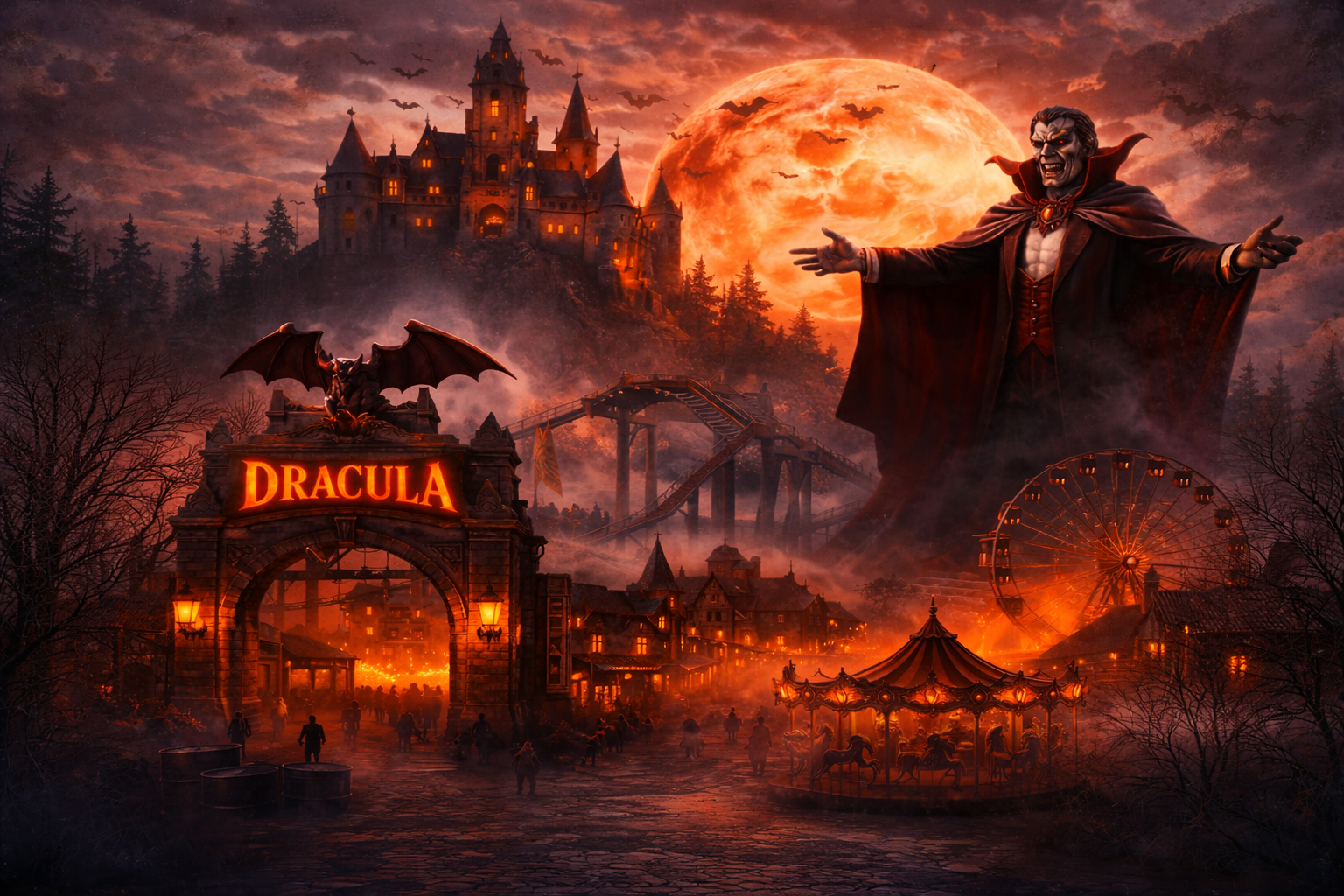
The project moves beyond haunted houses and souvenir shops. Developers envision an immersive entertainment environment that blends historical mythology, gothic storytelling, and large-scale entertainment infrastructure.
For travelers, the park could become a gateway into Romania’s medieval landscapes. For investors, it represents a bold attempt to expand the country’s tourism economy through experiential attractions.
The concept also taps into one of the most enduring narratives in global pop culture. The legend of Dracula continues to attract readers, film audiences, and travelers searching for places where fiction and history intersect.
The Romania Dracula Theme Park aims to turn that fascination into a destination that operates year-round.
The Vision Behind the Romania Dracula Theme Park
The proposed park centers on a simple yet powerful idea. Visitors should feel as though they have stepped inside the world that inspired the Dracula legend.
Developers plan to combine theme park attractions, interactive storytelling, and historic architecture references drawn from the castles and villages of Transylvania.
The Romania Dracula Theme Park would likely feature large-scale rides, immersive theatrical experiences, themed hotels, and cultural exhibits that explore the historical context behind the legend.
The foundation of the concept rests on the intersection of fiction and reality.
The fictional Dracula character created by Bram Stoker drew inspiration from historical figures associated with Transylvania. The region’s medieval castles, narrow valleys, and mist-covered forests already possess the visual atmosphere that shaped the story.
Theme park designers aim to translate those landscapes into curated environments that visitors can explore safely and comfortably.
Unlike traditional amusement parks, the goal is to maintain a strong sense of place. Architecture may reflect the stone fortresses and Gothic structures common in the region. Streets inside the park could resemble medieval towns illuminated by lantern light.
Restaurants, performance venues, and exhibitions may also explore the folklore traditions of Romania.
This approach turns the park into more than entertainment. It becomes a cultural narrative space where mythology and regional history exist side by side.
Design teams working on the project have studied successful theme park models around the world. Large destination parks operate as immersive environments rather than collections of rides.
Visitors move through carefully designed spaces where architecture, music, lighting, and storytelling combine into a unified experience.
Inside the Romania Dracula Theme Park, a visitor might walk through a candlelit village square before entering a ride that simulates a nighttime journey through mountain passes.
Another attraction could place guests inside the chambers of a fictional castle where the Dracula legend unfolds through live performance and projection technology.
Modern theme parks rely heavily on advanced systems to create these experiences.
Motion simulation platforms allow vehicles to move through controlled environments while projecting cinematic imagery. Lighting systems shape atmosphere throughout the park as daylight fades.
Sound design also plays a critical role. Ambient audio can transform an ordinary pathway into a mysterious forest corridor.
These mechanisms operate quietly behind the scenes, yet they form the backbone of immersive entertainment design.
How the Romania Dracula Theme Park Could Transform Tourism
Tourism already plays an important role in Romania’s economy. Visitors arrive each year to explore medieval towns, mountain landscapes, and historic castles.
However, many travelers visit for short stays before continuing through other parts of Europe.
Large destination attractions can change that pattern.
The Romania Dracula Theme Park aims to create a reason for travelers to spend several days in the region rather than a single afternoon.
Theme parks generate economic activity that extends beyond their gates. Hotels, restaurants, transportation services, and local tour operators benefit from increased visitor numbers.
A major park also creates employment opportunities across a wide range of sectors.
Construction teams, hospitality workers, entertainment performers, and technical specialists all contribute to the operation of large-scale tourism infrastructure.
International tourism investors often evaluate projects like this through the lens of long-term visitor demand.
The Dracula legend provides a powerful foundation for marketing. The character remains recognizable across cultures due to decades of literature, cinema, and television adaptations.
Visitors from North America, Asia, and Western Europe already associate Transylvania with gothic storytelling.
A fully developed Romania Dracula Theme Park could transform that association into a structured tourism experience.
Another factor shaping the project involves the evolution of global travel preferences.
Many travelers now seek experiential destinations that combine entertainment with cultural exploration.
Theme parks that connect their attractions to local identity often perform particularly well. Visitors appreciate environments where the surrounding landscape enhances the story being told.
Transylvania offers exactly that environment.
Rolling hills, fortified churches, medieval citadels, and dense forests already form the backdrop of the Dracula narrative. A well-designed theme park could serve as a central gateway to these wider regional attractions.
Guests might spend a day inside the park and then explore nearby castles, villages, and natural landscapes during the rest of their stay.
This integration between entertainment infrastructure and regional tourism creates a multiplier effect for local economies.
The Cultural Balance Between Myth and Heritage
The Dracula legend carries both fascination and controversy within Romania.
Many locals appreciate the global attention that the story brings to Transylvania. Others prefer to emphasize the region’s authentic history rather than fictional horror narratives.
Developers behind the Romania Dracula Theme Park therefore face an important challenge. The project must celebrate the gothic mythology while respecting the real historical heritage of the region.
Design concepts reportedly include educational exhibits that explain the historical context behind the Dracula legend. Visitors could learn about medieval Romania, regional folklore traditions, and the origins of vampire mythology across Eastern Europe.
This balance allows the park to function both as entertainment and cultural storytelling.
The Long-Term Vision for Romania’s Tourism Industry
Large tourism projects rarely reach completion overnight. Planning, investment negotiations, environmental assessments, and construction timelines can stretch across several years.
If realized successfully, the Romania Dracula Theme Park could become one of the most distinctive tourism destinations in Europe.
Few places possess a legend as recognizable as Dracula combined with landscapes that match the mythology so closely.
As evening falls across the hills of Transylvania, fog returns to the valleys below the castles. Travelers continue arriving each year searching for the atmosphere described in novels and films.
The proposed park attempts to transform that atmosphere into a permanent destination, one where story, architecture, and landscape merge into a single experience.
The legend itself will likely outlive any attraction built in its name.
FAQs
1. What is the Romania Dracula Theme Park project?
The Romania Dracula Theme Park is a proposed $1 billion tourism development designed to create an immersive entertainment destination inspired by the Dracula legend and the landscapes of Transylvania.
2. Where would the Dracula theme park be located?
The park is expected to be developed in the Transylvania region of Romania, an area closely associated with Dracula folklore and historic castles such as Bran Castle.
3. Why is Romania building a Dracula theme park?
The project aims to expand the country’s tourism industry by creating a major international attraction that combines entertainment, culture, and regional storytelling.
4. What attractions might the Romania Dracula Theme Park include?
Possible features include themed rides, immersive castle experiences, gothic architecture environments, live performances, and hotels designed around medieval Transylvania.
5. When could the Romania Dracula Theme Park open?
Large tourism projects of this scale require extensive planning and construction. If approved and funded fully, development could take several years before opening to visitors.