The 2026 FIFA World Cup, the first hosted by three countries and the first with 48 teams, opened at Mexico City’s Estadio Azteca with a ceremony that blended Latin American music, African rhythms and global pop. Shakira headlined the show before the tournament’s first match between Mexico and South Africa, debuting the official World Cup song “Dai Dai” with Burna Boy.
The Night the Tournament Began
Estadio Azteca has a unique place in World Cup history. It hosted the finals of 1970 and 1986 and became the first stadium to stage matches at three World Cups. Opening the 2026 tournament there gave the ceremony an emotional and historic backdrop.
The ceremony began roughly 90 minutes before kick-off, transforming the pitch into a stage for music, dance and visual effects.
The Lineup
Performers announced for the Mexico City opening included:
- Shakira, the headliner and a World Cup favourite, whose “Waka Waka” became the anthem of 2010
- Burna Boy, the Nigerian Afrobeats star
- Maná, the iconic Mexican rock band
- J Balvin and Danny Ocean, representing Latin pop and reggaeton
- Belinda, Lila Downs and Los Ángeles Azules, bringing Mexican pop, folk and cumbia
- Alejandro Fernández, expected to perform Mexico’s national anthem
- Tyla, the South African singer, expected to perform South Africa’s anthem
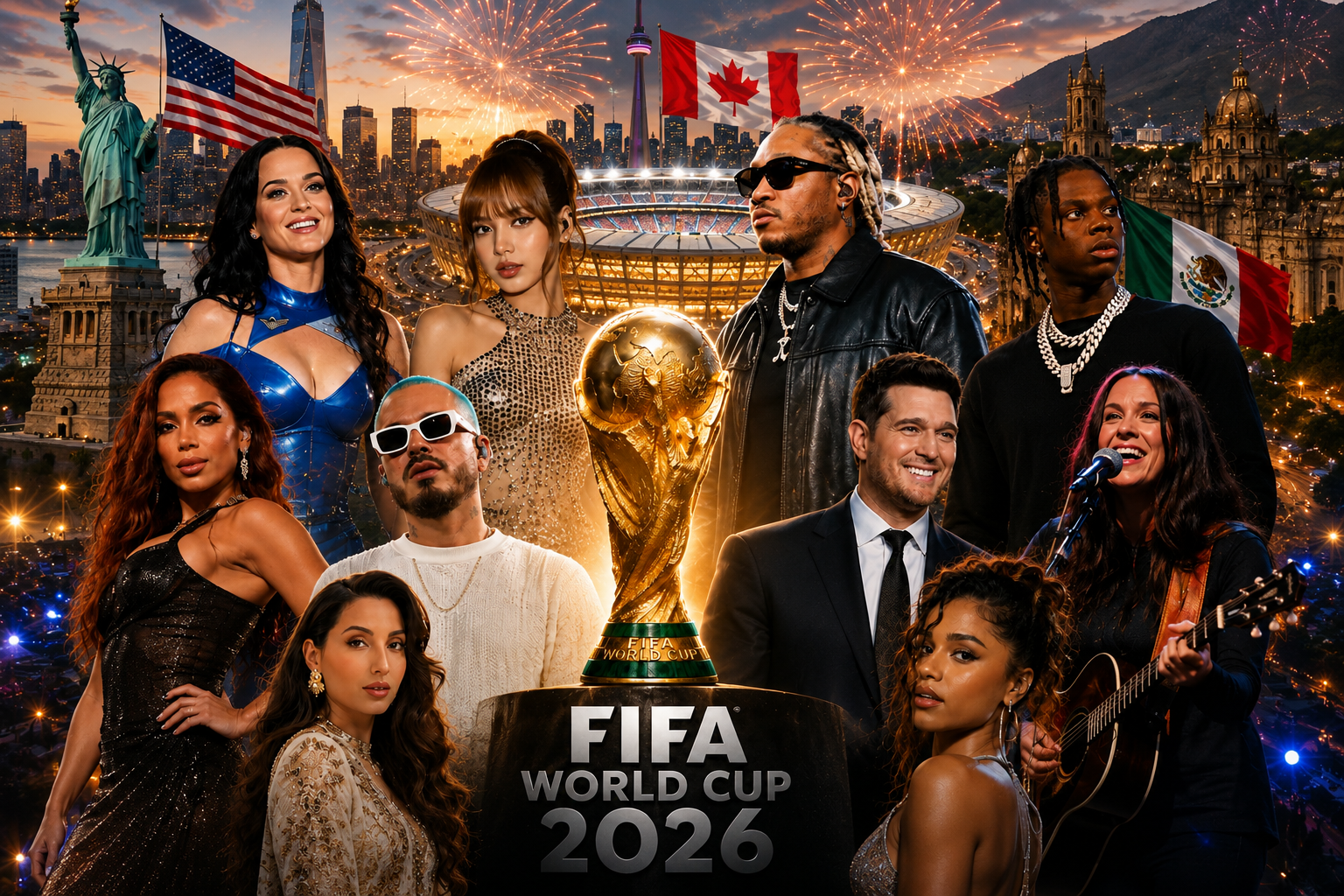
Other global stars, including Katy Perry, LISA and Future, were announced for opening events in the other host nations.
Why the Lineup Matters
An opening ceremony sets the tone for the tournament and is watched by hundreds of millions of people worldwide. FIFA uses it to celebrate the host nations, showcase global talent and launch the official music of the tournament.
How FIFA Chooses Performers
FIFA works with organisers, broadcasters and sponsors to select artists with global appeal and strong connections to the host countries. Balancing local heritage with international star power is key.
Representing Three Host Nations
With the United States, Canada and Mexico sharing hosting duties, the 2026 tournament featured opening events in each country. Mexico’s ceremony emphasised Latin culture and music, while events in Canada and the US featured their own lineups.
Stage Design and Production
Turning a football stadium into a concert venue requires temporary stages, lighting rigs, sound systems and choreography, all installed and removed quickly so the pitch is ready for the match. Productions also design for television, since the global broadcast audience is far larger than the crowd in the stadium.
Music and Tournament Identity
World Cup songs often become part of a tournament’s legacy. Shakira’s “Waka Waka” in 2010 and Ricky Martin’s “La Copa de la Vida” in 1998 remain closely tied to their tournaments. “Dai Dai” was positioned to play a similar role in 2026.
Fan Reaction
Announcements of the performers sparked heavy discussion on social media, with fans celebrating Shakira’s return and the inclusion of artists from across Latin America and Africa.
The Intersection of Sport and Entertainment
Major sporting events increasingly resemble entertainment spectacles, with halftime shows, concerts and celebrity appearances. The World Cup opening ceremony is football’s biggest example, giving artists access to one of the largest audiences on Earth.
A Performance Built for History
For the artists involved, performing at a World Cup opening is a career highlight. For fans, it is the moment the tournament truly begins.
FAQ
Who performed at the 2026 World Cup opening ceremony?
In Mexico City, performers included Shakira, Burna Boy, Maná, J Balvin, Danny Ocean, Belinda, Lila Downs, Los Ángeles Azules, Alejandro Fernández and Tyla.
Where was the opening ceremony held?
At Estadio Azteca in Mexico City, before Mexico’s opening match against South Africa.
What was the official World Cup song?
“Dai Dai”, performed by Shakira and Burna Boy.
Were there other opening ceremonies?
Yes. With three host nations, opening events also took place in Canada and the United States, featuring artists such as Katy Perry, LISA and Future.
Why is Estadio Azteca special?
It hosted the 1970 and 1986 World Cup finals and was the first stadium to stage matches at three World Cups.